Estratègies de prevenció de l'ús de la força (part 1)
Introduction to Module 2 of Police Training
Overview of the Course and Its Objectives
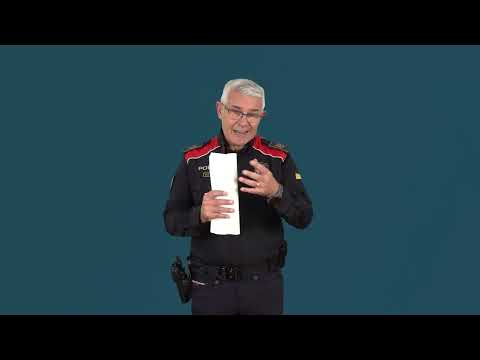
- Manel Giovanni introduces himself as a sub-inspector of the Mossos d'Esquadra and coordinator of Module 2 in basic police training.
- The focus is on free policing, progression, and appropriate use of force.
- The class will present an overview of Module 2, emphasizing coordination across various subjects related to police force usage.
- Importance is placed on understanding exceptional and non-exceptional situations involving police force for better preparedness upon graduation.
- Giovanni's presentation ties into his professional background within the police academy.
Study on Real Situations Involving Firearms
- Initial emphasis is on a study regarding real-life firearm usage published in Segments de Seguretat by the Public Security Institute of Catalonia.
- A subsequent video will provide deeper insights into this study related to police procedures and force application.
- The study was conducted between 2015 and 2017 and published in three languages: Catalan, Spanish, and English.
- It analyzed cases where Mossos d'Esquadra officers used firearms or faced threats from armed individuals.
- This research has significantly influenced courses on police procedures and use of force.
Unification of Related Subjects in Police Training
Integration of Courses Related to Use of Force
- One objective was to unify various subjects concerning the use of force into a single module for better coherence in training.
- Key subjects include police procedures, firearms training, self-protection, and control measures which were previously scattered across different modules.
- This unification aims to enhance integration among these topics for improved theoretical knowledge and practical skills among trainees.
- Giovanni praises this initiative as a wise decision by the academy's leadership for comprehensive learning experiences.
New Course Addition: Strategies for Preventing Force Usage
- A new subject titled "Strategies for Prevention of Force Usage" (Module 2.1), has been introduced this year as part of basic training.
- This course aims to equip trainees with necessary skills before they encounter situations requiring force application.
- Emphasis is placed on reducing reliance on physical force since statistically only about 10%-20% involve such actions during their duties.
Enhancing Emotional Awareness Among Trainees
Key Components of New Training Strategies
- The new course consists of three main components aimed at improving emotional awareness among officers:
- Emotional Awareness: Focuses on enhancing personal security when facing potentially volatile situations.
- Reading Hostility Indicators: Teaches trainees how to identify signs that may indicate escalating hostility from citizens during interactions.
- De-escalation Techniques: Provides tools for managing tense situations without resorting to physical confrontation.
Practical Application Examples
- Giovanni presents real-life scenarios illustrating extreme cases where officers had to use firearms against threats:
- An example involves an officer confronting an individual attempting to stab another person while being shot at themselves.
- Another case shows an officer being attacked with a large shovel while trying to protect a colleague lying on the ground.
This structured approach ensures that trainees are well-prepared both theoretically and practically for their roles in law enforcement.
Overview of Force Usage in Law Enforcement
Introduction to the Compilation
- The speaker presents a compilation of real cases sourced from the internet, emphasizing minimal effort in gathering this information.
Real Cases and Context
- The examples provided are drawn from YouTube, showcasing actual incidents involving local police and Mossos d'Esquadra (Catalan police).
Understanding Use of Force
- Discussion on the various types of force used by law enforcement, highlighting the progression of force and multiple influencing variables.
Key Variables Affecting Situations
- Emphasis on prior capacities of individuals involved, particularly focusing on emotional awareness as a significant factor.
External Factors Influencing Responses
- Mention of additional variables that will be discussed later, including external factors impacting law enforcement responses.
Types of Aggressors and Response Tools
Aggressor Typologies
- Videos will illustrate different aggressor types, providing insight into how these variations affect police response strategies.
Weapons and Tools Used by Police
- Observations regarding diverse weapons utilized during confrontations, including hands-on responses versus tools like batons or firearms.
Situational Context Variability
- Recognition that environmental context plays a crucial role in shaping police responses to aggression.
Preparing for Effective Law Enforcement
Deepening Knowledge in Force Application
- Encouragement for students to deepen their understanding not only in this specific course but across all related subjects within the module.
Emotional Preparedness for Officers
- Importance placed on being emotionally prepared to respond effectively to situations involving force.
Conclusion and Next Steps
Transition to Video Analysis
- The session will transition into viewing video clips followed by commentary on observed content.
Turn any video into a summary like this
YouTube links, meetings, lectures. With transcripts, search, and chat.