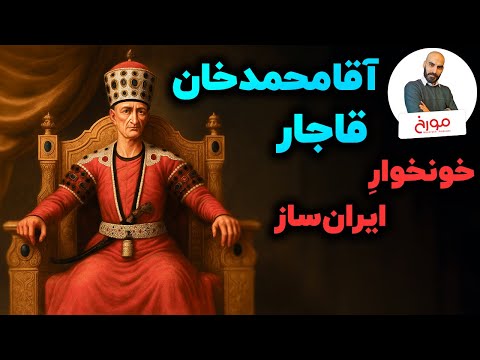
آقامحمدخان قاجار | اسیری اخته شده چطور سلسلهای باثبات بنا کرد؟
The Fall of Tbilisi: A Historical Account
The Siege of Tbilisi
- On the 18th of Shahrivar, 1174 in the Persian calendar, seventy elders approached the conquerors with gifts to save their citizens' lives. However, they were executed instead.
- The conquerors entered Tbilisi, committing atrocities such as burning churches and capturing women who had not committed suicide during the siege.
- A thick fog enveloped the battlefield, halting combat and allowing a massive army to approach Tbilisi undetected.
The Aftermath of Conquest
- As fear gripped Tbilisi's inhabitants, their leader Iraki fled, leading to a swift collapse of resistance against the invading forces.
- The brutal actions taken by the invaders raised questions about who ordered these atrocities; it was revealed that they stemmed from a powerful figure who rose from oppression.
Rise of Agha Mohammad Khan Qajar
- This powerful figure responsible for bloodshed was Agha Mohammad Khan Qajar, whose reign marked significant changes in Iranian history despite his violent methods.
- Ahmad Hashemi introduces sources for further understanding this historical period: "Modern History of Iran" by Abbas Amanat and "Social and Political History of Contemporary Iran" by Saeed Nafisi.
Understanding the Qajar Tribe
- To comprehend Agha Mohammad Khan's rise to power, one must explore the origins of the Qajar tribe and its connections to historical figures like Genghis Khan.
- The narrative surrounding Genghis Khan has evolved over time; he was once seen as an unparalleled conqueror rather than a tyrant.
Complexities in Tribal Lineage
- While claims about lineage connecting various tribes to Genghis Khan exist, establishing definitive genealogical links remains complex due to centuries of intermingling among different groups.
- For deeper insights into Agha Mohammad Khan’s ascent to power within Iranian history, viewers are encouraged to watch related episodes on YouTube covering Ottoman glory and Nader Shah Afshar.
The Forced Migration and Social Change in Iran
Shah Abbas's Strategy
- Shah Abbas initiated widespread forced migrations of various tribes, altering the social fabric of Iran to weaken the power of the Qizilbash.
- He merged smaller tribes he deemed troublesome into larger groups, relocating them to central and southern Iran, leading to the formation of new tribal entities like the Qashqai.
Formation of New Tribes
- The Qashqai tribe emerged from a mix of relocated tribes and Persian and Arab clans as part of Shah Abbas's strategy to consolidate power.
- Larger tribes such as the Qajar were also forcibly moved; some were settled in Astrabad (modern-day Gorgan), where they could be monitored against potential threats from Uzbeks or Turkmen.
Historical Context and Identity
- The historical name for Astrabad is rooted in "Astrabad," although it has been commonly referred to as "Estarabad" throughout history.
- A significant question arises regarding the correct pronunciation: "Qajar" vs. "Qajar," with no real difference; it reflects regional dialect variations.
Rise of the Qajars
- The narrative shifts towards the rise of the Qajars following the fall of Shah Sultan Hussein Safavid and their claims to power dating back sixty years before Agha Mohammad Khan's reign.
- Historians argue that claims by Qajar historians about holding power prior to Agha Mohammad Khan are inaccurate, as previous uprisings did not lead to actual governance.
Historical Claims and Evidence
- The three uprisings referenced by Qajar historians failed to establish any lasting authority or kingship, highlighting a disconnect between historical claims and factual evidence.
- Following Afghan invasions, Tehmasp II fled toward Mazandaran while Agha Mohammad Khan’s predecessor led an attack against him, ultimately becoming his protector after defeating his forces.
Power Dynamics Post-Nader Shah
- Nader Shah Afshar emerged as a significant figure during this tumultuous period, eventually killing Agha Mohammad Khan’s predecessor during a joint military campaign aimed at capturing Mashhad.
- Nader’s rise marked a shift in Iranian politics; despite his military successes abroad, he struggled with establishing a stable dynasty post-conquest due to internal strife within his own family.
This structured summary captures key insights from each timestamped segment while maintaining clarity and coherence for study purposes.
The Rise of the Qajar Dynasty
The Context of Power Struggles
- A khan gathered a group to claim power, with many asserting kingship. One notable figure was Karim Khan Zand, who successfully led a rebellion and established the Zand dynasty.
- Another khan during this period was Mohammad Hassan Khan Qajar, who aimed to seize control over parts of Iran or establish an autonomous region.
The Rebellions of the Qajars
- Mohammad Hassan Khan, from the Qajar tribe's sub-group in Astaraabad, allied with rebellious Turkmen against Nader Shah Afshar but ultimately faced defeat.
- After Nader Shah's death, Mohammad Hassan Khan attempted another uprising but was defeated by Adil Shah (Ali Quli Mirza), Nader's nephew.
Historical Significance of Defeats
- Despite his defeats, these events were pivotal for the Qajars; Mohammad Hassan Khan had a son named Agha Muhammad Khan, whose fate would shape future narratives.
- Agha Muhammad Khan was captured and mutilated as punishment by Adil Shah, marking a significant moment in their family's history.
Legacy and Name Changes
- The incident led historians to write Agha Muhammad Khan’s name differently due to his condition; "Agha" became associated with men while "Aghin" referred to women.
- Following political upheavals after Adil Shah's assassination, the Qajars regained power in Astaraabad under Mohammad Hassan Khan.
Power Dynamics Post-Adil Shah
- During this time, various regions were controlled by different factions: Afghanistan under Ahmad Shah Durrani and Azerbaijan under Afghan leaders.
- Conflict arose between Karim Khan Zand and Mohammad Hassan Khan; despite initial peace overtures from Mohammad Hassan, war ensued leading to significant losses for Karim.
The Turning Point: Capture of Isfahan
- After defeating Karim Khan in battle and seizing Isfahan—the capital at that time—Mohammad Hassan Khan is considered by some as having ruled before his son Agha Muhammad Khan.
- This narrative raises questions about what constitutes kingship in historical contexts.
Khadamati and the Power Struggle in Iran
The Conflict Between Karim Khan and Mohammad Hassan Khan
- The rivalry between Afghan leader Abad Khan and Mohammad Hassan Khan Qajar created an opportunity for Karim Khan to regroup and reassert his power.
- Despite his victories, Mohammad Hassan Khan needed to conquer southern Iran to claim full sovereignty over the region, which required defeating Karim Khan.
- In a renewed attempt, Mohammad Hassan Khan marched towards Shiraz but faced unexpected resistance from Karim Khan's strengthened forces.
- The battle resulted in a significant defeat for Mohammad Hassan Khan, leading to his retreat towards Mazandaran where he was ultimately killed by Karim Khan's troops.
- Following the death of Mohammad Hassan Khan, Karim Khan treated his remains with respect and married his sister Khadijeh Begum.
Aftermath of the Battle
- With the fall of Mohammad Hassan Khan, power shifted to Muhammad Hussein Khan Dolu, who was related to the Qajar family through marriage.
- At the time of his death, Mohammad Hassan had nine sons; two were sent respectfully to Shiraz while five others were dispatched to Qazvin by Karim Khan.
- During nearly two decades at Karim's court, Agha Muhammad Khan focused on revenge against those who wronged him during his youth.
Agha Muhammad’s Character Development
- Agha Muhammad was described as physically weak and emotionally detached compared to his brother Hossein Quli.
- Hossein Quli became a prominent figure in governance after being appointed governor of Damghan by Karim khan. His marriage produced a son named Fath Ali Shah Qajar.
Khan's Revenge and the Rise of Qajar Power
The Conflict Between Khan and the Qajars
- The narrative begins with Hussein Qoli Khan, governor of Damghan, seeking revenge against the Dolu tribe in Astrabad, who had gained power under Karim Khan Zand after Muhammad Hassan Khan Qajar.
- Historians note that before Agha Mohammad Khan Qajar rose to power, there were three kings during a 21-year period. Hussein Qoli Khan was the last of these rulers, known as "Jahansooz."
- Karim Khan Zand sends his brother Zakikhan to suppress Hussein Qoli Khan's rebellion; ultimately, Hussein Qoli is forced to flee.
The Role of Agha Mohammad Khan
- Agha Mohammad Khan intervenes on behalf of his brother by appealing to Karim Khan Zand for mercy, arguing that their conflict was an internal family dispute.
- Despite Karim’s initial leniency towards Hussein Qoli, he is later killed by his own slaves—rumored to be orchestrated by Karim himself—marking the end of this rebellion.
The Struggles and Myths Surrounding Agha Mohammad Khan
- After fleeing Shiraz due to political instability following Karim's death, Agha Mohammad finds himself impoverished and resorts to clever tactics for survival.
- This period shapes him into one of Iran's most notorious yet significant historical figures; even Reza Shah Pahlavi acknowledged his impact despite personal disdain for the Qajars.
Historical Context and Legacy
- Regardless of personal opinions about him, Agha Mohammad’s contributions must be recognized; he faced immense challenges on his path to power which shaped Iranian history significantly.
Transition Towards Power
- Following Karim’s death in 1157 SH (Solar Hijri), uncertainty looms over Agha Mohammad’s fate. His aunt warns him about potential threats from rivals within the Zand dynasty.
- As he leaves Shiraz towards his homeland among the Qajars, it symbolizes a new claim for sovereignty amidst ongoing conflicts between various factions vying for control in Iran.
The Rise of Agha Mohammad Khan Qajar
Background on Shahrokh Shah Afshar
- Shahrokh Shah Afshar, the grandson of Nader Shah Afshar, claimed kingship in Iran while residing in Khorasan. He eliminated potential heirs to Nader's throne except for one, whom he only blinded.
Internal Conflicts Among Qajars
- Despite his claims, Shahrokh had little influence in Khorasan. Agha Mohammad Khan sought unity among internal rivals within the Qajar tribe to prevent their downfall and preserve their aspirations for power over Iran.
Historical Context of Rivalries
- The historical rivalries within the Qajar family led to significant conflicts. Agha Mohammad Khan referenced past disputes involving his grandfather and Fath Ali Khan, which resulted in Karim Khan becoming king.
Strategic Moves by Agha Mohammad Khan
- Realizing that two half-brothers were unwilling to support him, Agha Mohammad Khan changed his strategy and headed towards Barfarush (modern-day Babol), avoiding direct confrontation with them.
Family Dynamics and Power Struggles
- In Babol, Agha Mohammad Khan consolidated power by marrying into his deceased brother’s family. This move incited jealousy from his half-brother Reza Qoli, who attempted to eliminate him from competition but ultimately failed due to external pressures from other exiled brothers.
The Role of External Forces
- Other members of the Qajar clan recognized that internal strife would weaken their position against external threats. They intervened to free Agha Mohammad Khan from captivity and temporarily reconciled him with Reza Qoli.
Death of Key Rivals
- Shortly after this reconciliation, Reza Qoli died unexpectedly, removing a significant obstacle for Agha Mohammad Khan as he sought dominance within the Qajar tribe.
Political Maneuvering Against Zand Dynasty
- With another half-brother remaining as a rival, Agha Mohammad Khan employed diplomacy again by assuring Mortaza Qoli that he would retain his governorship while focusing on defeating the Zand dynasty instead.
Transition of Power Post-Karim Khan Zand
- Following Karim Khan's death, Zaki Khan took control but did not claim kingship outright. His oppressive rule led to unrest among the populace and paved the way for further conflict with Agha Mohammad Khan.
Escalation of Conflict with Zand Dynasty
- As tensions escalated between Agha Mohammad Khan and Zaki Khan’s forces, brutal tactics emerged on both sides. This period marked a significant shift toward more violent confrontations as power struggles intensified.
Conclusion: The Path Towards Dominance
- Ultimately, through strategic alliances and eliminating rivals within both the Qajar clan and against external enemies like the Zands, Agha Mohammad Khan began establishing himself as a dominant force in northern Iran amidst ongoing conflicts.
The Rise of Tehran: A Historical Overview
The Context of Tehran's Significance
- The discussion begins with the historical significance of Tehran, which later became the capital under Agha Mohammad Khan Qajar.
- During a conflict with Ja'far Khan Zand, Agha Mohammad Khan was denied entry into Tehran by its governor, emphasizing the city's political importance.
The Power Struggle Between Qajars and Zands
- After Ja'far Khan's death—resulting from internal family conflicts rather than direct confrontation with Agha Mohammad Khan—the latter sought to consolidate power among his own tribe, the Qajars.
- Ja'far Khan's successor, Lotf Ali Khan Zand, faced challenges in maintaining authority due to rival factions and personal vendettas.
Internal Conflicts and Rivalries
- Both Agha Mohammad Khan and Lotf Ali Khan were embroiled in familial disputes; Agha had a strong preference for his nephew Fath Ali over his half-brother Jafar Gholi.
- This favoritism led to jealousy within the family, culminating in Jafar Gholi’s rebellion against Agha Mohammad Khan.
The Climax of Conflict
- Tensions escalated as Lotf Ali Khan issued orders for executions against those he suspected of involvement in his father's murder.
- The narrative shifts to military confrontations between Lotf Ali Khan and Agha Mohammad Khan, highlighting strategic maneuvers on both sides.
Turning Points in the War
- Lotf Ali Khan attempted to regain control by moving south towards Kerman but failed to secure an alliance or victory there.
- Upon returning to Shiraz, he found himself shut out due to previous enmities with local leaders like Ibrahim Khān Kalāntar.
Final Outcomes and Consequences
- As battles continued, initial victories for Lotf Ali turned into defeats due to dwindling resources compared to those available for Agha Mohammad Khan.
- Ultimately, after securing victory at Shiraz, Agha Mohammad Khan sought revenge against the Zands by desecrating their legacy and asserting dominance over Iran.
The Tragic Fate of Lotfali Khan Zand
Marriage Proposal and Political Dynamics
- A proposal for marriage between Lotfali Khan Zand and Karim Khan's daughter was discussed, highlighting the political alliances in Shiraz. However, Karim Khan deemed Lotfali unworthy, suggesting he should marry a commoner instead.
Resentment and Consequences
- The resentment from Karim Khan's daughter towards her fate as the wife of a commoner fueled tensions. This reflects how personal grievances can intertwine with political narratives.
The Downfall of Lotfali Khan
- Following his defeat, Lotfali Khan became a refugee in Bam, where he received support from allies like Jahangir Khan. He attempted to reclaim power by minting coins in Kerman but ultimately faced further defeats.
Escalating Conflicts with Qajars
- Despite initial successes, Lotfali Khan's repeated retreats led to criticism of his leadership. His inability to stand firm against the Qajars resulted in significant losses for his forces.
Betrayal and Capture
- After being separated from his ally Jahangir during their escape, Lotfali was captured by the Qajars. His family faced exile while he suffered severe torture at the hands of Agha Mohammad Khan.
Legacy of Suffering
- The tragic end of Lotfali Khan serves as a poignant reminder of the brutal realities faced by leaders during this tumultuous period in Iranian history. His story is marked by betrayal and suffering that resonates through time.
The Siege of Kerman: A Turning Point
Public Sentiment During Conflict
- As Agha Mohammad Khan’s forces approached Kerman, local citizens expressed hope through poetry about their leader until despair set in following the city's fall to Qajar forces.
Devastation Post-Siege
- The capture of Kerman resulted in catastrophic loss for its inhabitants; historical accounts suggest that thousands were killed or blinded, leading to long-lasting trauma within the community.
Brutality as State Policy
Common Practices in 18th Century Iran
- The 18th century is characterized as an era marked by extreme violence and mutilation becoming normalized forms of punishment across various factions within Iran.
Agha Mohammad Khan’s Infamy
- Notably cruel even among contemporaries who practiced such brutality, Agha Mohammad Khan’s actions solidified his reputation as one of history's most notorious figures due to his own experiences with violence during childhood.
Territorial Ambitions and Conquests
Quest for Control Over Georgia
- In response to Georgian defiance against Persian rule under Catherine II’s influence, Agha Mohammad Khan sought to reassert control over territories lost during previous conflicts.
Violent Reclamation Efforts
- His campaign against Tbilisi resulted in horrific bloodshed; thousands were slaughtered or forcibly relocated back into Persia—echoing past injustices inflicted upon displaced populations throughout history.
The Rise and Fall of Agha Mohammad Khan Qajar
Historical Context and Initial Conquests
- The narrative begins with the plight of 15,000 women who suffered after the conquest of the Caucasus and Georgia, while Khorasan remained nominally under Shahrokh Shah Afshar.
- Agha Mohammad Khan Qajar declared himself king in 1175 SH (Shamsi Calendar), following his conquests, including a successful campaign against Turkmen tribes near Mashhad.
- Upon reaching Mashhad, he captured Shahrokh Afshar and tortured him to reveal the location of Nader Shah Afshar's hidden treasures.
Expansion and Military Campaigns
- Agha Mohammad Khan's relentless pursuit of power mirrored historical figures like Nader Shah Afshar, who never ceased fighting until madness led to his demise.
- Unlike Nader, Karim Khan Zand chose peace after numerous victories; he married into the Qajar family as a sign of reconciliation.
- Agha Mohammad Khan camped for three days in Shushi, Karabakh—a site significant for its bloodshed—before meeting an untimely death on the fourth day.
Mysterious Death and Legacy
- His assassination remains shrouded in mystery, akin to Nader’s fate; both were killed by their own commanders amid political turmoil.
- Despite his violent reign marked by cruelty and avarice, Agha Mohammad Khan is recognized for unifying Iran post-Nader Shah—a feat unmatched by others since.
Political Strategies and Governance
- He established stability in a nation that had long been fragmented; his military discipline surpassed even that of Nader Shah while maintaining political alliances with clerics.
- Unlike previous rulers who faced succession crises filled with violence, Agha Mohammad Khan eliminated potential rivals decisively before his death.
Establishing a New Dynasty
- He meticulously planned succession for future generations within the Qajar dynasty, ensuring continuity despite past chaos.
- His choice of Tehran as the new capital symbolized a break from tradition; initially perceived as continuing Safavid rule but ultimately establishing an independent governance model.
The Transformation of Iran: A New Era
The Impact of Agha Mohammad Khan Qajar
- The narrative discusses a significant transformation in Iran, marked by the establishment of a new capital and a fresh era in Iranian history.
- Agha Mohammad Khan Qajar is portrayed as a complex figure, embodying traits of violence, fear, wealth accumulation, and deep-seated animosity.
- Despite his harsh characteristics, he is recognized as an exceptional politician and nation-builder for Iran.
- The speaker emphasizes the importance of learning from history to avoid repeating past mistakes.
- Ahmad Hashemi concludes with a personal note, asserting that he is not alone in this historical reflection.