El Pacífico colombiano: el potencial de una región olvidada
The Impressive Jungle of the Colombian Pacific
This section introduces the dense and impressive jungle of the Colombian Pacific, highlighting its contrast with the deep blue sea and dark sand. It also mentions that Choco, one of the poorest departments in Colombia, has a high poverty rate.
The Beauty and Poverty of Choco
- The jungle in the Colombian Pacific is impressive and dense, with enormous trees contrasting with the deep blue sea and dark sand.
- Choco, one of the poorest departments in Colombia, has over 58% of its population living in poverty according to national statistics.
Empowering Afrodescendant Communities
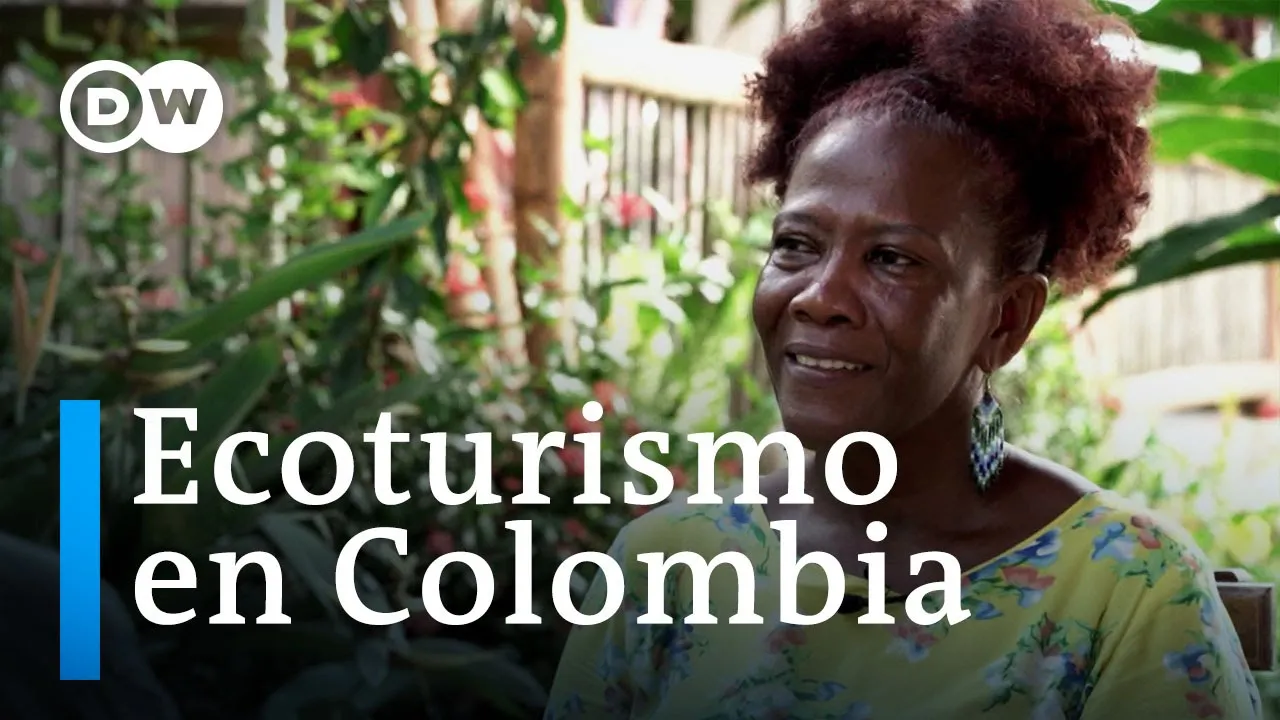
This section focuses on Josefina Klínger, an activist who dedicates her life to empowering Afrodescendant communities in Choco. It mentions her resistance against discrimination, lack of opportunities, poverty, and low self-esteem faced by black women in the region.
Josefina Klínger's Activism
- Josefina Klínger was born in Nuquí and has dedicated over 30 years of her life to empowering Afrodescendant communities.
- Black women in this region face gender discrimination, lack of opportunities, poverty, and low self-esteem.
Overcoming Challenges and Building Strength
This section highlights Josefina's resilience in defending her territory and community since childhood. It mentions her leadership qualities and how she faced challenges from adults who felt challenged by her stance.
Resilience and Self-Empowerment
- Josefina always defended what she considered just from a young age without fear or hesitation.
- She faced challenges from adults and teachers who felt challenged by her leadership qualities.
- Over the years, Josefina has overcome fears and built self-esteem, using her experiences to empower herself and others.
The Deep Connection to the Land
This section explores Josefina's deep connection to the land of Choco, specifically Nuquí. It mentions the ancestral practice of burying umbilical cords in specific places and how Josefina feels her connection extends throughout the entire Pacific region.
Connection to the Land
- Josefina believes her deep connection to Choco comes from having her umbilical cord buried there, symbolizing a bond with nature.
- She feels that her umbilical cord travels throughout the entire Pacific region, representing her love for the land and its people.
Passion for Empowerment and Love for Choco
This section emphasizes Josefina's passion for empowering communities and promoting Choco to the world. It mentions how she sacrifices personal income and leaves her children behind to pursue this mission.
Passion for Empowerment
- Josefina's passion for empowerment drives her to sacrifice personal income and leave her children behind in order to work towards creating change.
- She deeply loves Choco and wants the world to know about its beauty, challenges, and potential impact on individuals' lives.
Challenges Faced by Choco
This section discusses some of the challenges faced by Choco, including lack of infrastructure, historical neglect, and a mindset of scarcity. It highlights the need for recognition of Choco's biodiversity and development opportunities.
Challenges Faced by Choco
- The lack of infrastructure, including roads and permanent energy supply, is a major challenge for Choco.
- Historical neglect and a mindset of scarcity have affected the region's self-esteem and hindered its development.
- Recognizing Choco's biodiversity as an asset is crucial for its development and the well-being of its people.
Dreams for Development
This section explores the dreams and aspirations of the people in Choco regarding development, access to resources, and integration with the rest of the country.
Dreams for Development
- People in Choco desire better access to resources such as roads and energy to overcome disadvantages compared to other regions.
- The dream is for Choco to be integrated into national development plans while preserving its unique identity and natural wealth.
The transcript provided does not contain any timestamps beyond 6 minutes 48 seconds.
The Need for Change
In this section, the speaker discusses the need for change and the potential consequences of not addressing it. They mention the risk of sacrificing biodiversity for infrastructure development.
The Consequences of Neglecting Change
- The world is in need of change, but there is a danger of sacrificing biodiversity for infrastructure development.
- Roads, ports, and similar developments are being prioritized over preserving biodiversity.
- These developments are not endogenous and may not benefit the local communities as promised.
Mano Cambiada - A Concept of Exchange
This section introduces the concept of "Mano Cambiada," which means exchange or barter. It explains how this concept was practiced in Pacific communities where money was scarce.
Mano Cambiada - Exchange of Skills
- In Pacific communities where money was scarce, life revolved around solidarity and complementarity.
- Practices like "minga" involved collective efforts to solve problems.
- Bartering tangible products such as bananas, rice, and fish was common among community members.
- People with surplus would exchange their abundance with those who had less in a complementary manner.
- Mano Cambiada refers to an exchange of skills between peers based on gender roles (e.g., women assisting in childbirth, men engaging in agricultural practices).
The Impact of Money on Community Dynamics
This section explores how the introduction of money as a mediator disrupted traditional community dynamics based on solidarity. It highlights the negative effects caused by an excessive focus on money.
Disruption Caused by Money
- Money has become a mediator in relationships, replacing traditional forms of solidarity.
- This shift has led to a breakdown in social fabric and a loss of community cohesion.
- The overemphasis on money has made people feel poorer and less connected to each other.
- As money becomes the primary measure of wealth, solidarity diminishes, leading to true poverty.
Tourism as a Tool for Local Development
This section discusses how tourism can be used as a tool for local development. It highlights the unique assets of biodiversity and cultural heritage that can attract tourists seeking meaningful experiences.
Harnessing Tourism for Local Development
- The speaker believed that tourism could be a catalyst for local development due to the region's biodiversity and cultural richness.
- They aimed to promote a model of local development centered around tourism.
- By applying the concept of Mano Cambiada, tourism could stimulate economic growth through interconnected businesses rather than one-sided benefactor-beneficiary relationships.
- Tourists visiting one establishment would contribute to a chain of value by patronizing other businesses in the community.
Impact and Achievements of Mano Cambiada Organization
This section highlights the impact and achievements of the Mano Cambiada organization in promoting community-based tourism and driving local development.
Achievements of Mano Cambiada
- The Mano Cambiada organization has become a center for regional development, impacting over 10,000 people across eight different communities.
- More than 1,000 children have become ambassadors for community-based tourism through their efforts.
- The organization has secured resources exceeding three million dollars for projects such as the Nuquí airport and improvements to Utría National Park.
Transforming Termales Community Through Tourism
This section focuses on the transformation brought about by tourism in the Termales community. It showcases the positive changes and initiatives led by Josefina, the founder of Mano Cambiada.
The Transformation of Termales Community
- Termales is a community located in the south of Nuquí, known for its thermal waters.
- The community discovered the thermal springs and realized their potential as a tourist attraction.
- By protecting and developing the territory, they were able to create an entrepreneurial venture centered around tourism.
- They collaborated with the national government to improve infrastructure and enhance visitor experiences.
- The community now has its own initiative that generates income and resources while promoting sustainable practices.
Surfing and Education in Termales
This section explores how surfing has become an important aspect of education and connection for children and youth in Termales. It highlights how surfing goes beyond just a recreational activity.
Surfing as Education and Connection
- Surfing plays a significant role in connecting children and youth with nature.
- It provides opportunities for physical activity, education, and personal development.
- Members of the Termales community saw surfing as a way to engage children who previously lacked purpose or direction.
- Through surfing, children can participate in sports while also learning about environmental conservation.
Positive Ripple Effects of Initiatives
This section discusses how implementing one idea can lead to various positive ripple effects within a community. It emphasizes the transformative power of initiating change.
Positive Ripple Effects
- Implementing an idea sets off a chain reaction that allows communities to find their productive path and stimulate their economy.
- In addition to economic benefits, tourism initiatives can also shift behaviors from hunting wildlife to providing tourism services.
- Termales serves as a gateway for tourists entering the municipality, benefiting both visitors and locals alike.
- Surfing acts as a powerful connector, particularly for children and youth, fostering education and a sense of purpose.
These notes provide a comprehensive summary of the transcript, highlighting key points and insights from each section. The timestamps are used to link specific parts of the video to facilitate studying the transcript.
Building a Surfing Community
In this section, the speaker discusses the challenges faced in building a surfing community and the importance of overcoming personal limitations.
Overcoming Obstacles
- The biggest obstacles in building a surfing community are internal fears and societal invalidation.
- Growing up, they felt like third-class citizens due to racial and social discrimination.
- The challenge is to change one's own mindset and convince others to do the same.
- Initially, there was a desire for the whole community to believe and support their vision, but they realized that not everyone prioritizes tourism as an economic opportunity.
Changing Perceptions
- They were taught that they were not capable of being entrepreneurs or leaders in their own territory.
- The biggest challenge was overcoming their own limiting beliefs and convincing others to join them.
- It took time to find individuals who believed in their cause and were willing to support it.
Attracting the Right People
- The destination attracts individuals who are seeking something beyond material success.
- Those who come with respect for the environment and culture are welcomed.
- The focus is on authenticity and valuing local culture.
Empowering Women for Transformation
This section highlights the role of women in driving change within the community and emphasizes the importance of female empowerment.
Women as Agents of Change
- Women play a crucial role in transforming society by influencing perceptions and promoting positive change.
- Leadership is not imposed but assumed. If women don't step up, things won't happen.
Inspiring Others
- Rather than focusing solely on activism or demanding change, they inspire through example and subliminal messages.
- When women commit themselves to a cause, they bring more consistency, vision, and perseverance to processes.
Female Representation Matters
- The brand represents a black woman with nature because both the territory and processes are feminine.
- More women, especially young women, are embracing their identity and challenging societal expectations.
- The recognition received comes with both satisfaction and responsibility.
The transcript provided is a small portion of the video.
The Responsibility of Inspiring Others
In this section, Josefina discusses the responsibility she feels to inspire others and the impact her work has had on people across the country.
Inspiring People from Different Communities
- Josefina acknowledges that people's perception of her can change from being seen as a queen to a villain.
- She believes in the responsibility of doing her work well to inspire those who are watching her.
- Initially, she aimed to inspire people from her own community, but now she realizes that her influence extends beyond that.
- Awards have helped in reaching people from all over the country and even outside, who relate to her journey and find inspiration in it.
Connecting with Others on a Spiritual Level
- Josefina emphasizes that inspiration is not limited to a specific group but rather connects with individuals who resonate with her message.
- She sees humanity as one spirit, embodying different energies and performing various tasks.
- The spiritual aspect of her work is about synchronizing and connecting with beings who share similar values.
Embracing Responsibility
- Josefina acknowledges the magnitude of responsibility she carries.
- However, she does not make an effort to maintain certain postures or appearances for fame's sake.
- She remains authentic and true to herself, even if it means being without shoes during interviews or public appearances.
Envisioning the Future
In this section, Josefina shares her vision for Choco in 20 years and how she imagines herself in that future.
A Healed Community
- Josefina envisions Choco as a community that has healed from its past grievances.
- The mindset of complaint and victimization will be replaced by an understanding that they possess sufficient intelligence, soulfulness, and an extraordinary territory to rewrite their story.
- She believes that Choco has the potential to attract people from all over the world to experience and appreciate its environmental services, particularly its abundant water resources and rainforests.
Cultivating Culture and Biodiversity
- Josefina dreams of a future where the community recognizes that their greatest asset lies in their culture and biodiversity.
- She envisions a shared vision of development where they have overcome challenges such as poorly maintained streets, garbage issues, chaos, and lack of leadership.
- Support from external sources will come when they have collectively embraced this vision.
Josefina's Personal Future
In this section, Josefina reflects on how she imagines herself in 20 years living in Combi Lynchero.
A Place for Human Connection
- Josefina sees herself living in Combi Lynchero, a place where people come to be embraced by her and find solace.
- Her role is to provide support, embrace others, and help them rediscover their true selves.
The transcript provided does not include timestamps for every line. I have summarized the available sections based on the given timestamps.