Particularismo
Introduction to Theoretical Currents in Anthropology
Critique of Evolutionism
- The discussion focuses on the main theoretical currents within anthropology, particularly critiques of evolutionism as a cultural conception dominant from the mid-19th century until around 1920.
Historical Particularism
- A significant shift in thought is introduced with historical particularism, initiated by Franz Boas in the late 19th century, gaining prominence post-World War I.
Franz Boas and His Methodology
- Boas traveled extensively through Northwestern United States and Canada, studying various populations including the enigmatic Cuautl society, which challenged existing anthropological theories.
Cultural Differences Among Arctic Societies
- Contrary to expectations that Arctic societies would exhibit similar cultural responses due to harsh environmental conditions, Boas discovered notable differences among them.
Rejection of Materialist Influences on Culture
- Boas argued against the notion that culture is solely influenced by material needs or geographical conditions; instead, he posited that culture comprises unique codes and ideas specific to each society.
Concept of Historical Particularism
Unique Development of Cultures
- Historical particularism emphasizes that each society develops its own distinct culture based on idiosyncratic traits shaped throughout its history.
Etnocentrism vs. Cultural Relativism
- Boas rejected ethnocentric comparisons between cultures; he asserted no culture could be deemed more evolved than another, emphasizing their equal complexity and validity.
Implications for Anthropology
Incommensurability of Cultures
- He introduced the idea that cultures are inconmensurable; there are no universal metrics for comparing them meaningfully.
Impact on Nazi Ideology
- Boas's relativistic views were at odds with Nazi ideology; his works were among those burned during Hitler's regime due to their challenge to notions of racial superiority.
Core Principles Established by Boas
Cultural Relativism as a Fundamental Principle
- The principle of cultural relativism became central in anthropology under Boas’s influence—cultures should be respected and studied without comparative judgments against others.
Ethnographic Methodology
- Emphasizing direct engagement with communities, Boas collected narratives and myths from informants to reconstruct cultural understandings accurately.
Cuautl Society Practices
Totem Poles as Cultural Symbols
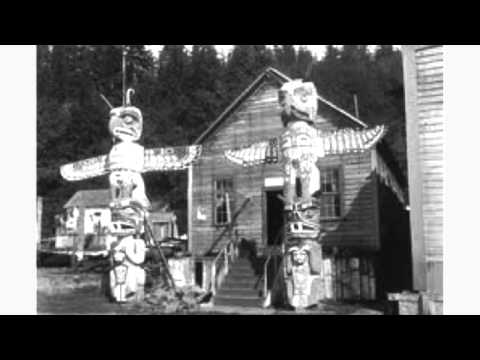
- The Cuautl created large totem poles representing their identity and ancestral lineage, showcasing their complex social structures through art.
Potlach Ceremony
- An annual ceremony called potlach involved accumulating goods only to destroy them ceremonially—this practice prevented individual accumulation while enhancing communal prestige.
Conclusion on Franz Boas's Contributions
Importance of Narrative Collection
- Through collecting life stories and legends from key informants (often elders), Boas aimed to preserve the richness of cultures like that of the Cuautl.
Summary Reflection
- Key takeaways include: critique against ethnocentrism, rejection of evolutionary comparisons between cultures, emphasis on ethnographic methods for understanding societies directly.
Turn any video into a summary like this
YouTube links, meetings, lectures. With transcripts, search, and chat.