Mitosis Celular
Mitosis Cellular: Understanding Cell Division
Introduction to Mitosis
- The concept of cellular mitosis is introduced, emphasizing its significance in the life cycle of a cell.
- Mitosis is described as the process through which a parent cell divides to form two identical daughter cells, ensuring genetic material is accurately replicated.
Types of Cells Involved
- The discussion highlights somatic cells, which encompass all body cells except for reproductive cells (gametes).
Phases Leading to Mitosis
- Interphase is identified as a crucial preparatory phase where DNA replication occurs, ensuring that genetic information is duplicated.
- Interphase consists of three stages:
- G1 Phase: Organelles grow and duplicate.
- S Phase: DNA replication takes place.
- G2 Phase: Genetic material condenses and prepares for division.
The Process of Mitosis
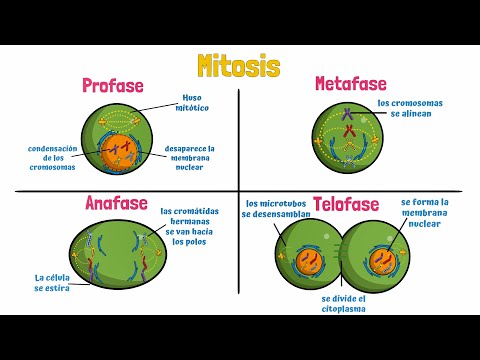
- Mitosis itself unfolds in four key phases:
- Prophase: Chromatin condenses into chromosomes; the nuclear membrane disintegrates.
- Metaphase: Chromosomes align at the cell's equator due to spindle fibers from centrosomes.
Final Stages of Mitosis
- During Anaphase, spindle fibers pull sister chromatids apart towards opposite poles of the cell.
- In Telophase, nuclear membranes reform around each set of chromosomes, and cytokinesis begins with plasma membrane division.
Genetic Consistency Post-Mitosis