Christina Costa: How gratitude rewires your brain | TED
Introduction to the Finger-Kissing Ritual
The speaker introduces a ritual where students would touch their fingers to their mouths and then to the top of their heads, which was seen as cute and enjoyable.
Finger-Kissing Ritual in the Classroom
- The speaker brought the finger-kissing ritual into her classroom, which turned out to be a fun and engaging activity for her students.
- The ritual involved students kissing their brains as a gesture of gratitude for their efforts in class.
Teaching Psychology and Research Focus
The speaker discusses her background in teaching psychology and her research focus on positive psychology, which explores factors that contribute to individual and community well-being.
Teaching Psychology at Different Levels
- The speaker teaches psychology to both university students and high school students.
- She expresses her love for teaching psychology, with a particular interest in the brain.
Adapting the Finger-Kissing Ritual
The speaker explains how she adapted the finger-kissing ritual for adult students after realizing it might be too much to ask them to kiss their brains.
Three Years Later - Remembering the Fun Phrase
- After three years, the speaker recalls the fun phrase from the finger-kissing ritual.
- She reflects on how she initially hesitated to ask adult students to kiss their brains.
Personal Health Challenges
The speaker shares her personal health challenges, including migraines, numbness in her face, blurred vision, dizziness, and subsequent medical examinations.
Experiencing Migraines and Seeking Medical Help
- The speaker developed migraines that caused numbness in her face and blurred vision.
- She sought medical help and underwent various examinations, including an MRI.
Diagnosis and Facing the Reality
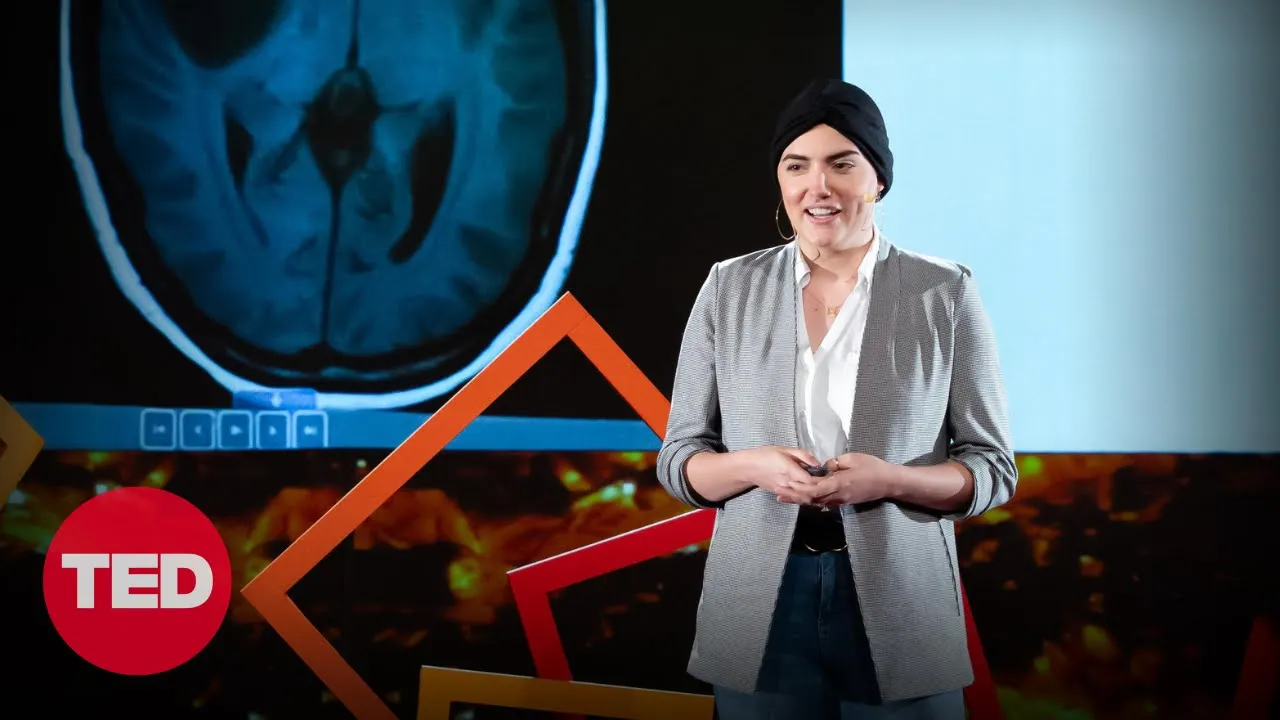
The speaker receives a diagnosis of having a large mass in the right hemisphere of her brain, leading to fear and emotional turmoil.
Receiving the Diagnosis
- The speaker's doctor informs her about a significant mass in her brain.
- She sees the image of her brain for the first time, which triggers intense fear.
Kissing Her Brain as a Mantra
The speaker adopts kissing her brain as a mantra and practices it daily before and after surgery.
Embracing Kissing Her Brain
- The speaker starts kissing her brain every day as a mantra.
- She continues this practice even after undergoing surgery.
Diagnosis Confirmation
Two weeks after surgery, pathology reports confirm that the speaker has anaplastic astrocytoma.
Pathology Reports Confirming Diagnosis
- After two weeks, pathology reports arrive, confirming the diagnosis of anaplastic astrocytoma.
Reflection on Difficulties Faced
The speaker reflects on the challenging weeks following her diagnosis and shares some of her thoughts through Instagram posts.
Expressing Resilience Through Writing
- The speaker writes about continuing to fight, love, live, and embrace life despite the difficulties she faces.
- She emphasizes resilience and self-reflection in coping with her experience.
Narrative of Battle and Uncomfortable Labels
The speaker discusses how she feels uncomfortable with being labeled as a warrior or fighter due to her diagnosis. She also expresses dissatisfaction with the narrative of battling cancer.
Uncomfortable Labels and Narrative
- The speaker feels uneasy being labeled as a warrior or fighter due to her diagnosis.
- She dislikes the idea of framing her experience as a battle against her own body.
Embracing Well-being Practices
The speaker shares her preference for focusing on well-being practices she has learned through her studies, rather than adopting a battle mentality.
Prioritizing Well-being and Resilience
- The speaker mentions studying resilience and well-being in her field of psychology.
- She emphasizes the importance of incorporating well-being practices into her journey.
Professional Background and Reactions
The speaker discusses her professional background in psychiatry, neuroscience, and psychology, as well as reactions she receives when sharing this information.
Professional Background and Reactions
- The speaker holds expertise in psychiatry, neuroscience, and psychology.
- When sharing her area of study, some people find it irrelevant or respond with irony.
Reading Stories of Resilience
The speaker reflects on reading stories and studies about resilience but expresses frustration with the dominant narrative surrounding cancer battles.
Frustration with Dominant Narratives
- The speaker acknowledges the existence of hashtags related to cancer battles but struggles to find a hashtag that aligns with her own experience.
- She dislikes the idea of imagining chemotherapy as an army or engaging in war-like imagery.
Turn any video into a summary like this
YouTube links, meetings, lectures. With transcripts, search, and chat.