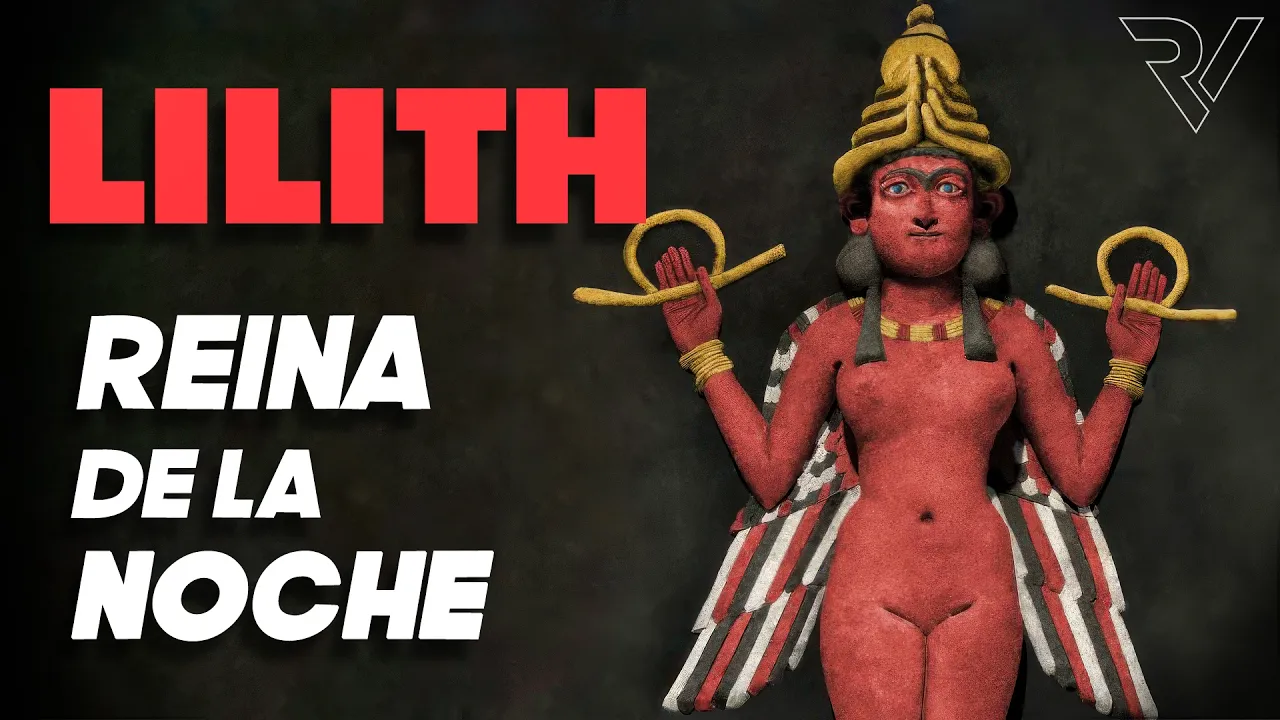
¿Quien Es Lilith La Primera Mujer?
Revealing the Veil: The Legend of Lilith
This section delves into the ancient Mesopotamian entity, Lilit, adopted by Semitic peoples and transformed into a notorious demon in Hebrew tradition. The evolution of Lilit across different cultural and religious narratives is explored.
The Origin and Evolution of Lilit
- Lilit is described as the original woman created before Eve, associated with terrifying legends like being the queen of demons or a succubus.
- The name "Lilit" means "belonging to the night," originating from the Akkadian word "lilitu," signifying a female demon or spirit linked to darkness and esoteric interpretations.
- The legend of Lilit originates in ancient Mesopotamia during the era of early written records, featuring in Sumerian myths such as the descent of Inana, a foundational story in Mesopotamian mythology.
- In the mythological narrative, Inana descends to the underworld to confront her sister Ereshkigal, symbolizing a hero's journey into the inner self for profound understanding and transformation.
Symbolism and Significance of Lilit
- The tale reflects a classic heroic archetype where descent into darkness leads to valuable self-discovery and renewal, portraying death as purification and a path to new life.
- The character of the Dark Maiden serves as a guardian at the threshold between worlds, representing detachment from earthly power for spiritual growth.
- In encountering seven gates in her descent, Inana sheds layers symbolizing aspects she must relinquish before facing her sister Ereshkigal fully.
The Influence of Lilit in Mythology
This section explores how Lilit's character appears in various mythologies beyond Mesopotamia, shaping narratives across cultures and evolving from an esoteric figure to a nocturnal demon.
Mythological Adaptations
- Lilit's role as a guardian at the underworld's threshold signifies initiation into deeper truths through shedding external identities.
- As depicted in Gilgamesh's epic tablet 12, scholars debate whether Lilit is portrayed as a demonic entity or dark goddess amidst magical tales set in Mesopotamia.
Lilit: From Esoteric Figure to Demon
This section traces how interpretations of Lilit transitioned from an esoteric symbol to a nocturnal demon across Assyrian, Akkadian, Babylonian cultures influenced by Sumerian myths.
Cultural Transformation
New Section
This section delves into the prophecy regarding the destruction of nations, focusing on the concept of Lilit and its various interpretations in different translations.
The Significance of Lilit
- Lilit is described in various translations as a night demon, night bird, owl, or lamia.
- In folklore, Lilit is depicted as a seductive being who kidnaps children for consumption.
- References in Babylonian Talmud highlight the need to protect children from Lilit's influence.
- Midrash suggests Adam had a first wife before Eve, identified as Lilit, known for her rebellion against God's design.
- The connection between Lilit and creation narrative evolves over time in Jewish mythology.
Exploring the Legend of Lilit
This section delves into the detailed legend of Lilit found in the Alphabet of Ben-Sira and its implications on her characterization.
Evolution of Lilit's Story
- The Alphabet of Ben-Sira portrays Lilit as Adam's equal but conflicts arise due to her refusal to submit during intimacy.
- After leaving Adam, Lilit gains powers by invoking God's forbidden name and transforms into a nocturnal creature.
- Adán seeks help from angels to bring back Lilit but she refuses, claiming her purpose is to harm infants.
- Despite threats from angels, Lilit spares her life by promising not to harm children with amulets bearing angelic names.
Lilit in Medieval Folklore
This part explores how medieval texts like the Alphabet of Ben-Sira shaped perceptions of Lilith as a rebellious figure associated with infant mortality.
Impact on Lilith's Legacy
- The story establishes Lilith as a rebellious entity resisting authority and linked with infant mortality.
- Lilith becomes synonymous with defiance against patriarchy, sexual submission rejection, and motherhood challenges.
Lilith: The Dark Feminine Archetype
The discussion explores the archetype of Lilith, often associated with a distorted aspect of the divine feminine separated from the Sacred Source. Lilith embodies cosmic power as a counterpart to Shekinah, representing an imbalanced or opposing aspect of creation.
Lilith's Role in Kabbalistic Texts
- As humanity approached chaos, the masculine aspect of divinity distanced from Shekinah towards Lilith. Mystical comments suggested that the spiritual sexual bond with Lilith would only end with the arrival of the Messiah and the repair of the world's division.
Lilith's Description and Symbolism
- Described as one of the seven traditional demons, Lilith is seen as Samael's female version and an adversary to Venus' Netzach, symbolizing the negative counterpart to feelings, love, harmony, and beauty.
Lilith's Archetypal Significance
- Despite evolving interpretations across millennia and cultures, recurring elements in Mesopotamian and Jewish myths depict Lilith embodying femininity, darkness, and sexuality. She is portrayed as a beautiful woman with a long serpent tail.
Psychological Interpretation of Lilith
- Viewed as preceding Eve and symbolizing repressed dark aspects of consciousness, Lilith represents the feminine shadow. Being linked to Samael's female form suggests she embodies characteristics classified as feminine within deeply buried psychic material.
Taboos Associated with Lilith
- Lilit symbolizes nature's dark side – wildness, non-domesticity, often perceived as evil due to societal taboos on sexual freedom challenging individual consciousness. This portrayal reflects suppressed psychic content hidden in shadows.
Conclusion