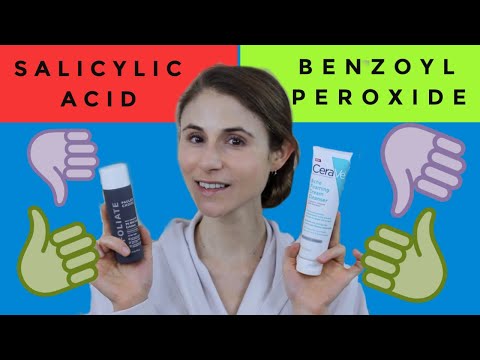
SALICYLIC ACID VERSUS BENZOYL PEROXIDE| DR DRAY
Salicylic Acid vs Benzoyl Peroxide: Which is Better for Acne?
In this video, the speaker clarifies the differences between salicylic acid and benzoyl peroxide, two active ingredients that are FDA approved for treating acne. The speaker also discusses how these ingredients can be used off-label for other purposes.
Understanding Acne Pathogenesis
- Acne pathogenesis has four components: inflammation in the skin, abnormal skin cell proliferation and stickiness, abundance of bacteria called Cutibacterium acnes (formerly Propionibacterium acnes), and sebum oil production.
- Inflammation is one of the first offenders in the skin before anything else shows up on the scene.
- Skin cells lining the pore proliferate at an abnormal rate and are unnecessarily sticky so they plug up the pore leading to blackheads and whiteheads.
- Cutibacterium acnes lives in the pore and leads to inflammation in the pore driving acne.
- Seborrhea or increased oil production contributes to acne pathogenesis.
Salicylic Acid
- Salicylic acid is a carboxylic acid that loves oil and grease. It concentrates on oily surfaces of our skin like our forehead, nose, and within our pores where it needs to go to help address acne pathogenesis.
- Its key strength is decreasing corneocyte cohesion which helps unstick skin cells within pores preventing them from becoming clogged. This makes it a great treatment for blackheads, whiteheads as well as acne.
- It's less aggressive at exfoliating the rest of our skin structure and tends to sting less than some other exfoliants. It's also less irritating and slightly easier to tolerate compared to many other acne medications.
Benzoyl Peroxide
- Benzoyl peroxide is an oxidizing agent that kills bacteria on the surface of the skin as well as within pores.
- It's effective against Cutibacterium acnes, which contributes to acne pathogenesis.
- It can be drying and irritating, especially in higher concentrations.
Using Salicylic Acid and Benzoyl Peroxide Together
- Combining salicylic acid and benzoyl peroxide can be a good strategy for treating acne because they work in different ways.
- Salicylic acid helps unstick skin cells within pores preventing them from becoming clogged while benzoyl peroxide kills bacteria on the surface of the skin as well as within pores.
Off-label Uses for Salicylic Acid and Benzoyl Peroxide
- Salicylic acid can be used off-label for conditions such as seborrheic keratosis, warts, psoriasis, dandruff, and calluses.
- Benzoyl peroxide can be used off-label for folliculitis (inflammation of hair follicles), hidradenitis suppurativa (chronic inflammatory condition affecting sweat glands), and rosacea.
Salicylic Acid vs Benzoyl Peroxide for Acne Treatment
In this section, the speaker discusses the differences between salicylic acid and benzoyl peroxide in treating acne.
Salicylic Acid
- Salicylic acid is a comedolytic ingredient that treats the plugged-up pore part of acne.
- It exerts long-term control against blackheads and whiteheads.
- It has a preferential localization to the core of pores and stays there for a prolonged period of time without affecting other structures of the skin.
- It has an anti-inflammatory effect but does not offer any protection against ultraviolet radiation or UVB.
Benzoyl Peroxide
- Benzoyl peroxide is an antibacterial ingredient that goes to work at killing Propionibacterium acnes (P. acnes), reducing its burden on the skin.
- Unlike other antibiotics, no bacterial resistance has been demonstrated to benzoyl peroxide to date.
- A daily use of 10% benzoyl peroxide-containing product reduces P. acnes within the pore by 98%.
- It is much more irritating than salicylic acid and can bleach fabric.
Which One Is Better?
- It's not a simple answer as both ingredients have their strengths and weaknesses in treating acne.
- Salicylic acid does a better job in treating plugged-up pores while benzoyl peroxide is much better at tackling P. acnes component of acne.
- Benzoyl peroxide is superior in treating inflammatory types of acne while salicylic acid works well for many patients who cannot tolerate benzoyl peroxide's irritation.
- For some patients, using both ingredients together or alternating them may be beneficial.
Salicylic Acid vs Benzoyl Peroxide
In this section, the speaker discusses the differences between salicylic acid and benzoyl peroxide.
Salicylic Acid Benefits
- Salicylic acid is effective in breaking up blackheads and whiteheads.
- It treats post-inflammatory hyperpigmentation, brightens skin, and reduces the risk of post-inflammatory hyperpigmentation.
- It normalizes skin cell biology and turnover to a certain extent, exfoliates sun-damaged skin cells, and has UVB protective ability.
- It dissolves scaly scalp skin cells and is a great treatment for dandruff.
- It helps reduce oil production to a certain extent and is helpful for improving seborrheic dermatitis on the face.
Benzoyl Peroxide Benefits
- Benzoyl peroxide is an antibacterial that bacteria do not become resistant to.
- It works well for folliculitis (itchy bumps in hair follicles), hidradenitis suppurativa (painful bumps around hair follicles), and other diseases with a bacterial component.
Hidradenitis Suppurativa
In this section, the speaker discusses hidradenitis suppurativa.
Hidradenitis Suppurativa Treatment
- Benzoyl peroxide can help control bacterial burden on the surface of the skin and reduce inflammation that drives hidradenitis suppurativa.
Benzoyl Peroxide and Salicylic Acid: What's the Difference?
In this video, Dr. Dray explains the differences between benzoyl peroxide and salicylic acid, two common ingredients used in skincare products to treat acne and other skin conditions.
Benzoyl Peroxide
- Benzoyl peroxide helps to normalize bacterial burden on the skin that contributes to acne.
- It is also effective for treating ingrown hairs by reducing inflammation, bacteria, and exfoliating the skin.
- Lathering benzoyl peroxide onto the beard area before shaving can help control ingrown hairs.
- Benzoyl peroxide is also helpful for treating a rare skin disease called progressive macular hypo melanocytes caused by kati bacterium acnes.
Salicylic Acid
- Salicylic acid is a beta-hydroxy acid that works by exfoliating dead skin cells and unclogging pores.
- It is particularly effective for treating blackheads and whiteheads.
- However, it may not be as effective as benzoyl peroxide for treating inflammatory acne.
Conclusion
- The choice between benzoyl peroxide and salicylic acid depends on the individual's specific skin condition and needs.
- Consultation with a healthcare provider is recommended to determine which ingredient or combination of ingredients would be most effective.
Turn any video into a summary like this
YouTube links, meetings, lectures. With transcripts, search, and chat.