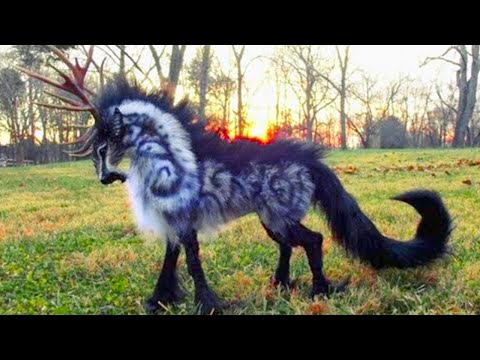
15 Wild Animals That Have Rarely Ever Been Seen
Rare Animals You've Probably Never Seen
In this video, the presenter talks about some of the rarest animals in the world that most people have never seen. The video covers 15 different animals and provides interesting facts about each one.
Shoe Bill Stork
- The shoe bill stork is a rarely seen animal that lives in eastern Africa.
- It can grow up to five feet tall with wings over eight feet wide.
- One of the most notable things about the shoe bill is its ability to stand perfectly still for hours on end while holding its bill against its neck, exposing its golden eyes.
- Very few people have seen a shoe bill in the wild, but those who have will tell you it's definitely not the kind of muppet you'd want to show your kids.
Mystery Creature
- A photo taken by Louise Jenkins is literally the only piece of evidence that such a creature exists.
- Louise claims she saw it during an early morning stroll in an Irish forest and was truly mind-blown.
- She posted this image to Facebook asking if anybody knew what it was, but she was accused of faking the whole thing.
- Louise has been obsessively trying to spot the creature again going to the same spot at the same time every day for five years now but has never spotted it since.
Pangolin
- The pangolin is considered to be the world's most trafficked mammal with poachers killing tens of thousands every single year.
- Their meat is considered a delicacy for ultra wealthy citizens in China and Vietnam while their scales are frequently used in traditional Chinese medicine.
- Every species of pangolin is considered to be either critically endangered or vulnerable, perhaps explaining why it's so hard to see one in its natural habitat.
- These peaceful and shy animals are dwindling in population year on year.
Seneca White Deer
- The seneca white deer has enough conspiracy theories surrounding it that nobody can fully agree about where these beautiful animals came from.
- While the white deer is hard to find in the wild, they've been around since at least 1941 when they began thriving inside of a fenced-off area of land designated for the US army.
- They have some slightly different genes to regular deer.
The Elephant Shrew and Other Unique Animals
This section discusses the elephant shrew, a small mammal that is not related to true shrews but rather to elephants. It also talks about the animal's ability to survive in various habitats and its speed. Additionally, it mentions other unique animals such as the northern hairy-nosed wombat, yang's finless porpoise, borneo pygmy elephant, and black spotted couscous.
The Elephant Shrew
- The elephant shrew is a small mammal that is not related to true shrews but rather to elephants.
- Despite its small size, it can survive in various habitats and is one of the fastest small mammals on the planet.
Other Unique Animals
Northern Hairy-Nosed Wombat
- The northern hairy-nosed wombat is a critically endangered species with a stocky body and short legs.
- Due to its burrowing nature, it is rare to see outside of zoos or animal facilities.
Yang's Finless Porpoise
- The Yang's finless porpoise has a charming smile but is facing extinction due to habitat loss and fragmentation.
- There are only around 1012 finless porpoises in the world.
Borneo Pygmy Elephant
- The Borneo pygmy elephant is considered the smallest elephant in the world and descended from domesticated elephants.
- It is an endangered species with very few living in zoos around the world.
Black Spotted Couscous
- The black spotted couscous is a little-known mammal that looks like a possum and has unusual features such as vertically split pupils and arced front claws.
- It is rare to find these animals in the wild.
Endangered Animals You've Never Heard Of
The video discusses some of the rarest and most endangered animals on the planet, including their unique characteristics, habitats, and threats to their survival.
Vanishing Vaquita
- The vaquita is a small porpoise that lives in the Gulf of California.
- There are only about 10 vaquitas left in the wild due to illegal fishing practices.
- Conservation efforts are underway to save the species, but it may be too late.
Saola
- The saola is a type of antelope found in Vietnam and Laos.
- It was discovered in 1992 and is one of the rarest large mammals on Earth.
- Habitat loss and hunting pose significant threats to its survival.
Pangolin
- The pangolin is a scaly anteater found in Asia and Africa.
- It's one of the most trafficked animals in the world due to demand for its meat and scales.
- Conservation efforts are underway to protect pangolins from poaching.
Axolotl
- The axolotl is a type of salamander found only in Mexico City's canals.
- It has remarkable regenerative abilities but is critically endangered due to habitat loss and pollution.
Purple Frog
- The purple frog is a burrowing species found only in India.
- It was discovered in 2003 and is closely related to another family that exists on the Seychelles Islands.
- Habitat loss and climate change pose significant threats to its survival.
Hooded Grebe
- The hooded grebe is a bird found in southern Argentina.
- It's critically endangered due to the devastating impact of climate change on its natural habitat.
- Conservation efforts have stabilized its population, but it remains at risk.
Philippine Eagle
- The Philippine eagle is the biggest bird in the world in terms of length and wingspan.
- Deforestation has led to a sharp decline in its population, making it all but impossible to spot one in the wild.
Southern Darwin's Frog
- The southern Darwin's frog is a unique frog found in South America.
- Its unique camouflage tactics make it difficult to spot, but habitat loss caused by deforestation and climate change pose significant threats to its survival.
Pygmy Three-Toed Sloth
- The pygmy three-toed sloth is an endearing animal found only on a small island off Panama's coast.
- There are no bullet points with timestamps associated with this section.
Overall, this video highlights some of the rarest and most endangered animals on Earth, discussing their unique characteristics, habitats, and threats to their survival. Conservation efforts are underway for many of these species, but it may be too late for some.
Thank you for the detailed instructions. I will follow them to create a clear and concise markdown file that makes use of timestamps when available.
Sloths in Panama
In this section, we learn about sloths living off the coast of Panama.
Sloth Habitat
- Sloths live off the coast of Panama.
- They are arboreal animals and spend most of their time in trees.
- They have long arms and legs that allow them to move easily through the trees.
- Sloths are slow-moving animals and can take up to a month to digest a single meal.
Threats to Sloth Population
- Deforestation is one of the biggest threats to sloth populations.
- The loss of habitat due to deforestation forces sloths into urban areas where they are at risk from cars and dogs.
- Poaching is another threat as some people hunt sloths for their meat or as pets.
Conservation Efforts
- There are several conservation efforts underway to protect sloth populations.
- One such effort involves planting trees in areas where deforestation has occurred.
- Another effort involves rescuing injured or orphaned sloths and rehabilitating them before releasing them back into the wild.
Conclusion
Sloths living off the coast of Panama face many threats, including deforestation and poaching. However, there are ongoing conservation efforts aimed at protecting these unique animals.