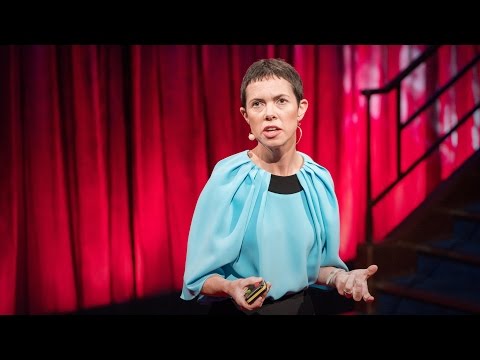
Social Services Are Broken. How We Can Fix Them | Hilary Cottam | TED.com
The Power of Relationships in Solving Social Problems
Introduction to Ella's Story
- The speaker introduces the theme of relationships as a solution to complex social issues, including poverty and violence.
- Ella is introduced as a representative case living in a deteriorating environment with significant family turmoil.
Ella's Environment and Challenges
- Ella has endured crises for 40 years, facing abusive relationships and the loss of one child to social services.
- Her remaining children are not in education and suffer from various problems, perpetuating a cycle similar to her mother's life.
Systemic Failures
- Despite 73 available services for families like Ella's, none effectively address their underlying issues; interventions lack coordination.
- The government estimates that managing such families costs £250,000 annually without yielding meaningful change.
Ineffective Interventions
- A chart illustrates decades of intervention without progress; these efforts merely contain rather than resolve issues.
- The speaker emphasizes that financial resources do not reach families meaningfully but instead support an ineffective system.
Frontline Workers' Struggles
- Social workers like Tom spend most of their time on administrative tasks rather than engaging with families directly.
- This focus on data collection hinders genuine relationship-building between professionals and those they aim to help.
A Shift in Approach
- Leaders in Ella’s city decide to reverse the ratio of time spent by professionals: 80% with families, 20% on administration.
- Families are empowered to choose who will assist them, fostering a more collaborative approach.
Selection Process for Support Professionals
- During interviews, mothers prioritize human qualities over technical expertise when selecting professionals for support.
The Power of Relationships in Social Change
Transformative Experiences of Families
- New teams and families received a portion of the former budget, allowing them to spend it freely. One family chose to dine at McDonald's, fostering communication and connection.
- Another family utilized the funds to renovate their home, while a mother invested in starting a social enterprise, leading to new relationships between team members and workers.
- Ella's journey illustrates significant progress: she completed an IT training course, secured her first job, and her children returned to school. Previously wary neighbors have now formed friendships with her family.
The Importance of Relationships
- The speaker emphasizes that relationships are crucial for addressing complex social issues. Current political and welfare systems often neglect this aspect.
- Authentic human connections foster happiness and support personal growth; however, these bonds are often overlooked by institutions designed around bureaucratic models.
Historical Context of Welfare Systems
- The welfare model established by William Beveridge prioritized impersonal systems over emotional connections, shaping modern state responses to social issues.
- The Beveridge Report had a profound impact globally upon its release, influencing the design of welfare states worldwide.
Loneliness as a Modern Epidemic
- Despite past successes in public health and education due to welfare institutions, they also contributed to contemporary challenges like loneliness.
- Statistics reveal alarming rates of isolation among older adults; one-third do not interact with anyone weekly.
Addressing Loneliness through Community Initiatives
- Traditional bureaucratic solutions fail to tackle loneliness effectively; it requires relational approaches instead.
- Engaging with older individuals revealed their desire for practical help (e.g., changing light bulbs), but also for companionship and fun activities.
Innovative Solutions: Circle Initiative
- A service called "Circle" was created offering on-demand support via a toll-free number for various needs while promoting social engagement through events.
- Over time, friendships developed within Circle members began replacing the initial focus on practical assistance.
Real-Life Impact: Belinda's Story
Understanding the Shift to Relational Welfare
The Role of Relationships in Social Solutions
- Natural friendships are emerging as a replacement for expensive services, emphasizing the importance of relationships in addressing social problems.
- Three converging factors enable a focus on relationships: changing nature of problems, high costs of traditional methods, and advancements in technology.
- Technology facilitates scalable solutions; for instance, Circle's system allows local teams to support up to 1,000 members effectively.
Inverting Traditional Models
- Traditional Beveridge models rely on institutions with limited resources that manage access anonymously, often spending significant resources on exclusion.
- Circle and similar relational services invert this logic by promoting more relationships as a means to strengthen solutions.
Addressing Unemployment through Relationships
- Current welfare systems aim to prepare individuals for work but often fail; attempts to make these systems more efficient have led to increased transactional approaches.
- Most job opportunities today arise from word-of-mouth rather than advertisements; social networks play a crucial role in job discovery.
- Individuals most isolated from rich social networks are those who need them the most for finding employment.
Designing New Systems with Community Focus
- A new service was designed around fostering connections between people both in and out of work, leading to better outcomes compared to traditional models.
- Initial results show that this relational approach outperformed existing services by three times at a lower cost while focusing on face-to-face interactions.
Revisiting Beveridge's Insights
- Beveridge acknowledged his mistake of excluding community aspects from welfare design in his later report, which is less recognized than his earlier works.
- There is a pressing need today to integrate communities into the design of new systems and services through "Relational Welfare."
Turn any video into a summary like this
YouTube links, meetings, lectures. With transcripts, search, and chat.