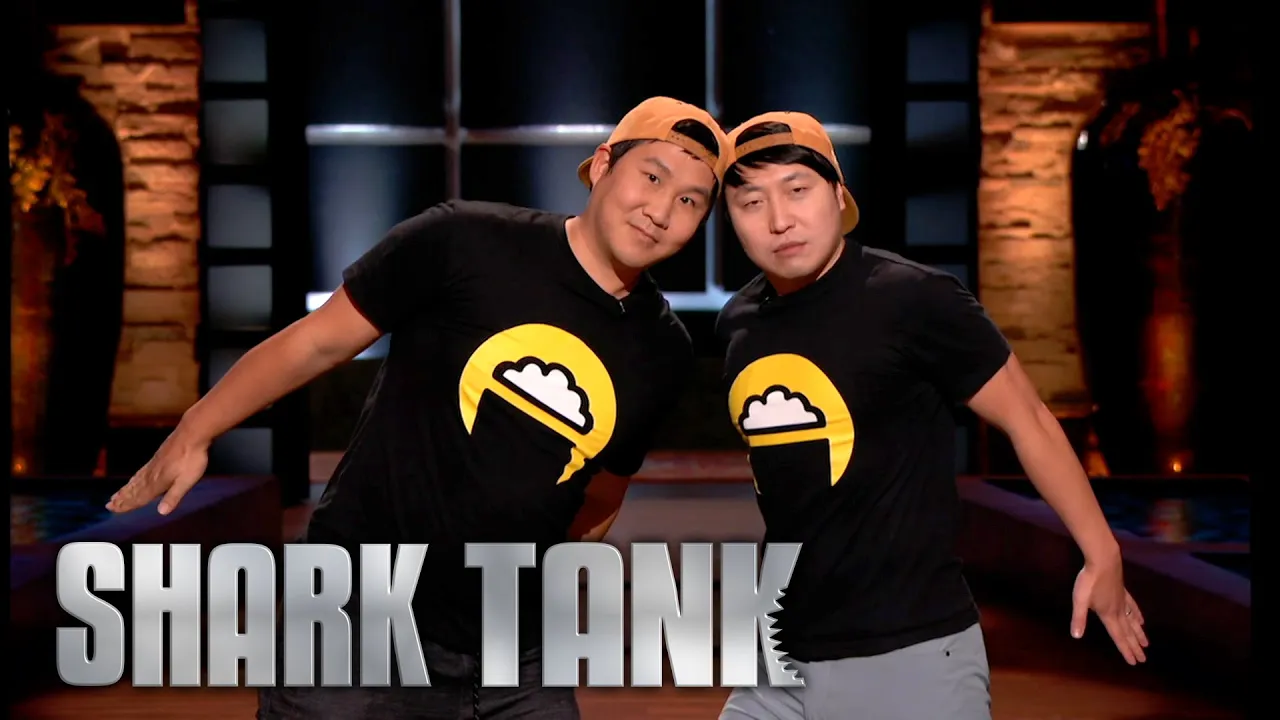
Shark Tank US | CUPBOP Are Asking For $1M From The Sharks
Introduction to Kabob Cup
The entrepreneurs introduce themselves as Doc and John, the creators of Kabob Cup, a convenient version of Korean barbecue in a cup. They express their enthusiasm for bringing Asian cuisine to the Quick Service restaurant industry.
Introducing Kabob Cup
- Doc and John present Kabob Cup as a convenient version of Korean barbecue.
- They highlight the growing popularity of Korean culture worldwide and believe there is room for more Asian concepts in the Quick Service restaurant industry.
Pitching their Offer
The entrepreneurs make their offer to the Sharks, seeking a $1 million investment for 3% equity in their company.
The Offer
- Doc and John propose an offer of $1 million for 3% equity in Kabob Cup.
- They express confidence in their product's success by stating that they are "swimming in cash" from sales.
Product Description and Feedback
The entrepreneurs describe the contents of Kabob Cup and receive positive feedback from the Sharks regarding its taste.
Product Description
- Kabob Cup contains spicy beef, hot spicy pork, sweet potato noodles, and vegetables.
- Customers can choose their preferred spice level on a scale from one to ten.
Positive Feedback
- The Sharks praise the taste of Kabob Cup, with Kevin calling it one of the best food concepts he has tried on Shark Tank.
- Barbara expresses her approval despite not being a fan of spicy food.
Sales Figures and Growth
The entrepreneurs share impressive sales figures and discuss their growth trajectory over the years.
Sales Figures
- In the trailing 12 months, Kabob Cup has achieved system-wide sales of $18.7 million.
- They attribute their success to a combination of food trucks, brick-and-mortar stores, and delivery services.
Growth Trajectory
- Over the past five years, Kabob Cup's sales have steadily increased from $7 million to $10.5 million.
- Despite the challenges posed by COVID-19, they experienced a 9% increase in same-store sales during the pandemic.
Background and Partnership
The entrepreneurs discuss their backgrounds and partnership in building Kabob Cup.
Doc's Background
- Doc previously worked as an investor at a major hedge fund before venturing into the food industry.
- John was his first customer when he operated a food truck in Salt Lake City.
Partnership
- Doc reached out to John to become his partner in Kabob Cup, emphasizing that they now own half of the business.
- They mention raising money through organic cash flow rather than external investments.
Customer Experience and Future Plans
The entrepreneurs emphasize the importance of providing a positive customer experience and share their aspirations for expanding Kabob Cup as a Korean national brand.
Customer Experience
- The entrepreneurs highlight their focus on creating a fun and energetic atmosphere for customers, including high-fives, hugs, and dancing.
- They aim to offer more than just food but also an enjoyable experience for customers.
Future Plans
- Despite not having raised money previously, they express their desire to partner with the Sharks to expand Kabob Cup into 2,000 stores.
- Their goal is to become the first Korean national brand represented on Shark Tank.
Personal Stories
The entrepreneurs share personal stories about their journeys from Korea to the United States and their motivations for success.
Doc's Story
- Doc recounts his experience of being labeled a failure in Korea but finding opportunities in the United States.
- He expresses his desire to make Kabob Cup a symbol of Korean pride and success.
John's Story
- John shares his family's decision to leave him and his brother in the United States during a vacation, hoping for a better future.
- They chose Utah as it was perceived as a safe and religious state.
Conclusion
The entrepreneurs behind Kabob Cup present their convenient version of Korean barbecue in a cup. They share impressive sales figures, positive feedback on taste, and aspirations to expand Kabob Cup into a national brand. Their personal stories add depth to their entrepreneurial journey.
Understanding the Sacrifices of Parents
The speaker reflects on how having children has helped them understand their own parents' sacrifices for the American dream.
Reflection on Parental Sacrifices
- Having children has allowed the speaker to better comprehend the sacrifices their parents made for the American dream.
- The love they have for their own children has given them insight into their parents' perspective.
- The speaker acknowledges that they have two kids, while the other person in the conversation has five kids, which may explain why they work so hard.
- The speaker's spouse has been supportive throughout their journey.
Justifying Sacrifice with Success
The speaker shares a personal story about how they felt compelled to be successful in order to justify their father's sacrifice. They also express uncertainty about the purpose of a three percent stake in exchange for one million dollars.
Personal Story and Purpose
- The speaker's father gave up everything to come to America, and as a result, they felt pressure to succeed and validate that sacrifice.
- They find it difficult to understand the purpose of giving away three percent equity for one million dollars at a valuation of 30 million dollars.
Growth Rate and Offer Consideration
The speaker discusses their company's growth rate and expresses interest in making an offer based on their positive impression of the business model, mission, energy, food, and cash flow.
Company Growth and Offer Proposal
- It took seven years for the company to reach 10 million dollars in revenue.
- They have plans to open ten more stores before year-end.
- Impressed by various aspects of the business, including its mission and cash flow, the speaker decides to make an offer.
Loan Offer with Equity
The speaker presents an offer to loan one million dollars at a 10% interest rate, with a three percent equity stake in return.
Loan and Equity Offer
- The speaker proposes lending one million dollars to the business.
- They suggest a 10% interest rate on the loan, with a three percent equity stake as collateral.
- By accepting this offer, the speaker would gain equity in the company.
Success Beyond School Performance
The speaker reflects on their experience on Shark Tank and shares that many successful entrepreneurs they encountered were not academically successful.
School Performance and Workplace Success
- Despite being unsuccessful in school themselves, the speaker finds it interesting that many of their top ten business owners and founders from Shark Tank also had poor academic records.
- They emphasize that these individuals excelled in the workplace, highlighting their intelligence and capabilities.
Evaluating Offers and Business Value
The speaker expresses belief in the entrepreneurs but considers the initial offer too rich. They propose an alternative valuation for the business based on its worth today.
Business Valuation and Alternative Offer
- The speaker believes that the business is currently worth around 18 million dollars.
- They find the initial ask of 33 million dollars too high for a one million dollar investment representing three percent equity.
- Instead, they propose offering five million dollars for 28 million dollars valuation, which aligns more closely with their perception of the business's value.
Cash Investment Options
The speaker offers alternative cash investment options to support the entrepreneurs' financial needs while expressing enthusiasm about joining them on their journey.
Cash Investment Options
- The speaker suggests providing a one million dollar loan for five percent equity or three percent equity with additional work on the financial side.
- They express interest in partnering with Barbara and Lori, offering a joint investment of five percent equity for a one million dollar loan.
Marketing and PR Support
The speaker highlights their ability to provide marketing, PR, and national visibility to help the business scale and gain recognition.
Marketing and PR Support Offer
- The speaker acknowledges the entrepreneurs' operational expertise but emphasizes their own strengths in marketing, PR, and national presence.
- They offer one million dollars for seven percent equity, emphasizing their commitment to scaling the business's visibility.
Fun Brand vs. Healthy Alternative
The speaker challenges the perception of the brand as a healthy alternative and proposes extending its customer base while maintaining its fun image.
Perception of Brand and Customer Expansion
- The speaker argues that the brand is not primarily a healthy alternative but rather a delicious and fun brand.
- They suggest expanding the customer base without compromising on the brand's identity.
- While they acknowledge their ability to create publicity, they question what others can bring to the table.
Negotiating Equity Stake
Negotiations continue as both parties discuss an appropriate equity stake in exchange for a one million dollar investment.
Equity Stake Negotiation
- The entrepreneur proposes a straight equity deal of four and a half percent for one million dollars.
- The speaker counters with an offer of five and a half percent as their lowest acceptable stake.
- After consulting with other partners involved, they agree to accept five percent equity for the investment.
Conclusion and Farewell
The conversation concludes with expressions of gratitude, good luck wishes, and a lighthearted request to do a celebratory dance.
Final Remarks
- Both parties express their appreciation and gratitude.
- The entrepreneurs thank the speaker for their offer and wish them luck.
- A playful request is made to repeat the celebratory dance.