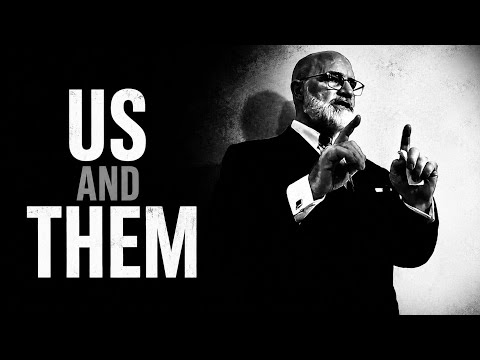
Us and Them | Part One: Allies
Misunderstandings in Political Alliances
The Nature of Political Factions
- The speaker discusses the common misunderstanding regarding political factions, emphasizing that individuals often feel compelled to align strictly with one side or another.
- A socialist's warning about the speaker highlights how people misinterpret his positions as alignment with their ideologies, showcasing a tendency to categorize others based on selective listening.
- The speaker critiques this factional mentality, comparing it to high school cliques and suggesting that political activism should not be about finding allies but rather about truth.
Personal Identity and Witnessing Truth
- The speaker identifies as a Muslim and introduces the concept of "shahada," which involves bearing witness through personal sacrifice of biases and preferences.
- True witnessing requires removing personal desires from one's testimony to describe reality accurately, regardless of personal affiliations or sympathies.
Misinterpretations of Advocacy
- When discussing injustices faced by various groups (e.g., Iran, working-class Americans), the speaker clarifies that he is not advocating for these groups but rather acknowledging their grievances objectively.
- He emphasizes that recognizing wrongdoings does not equate to endorsing any particular cause or group; it's about fulfilling his duty as a Muslim.
The Complexity of Truth in Activism
Holding Multiple Truths
- The speaker asserts that one can acknowledge multiple truths simultaneously—such as condemning both Iran's actions and military assaults against them—without contradiction.
- He criticizes those who engage in activism without a fixed standard for truth, noting how loyalty often overshadows honesty in discussions.
Loyalty vs. Objective Truth
- The need for allies reveals an individual's relationship with truth; true wrongness exists independently of personal affiliations or support systems.
- Many activists prioritize loyalty over objective morality, leading to selective acceptance of truths based on group identity rather than factual accuracy.
Critique of Western Civilization
Epistemological Issues
- The speaker argues that Western civilization lacks a fixed moral framework, relying instead on popular consensus to define right and wrong.
- This creates an environment where arguments are won through numbers rather than truthfulness, reducing allies to mere assets for validation.
Consequences of Factional Loyalty
- He warns against calibrating truth based on coalition needs, stating this approach undermines movements by prioritizing group feelings over honest discourse.
- This factional loyalty trap stifles genuine dialogue and perpetuates dishonesty within activist communities under the guise of solidarity.
Societal Critique: America’s Reality
Incarceration Rates and Violence
- The United States holds approximately 25% of the world's prison population despite being only 4% of its total population—a stark indicator of systemic issues within American society.
- High rates of violence (20,000 murders annually), sexual assault (600,000 rapes), and drug overdoses reflect deep societal dysfunction masked by rhetoric about freedom and rights.
Mental Health Crisis
- Loneliness has been declared a public health crisis in America; despite technological connectivity, many report chronic isolation contributing to rising mental health issues among all age groups.
Moral Hypocrisy in Western Institutions
Institutional Failures
- The Catholic Church's history is cited as an example where institutional protectionism led to widespread abuse while failing victims—a reflection on broader societal values regarding children’s safety.
Cultural Exports
- Discussion includes how Western civilization exports harmful ideologies globally while preaching human dignity—highlighting hypocrisy inherent in cultural narratives.
This structured summary captures key themes from the transcript while providing timestamps for easy reference.
Turn any video into a summary like this
YouTube links, meetings, lectures. With transcripts, search, and chat.