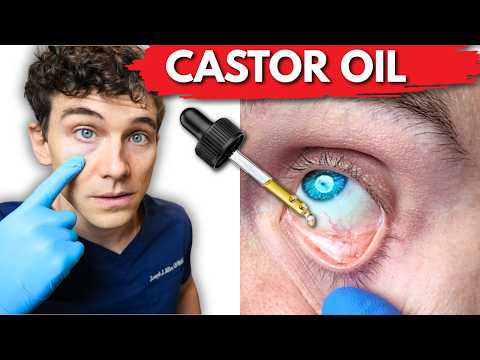
I Used 100% CASTOR OIL Eye Drops for 30 days - Here's What happened
Exploring the Effects of Castor Oil Eye Drops
Introduction to Castor Oil Eye Drops
- The speaker discusses the popularity of castor oil eye drops on social media, with claims about their benefits for dry eyes, eye floaters, cataracts, and eyelash growth.
- Despite these claims, the speaker notes a lack of published studies on the direct use of 100% castor oil as eye drops.
Personal Experiment with Castor Oil
- The speaker undertakes a personal experiment using 100% castor oil eye drops in one eye for 30 days while keeping the other as a control.
- A warning is issued regarding untested substances in the eyes and emphasizes consulting an eye care professional before trying new products.
Previous Research Insights
- The speaker references two notable studies: one showing positive results for blepharitis treatment using castor oil on eyelids and another indicating potential cytotoxic effects in vitro.
- Initial hesitations are expressed due to concerns about possible damage to the eyes despite anecdotal support from patients.
Methodology of the Study
- Baseline measurements were taken including evaluations of tear film stability, meibomian glands, ocular surface damage, cataracts, and eyelashes length.
- The specific type of castor oil used was hexane-free cold pressed and stored in dark glass to minimize impurities.
Experience During the Experiment
- Initial application experiences included no burning or irritation but resulted in sticky eyes and blurred vision lasting around 30 minutes due to its thick consistency.
- Vision fluctuated significantly after application; this made reading difficult at night post-drop application.
Observations Over Time
- Throughout four weeks, symptoms were tracked alongside final measurements taken at the end of the study period.
- Two major findings emerged: improvements in dry eye symptoms and an unexplained "mystery symptom" that requires further exploration.
Conclusion on Castor Oil Use
- It’s noted that while castor oil is present in some commercial eye drop formulations (typically at lower concentrations), confusion exists among consumers regarding product options.
- Introduction of One Drop preservative-free lubricating eye drops containing castor oil is mentioned as a solution to common issues faced with traditional options.
Castor Oil for Dry Eye: A Personal Experiment
Overview of Castor Oil's Benefits
- Castor oil supports the tear film lipid layer, preventing blurred vision and enhancing moisture retention with ingredients like hyaluronic acid.
- The product is preservative-free and safe for contact lens wearers, making it a versatile option for dry eye relief.
- Tier Restore offers competitive pricing, being about half the cost of many competitors.
Personal Experience with Castor Oil
- After 30 days of using castor oil in one eye, initial positive effects included reduced dryness while the drop was active; however, sticky feeling and fluctuating vision were noted.
- Over time, symptoms worsened in the treated eye, leading to spontaneous tearing during activities like computer use or walking outside on windy days.
Tear Film Stability Observations
- Despite subjective worsening symptoms, objective measurements showed stable tear film parameters compared to baseline assessments.
- Non-invasive keratograph breakup time remained around 4 to 5 seconds in the treated eye; normal stability is approximately 10 seconds.
Comparison Between Treated and Untreated Eye
- The untreated left eye improved in tear film stability over the month despite starting at a similar baseline as the right eye.
- This suggests that castor oil may have hindered natural healing processes in the untreated eye.
Additional Symptoms and Considerations
- No changes were observed in eyelash growth or overall ocular health; however, dull throbbing pain developed after several days of treatment.
- Consultation with an eye doctor ruled out internal inflammation as a cause for pain; potential accommodative spasm due to uneven treatment between eyes was considered.
Conclusions from Self-study
- This informal study does not provide definitive safety or efficacy conclusions; larger studies are needed for reliable data.
- While castor oil provided temporary relief from dry eyes, it may not be advisable for long-term application directly onto the eyeball.
Product Safety Concerns with Castor Oil
Overview of Castor Oil in Eye Care
- The speaker raises concerns about the safety standards of castor oil compared to medications and artificial tears, questioning the purity and composition of commercially available castor oil.
- There is uncertainty regarding potential impurities or changes in pH during shipping, highlighting a significant issue for healthcare providers about what patients may be applying to their eyes.
- Research suggests that castor oil can be beneficial in eye care when used at a concentration of 1% to 2%, indicating its formulated use rather than using it in its pure form.
- The speaker advises against applying 100% castor oil directly onto the eyeball due to insufficient evidence supporting its safety and efficacy; risks may outweigh benefits.
- The speaker invites viewers to share their experiences with castor oil eye drops, acknowledging that individual experiences may vary significantly.
Personal Experiences and Community Feedback
- The speaker encourages comments from viewers who have used castor oil for various purposes, such as hair growth or skin care, fostering community engagement around personal anecdotes.