6- Biología celular. Resolución de ejercicio modelo
Introduction to Biological Phenomena
Overview of Homeostasis and Bacteria
- The session begins with a clarification on homeostasis, defined as the ability to maintain stability within an organism.
- Bacteria are introduced as prokaryotic organisms, meaning they lack a membrane-bound nucleus. This concept will be explored in more detail in future tutorials.
Recap of Previous Blocks
- The first block covered various levels of organization in matter.
- The second block discussed characteristics shared by all living organisms.
- The third block focused on classification criteria for living beings.
Model Exercise on Viruses
Understanding Viruses
- Viruses are defined as agents composed of genetic information (nucleic acid) protected by a protein coat or capsid; they are not cellular entities.
- As pathogens, viruses can infect plants, bacteria, and animals but do not meet the criteria for being classified as living organisms.
Characteristics of Viruses
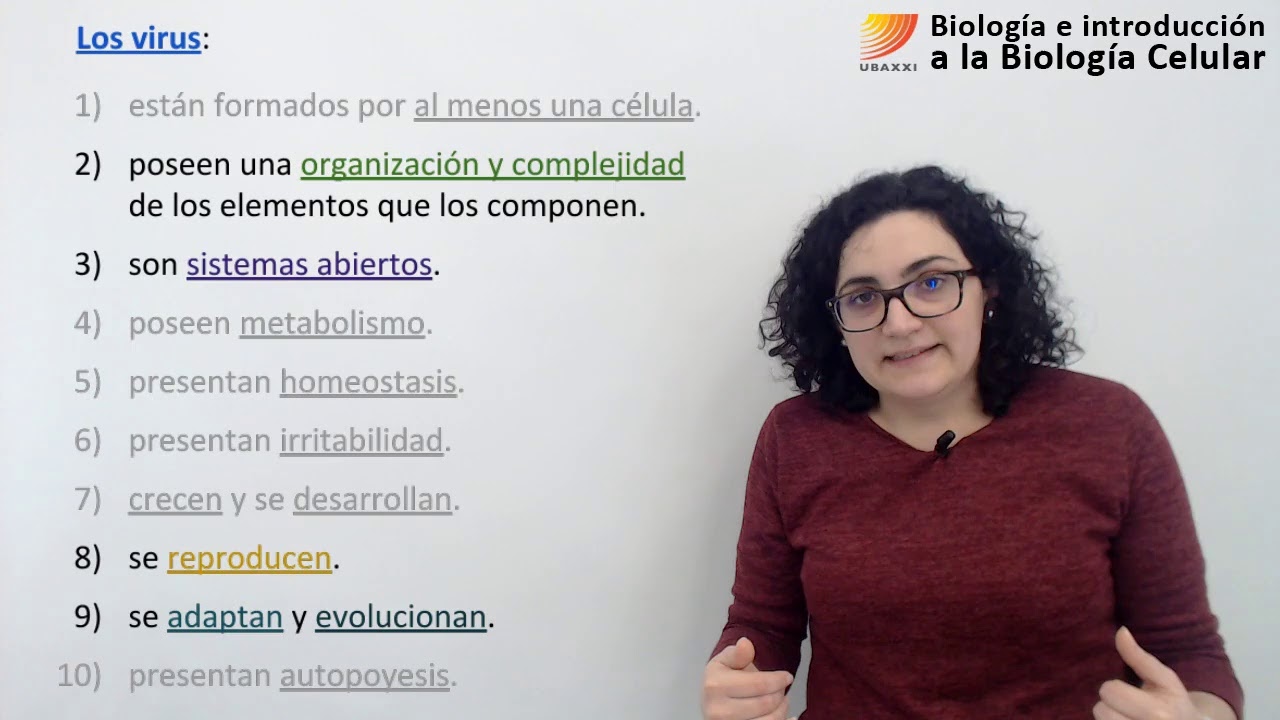
- Key characteristics absent in viruses include:
- Lack of cellular structure.
- Absence of metabolism and irritability.
- Inability to grow or develop independently.
- No capacity for autopoiesis (self-production).
- Present characteristics include:
- Organization and complexity from macromolecules like proteins and nucleic acids.
- Ability to exchange matter and energy with their environment (open systems).
- Capacity to reproduce using host cells and adapt/evolve over time.
Exercise Guidelines
Merging Concepts with Practical Application
- Students are advised to mention both present and absent characteristics when discussing viruses.
- Explanation should focus on one characteristic from each category, emphasizing clarity over quantity—students should aim for concise yet comprehensive descriptions.
Final Thoughts