8. Programación Dinámica
Introduction to the Val Algorithm
Overview of Val Algorithm
- The discussion begins with an introduction to a new algorithm called "Val," which is similar to policy iteration but does not explicitly improve a policy.
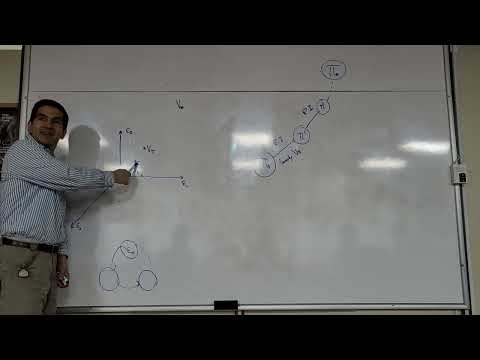
- The context is set by explaining that the value function exists in an n-dimensional space, where n corresponds to the number of states in the state space.
Understanding Value Function
- A vector in this value function space indicates expected long-term rewards from different states when following a specific policy.
- Each component of this vector represents the expected accumulated reward if starting from each respective state.
Example Illustration
- An example illustrates a simple system with three states, highlighting how transitions are governed by both environmental dynamics and actions taken.
- The value at a particular state indicates what one can expect to earn over time while following a given policy.
Policy Iteration Process
Starting Point and Policy Evaluation
- In policy iteration, one starts with an arbitrary initial policy (e.g., random or deterministic).
- The goal is to converge towards an optimal control policy (π*), beginning with an initial point typically set at zero in the value function space.
Iterative Process
- The process involves "policy evaluation," using Bellman’s equation to navigate through the value function space iteratively until reaching a point representing the expected reward for that specific policy.
Policy Improvement Mechanism
Transitioning Between Policies
- After evaluating a current policy's value, one can apply "policy improvement" based on this information, ensuring that the new derived policy is strictly better than its predecessor.
Generating New Policies
- This new improved policy (π') diverges from π but utilizes its value function as guidance for generating better outcomes.
- There’s flexibility in starting points; one could begin from any position within the value function space and still achieve convergence towards optimality through repeated evaluations.
Convergence Towards Optimal Value Function
Re-evaluating Improved Policies
Policy Evaluation and Iteration in Control Policies
Understanding Policy Evaluation
- The discussion begins with the concept of policy evaluation, which is essential for reaching an optimal control policy through iterative processes.
- It is emphasized that the term "policy" is crucial to understanding the context of this evaluation process.
Arbitrary Values and Control Policies
- An example illustrates how starting from an arbitrary value can lead to generating a control policy, even if it may not be optimal.
- The speaker notes that while arbitrary values can create a control policy, they do not necessarily reflect any collected information or insights.
Progressing Towards Optimal Control
- A mental exercise is presented where one might start evaluating policies but stop prematurely; this raises questions about how to continue progressing towards an optimal control function.
- The idea of using a less precise estimate (a rough approximation of the value function) still allows for progress toward better policies.
Value Iteration Explained
- The concept of value iteration is introduced as a method that updates estimates based on previous iterations to approach the optimal control policy.
- This method involves making intelligent decisions about updating policies based on current estimates rather than explicit functions.
Deriving Control Policies from Value Functions
- The discussion transitions into how to derive a control policy when no explicit policy exists during the evaluation process.
- It’s explained that by being grid-like concerning current estimates, new policies can be generated iteratively through value iteration.
Convergence and Optimality Conditions
- The stopping condition for these iterations occurs when reaching an optimal value function, aligning with Bellman's optimality equation.
- Questions arise regarding deriving explicit control policies during iterations without having them defined initially.
Practical Application of Value Iteration
- Visual aids are used to illustrate how value iteration progresses towards finding an optimal solution over time through repeated evaluations.
Understanding Optimization Algorithms in Industry
The Role of Dynamics in Optimization
- The discussion begins with a question about the dynamics used in industry, highlighting that current algorithms may not be directly applicable due to a lack of understanding of these dynamics.
- Emphasis is placed on developing intuition and theory around how algorithms behave, particularly for optimization problems when dynamics are known.
Policy Evaluation and Improvement
- A comparison is made between different approaches to policy evaluation and improvement, noting that the best solution often depends on the specific problem context.
- It is suggested that combining multiple steps of policy evaluation followed by policy improvement can yield better results, emphasizing flexibility in approach.
Iterative Processes in Value Estimation
- The speaker explains the iterative nature of evaluating policies, where improvements can be made after several iterations based on value estimates.
- The concept of hyperparameters is introduced, specifically regarding the number of iterations for policy evaluation before making improvements.
Expected Value Calculations
- Discussion shifts to calculating expected values from one-step transitions, stressing that these are estimates rather than actual values.
- A more refined method involves calculating expected rewards over multiple steps (K steps), which provides better estimations by incorporating future state estimates.
Complexity and Efficiency Considerations
- While multi-step calculations improve accuracy, they also increase computational complexity exponentially; however, there are algorithms designed to optimize this process.
- Mentioned are parallel processing techniques as potential solutions for enhancing algorithmic efficiency within this framework.
Convergence and Practical Applications
- The importance of convergence in value iteration is discussed; achieving equality between sides of Bellman's equation indicates a unique solution exists.
- Conditions necessary for convergence include ensuring discount factors remain less than one and all episodes terminate properly.
- Although theoretical guarantees exist for infinite iterations, practical applications often see convergence much sooner.
Understanding Policy Evaluation and Value Iteration
The Drunkard's Policy Example
- The discussion begins with a reference to the "drunkard" example, illustrating how policy evaluation changes over time, even when the value function is not yet established.
- It highlights that despite using the drunkard's policy, the derived control policy can still be optimal without having fully converted to its value function.
Approaching Optimal Values
- The conversation shifts towards approaching an optimal value (B*) rather than just any arbitrary policy. This indicates a more focused effort in deriving an optimal control strategy.
- An algorithm is introduced, emphasizing the importance of hyperparameters in measuring progress during iterations.
Value Function Updates
- The process involves initializing a value function arbitrarily while ensuring terminal states are set to zero. This sets up for iterative updates based on Bellman's equation.
- The loop continues until progress falls below a defined threshold (theta), leading to the final control policy being derived from maximizing actions relative to their values.
Complexity in Programming Control Policies
- Acknowledgment of programming complexity arises from defining dynamics accurately, similar to challenges faced in previous examples like cars.
- Emphasizes that complexities stem from weighted sums of probabilities needed for transitions between states.
Transition Probabilities and Dynamics
- Discusses how transition probabilities must be explicitly stated for each state, detailing potential movements to other states within the state space.
- Highlights various ways transitions can occur based on dynamic conditions, complicating coding efforts due to multiple scenarios needing representation.
Generalization of Value Iteration Methods
- Stresses that every problem requires explicit coding of all possible transitions and rewards associated with each state, contributing to overall complexity.
Understanding Reward Calculation in Iterative Processes
The Importance of Accurate Reward Estimation
- The calculation being discussed is precise, taking into account all factors involved in the reward for a jump. There is consensus on the expected value being calculated explicitly.
- The speaker introduces the concept of using previous estimates (B(k-1)) alongside current calculations to generate new estimates for rewards.
Sources of Improvement in Estimates
- A question arises regarding how improvements in information quality lead to better estimates, especially when relying on prior iterations.
- It is emphasized that the source of improved estimates comes from exact calculations rather than experimental data, highlighting the importance of accurate reward predictions.
Expected Value and Policy Dynamics
- The goal is to calculate the expected value based on potential outcomes while following a specific policy, considering both dynamics and control policies.
- The philosophy behind this approach acknowledges the difficulty in calculating everything but suggests focusing on exact values for immediate steps while refining future estimates with previous iterations.
Generalization and Algorithm Enhancement
- Discussion shifts towards generalizing calculations over multiple steps (K steps), suggesting that instead of just one step, K steps can be computed exactly before updating with current estimates.
- This leads to considerations about algorithm complexity; calculating B(s') explicitly for each possible state could result in exponential growth concerning branches explored.
Monte Carlo Techniques and Neural Networks
- The conversation touches upon utilizing Monte Carlo methods to identify promising branches among many possibilities, enhancing efficiency by focusing exploration efforts where they are most likely to yield beneficial results.
Understanding the Gambler's Problem
Introduction to the Gambler's Problem
- The speaker discusses reaching a point in their analysis where they play numerous games to estimate potential winnings, indicating a foundational approach to understanding gambling strategies.
- They emphasize that while theoretical variants may not be used in practice, grasping these fundamentals is crucial for applying more advanced techniques in real-world scenarios.
Explanation of the Gambler's Scenario
- The classic "Gambler's Problem" involves minimizing losses; it is a well-studied issue in probability theory and Markov chains.
- A compulsive gambler starts with a certain amount of money and aims to win an additional 100 units. They will continue playing until they either reach this goal or lose all their funds.
Game Mechanics and Probabilities
- The game consists of flipping a biased coin (not fair), where winning results in gaining the bet amount, while losing means forfeiting it. This setup reflects how casinos often have an edge over players.
- The objective is to devise an optimal control policy that maximizes the gambler’s chances of winning, given their starting capital and betting strategy.
State Space and Actions
- The state of the problem is defined by how much money the gambler has at any moment. Their actions depend on this state—if they have one unit, they can only bet that unit; if two units, they can choose to bet one or both.
- This dynamic illustrates how available actions are contingent upon current resources, emphasizing strategic decision-making based on capital.
Reward Structure in Reinforcement Learning
- Rewards should align with ultimate goals; thus, gamblers receive rewards only when achieving their target (e.g., reaching 100 units), reinforcing desired outcomes rather than intermediate wins.
- It’s essential for reinforcement learning algorithms to associate rewards with long-term objectives rather than short-term gains.
Optimal Control Policy Insights
- The optimal control policy suggests that at certain thresholds (like having 50 or 75 units), betting everything might be advisable as it maximizes potential returns.
- Value estimates converge towards probabilities of winning at each state, providing insights into effective strategies for different amounts of capital.
Experimentation and Further Exploration
- Participants are encouraged to solve the problem using both policy iteration and value iteration methods to compare effectiveness.
- Discussion arises about conservative versus aggressive betting strategies depending on initial conditions and risk tolerance within gambling scenarios.
Understanding State Transitions and Rewards in Programming
Overview of State and Reward Dynamics
- The discussion begins with the concept of having a single action available, focusing on how states and rewards are interconnected within a defined environment.
- The speaker introduces two specific states: "0 pesos" and "2 pesos," emphasizing the probabilities associated with transitioning between these states.
- It is noted that certain actions yield no reward, highlighting the importance of understanding which actions lead to gains or losses in this context.
- The conversation touches on defining rewards strictly at transition points, indicating that outside these moments, no rewards are given.
- A simpler environment allows for easier transitions between states, suggesting that fewer pathways can simplify programming challenges.
Exploring State Objectives
- The speaker discusses an objective to reach "100," illustrating a compulsive goal where exceeding this number does not provide additional incentives.
- There’s mention of allowing for backward movement in state transitions as a potential programming challenge, hinting at more complex decision-making scenarios.
- The need to compare policy iteration versus value iteration is introduced, focusing on their convergence times when applied to different betting strategies.
- Various initial policies are suggested for experimentation, including aggressive betting strategies or random selections among allowed values.
Implementation Strategies
- A call to action is made regarding implementing reward schemes—both positive and negative—to enhance learning outcomes from upcoming sessions.
- Clarification is provided about addressing questions during breaks via email to ensure collective benefit from shared inquiries.
Understanding Policy Updates
- The concept of "barridas" (or sweeps), which involves updating all states systematically during iterations, is explained as crucial for effective learning algorithms.
- Each update cycle aims to refine either the policy or value function across all states consistently until convergence is achieved.
Dynamic Programming Insights
- Asynchronous dynamic programming methods are introduced as alternatives to traditional sweeping approaches, allowing updates based on state distributions rather than fixed sequences.
- Visual aids illustrate how state distributions can be manipulated for more efficient updates in programming environments.
Dynamic Programming and Control Policies
Importance of Initial State in Dynamic Programming
- The initial state is crucial in determining the outcome of a game, as it sets the foundation for future evaluations.
- Evaluating exotic positions that may not be reachable offers no incentive, highlighting the need to focus on relevant states.
Asynchronous Updates in Dynamic Programming
- Asynchronous dynamic programming allows updates to be made out of order, focusing computational resources on interesting states rather than performing exhaustive sweeps.
- Convergence properties are maintained even with arbitrary update orders, provided all states are eventually sampled.
Learning and Control Simultaneously
- While learning, a control policy interacts with the environment, leading to frequent visits to certain states based on the control strategy.
- States frequently encountered provide valuable experience that can be integrated into algorithms for improved performance.
Generalized Policy Iteration
- The algorithm integrates evaluation and improvement steps, allowing for explicit calculations of expected values to enhance policies.
- Policy improvement and evaluation drive convergence towards optimal value functions despite competing influences from different target functions.
Efficiency of Dynamic Programming Techniques
- Despite criticisms regarding scalability, dynamic programming remains one of the most efficient methods for solving Markov Decision Processes (MDPs).
Understanding Dynamic Programming Complexity
Exploring Decision Processes and Complexity
- The discussion begins with the complexity of dynamic programming solutions in decision-making processes, emphasizing the need to understand various political forms.
- The complexity of dynamic programming solutions depends on factors such as the size of the recursion tree and the memory matrix required for memoization.
- It is noted that each action can lead to multiple states, leading to a complexity of n times k for one step in the decision process.
Steps in Dynamic Programming Implementation
- The initial evaluation step shows polynomial complexity concerning n times k , indicating manageable growth relative to input size.
- A practical approach involves programming from smaller cases to larger ones, avoiding exponential growth associated with recursive methods from large to small.
- Final state values are set at zero, requiring calculations based on base case values, which also contribute to overall complexity.
Factors Influencing Complexity
- The overall complexity is influenced not only by n times k but also by episode length, suggesting that longer episodes can significantly increase computational demands.
- While polynomial in nature regarding state numbers, episode length can complicate practical applications of dynamic programming.
Limitations and Alternatives
- Practical challenges arise when using dynamic programming due to its inherent complexities; alternative methods may be more efficient for certain learning problems.
- A brief mention highlights convex regions in linear programming where feasible regions are defined by hyperplanes.
Historical Context and Algorithm Efficiency
- Linear programming's significance led to a race between Soviet and American researchers aiming for polynomial-time algorithms; simplex method remains widely used despite its exponential worst-case performance.
- There was notable competition akin to space exploration efforts focused on finding efficient algorithms for linear programming problems.