UD4 Normas de PRL y protección ambiental 2
Risks in Computer Equipment Assembly and Maintenance
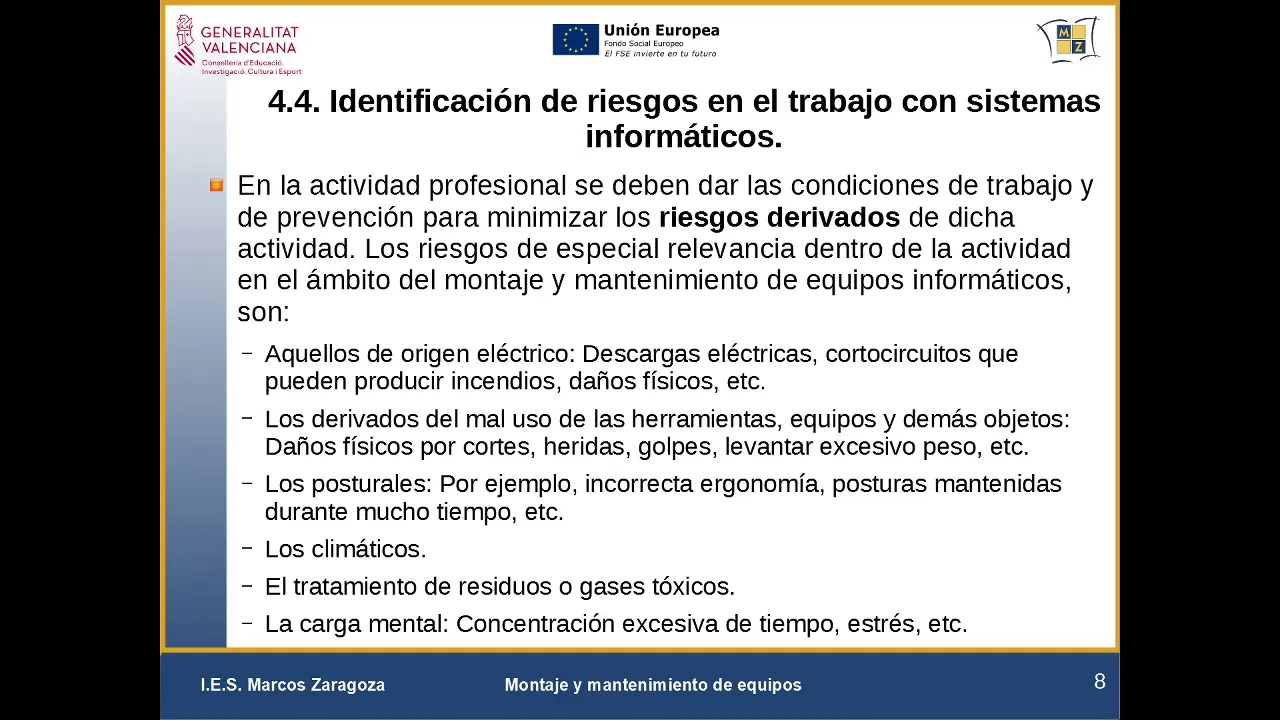
Overview of Risks
- The discussion begins with an introduction to the risks associated with assembling and maintaining computer equipment, emphasizing the importance of understanding these risks to prevent accidents.
- Electrical hazards are highlighted as a primary concern due to the reliance on electricity for operating electronic devices, necessitating caution against electric shocks and static discharges.
Understanding Short Circuits
- The concept of short circuits is explained using Ohm's Law, which states that current (I) equals voltage (V) divided by resistance (R). This fundamental principle helps understand how electrical systems function.
- A short circuit occurs when two wires at different voltages touch each other, leading to a significant increase in current flow that can cause overheating and potential fires.
- The speaker illustrates this with an analogy comparing electrical flow to water flowing down a waterfall, where voltage represents height difference and current represents the flow rate.
Physical Hazards from Tools and Equipment
- Various physical risks arise from improper use of tools such as cuts or injuries from sharp instruments like knives or scissors.
- Ergonomic considerations are discussed; prolonged poor posture while working can lead to musculoskeletal issues. Regular breaks for stretching are recommended to mitigate these risks.
Environmental Risks
Risks Associated with Chemical Exposure in the Workplace
Handling Toxic Residues and Gases
- The use of chemicals, including gases for compressed air, can lead to toxic environments. While some gases may not be highly toxic, others can contribute to hazardous conditions.
- Alcohols, such as propyl alcohol used for cleaning equipment, can evaporate into the air and pose inhalation risks if exposure is excessive.
Contamination from Inks
- Ink is identified as a contaminant that poses health risks. Care must be taken to avoid exposure or accidental ingestion of ink during cleaning processes.
Mental Load and Stress Factors
- Working with computer equipment often leads to mental strain due to prolonged concentration and stress. This self-imposed pressure can complicate tasks and increase risk factors associated with workplace safety.
Basic Safety Standards in Workshops
- Fundamental safety rules are crucial in maintenance workshops. Despite their apparent simplicity, these rules are frequently overlooked due to overconfidence or time constraints.
Turn any video into a summary like this
YouTube links, meetings, lectures. With transcripts, search, and chat.