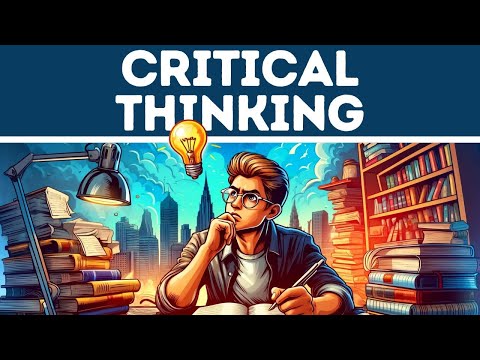
What is Critical Thinking?
Critical Thinking: An Essential Skill
Understanding Critical Thinking
- Critical thinking is defined as the process of evaluating information and arguments to make reasoned judgments. It involves structured thinking using logic and reasoning.
- In academic settings, critical thinking enables students to engage deeply with content, understand diverse perspectives, and formulate well-reasoned arguments.
- Beyond academics, critical thinking aids individuals in making better decisions, solving problems effectively, and navigating the overwhelming amount of daily information.
Key Components of Critical Thinking
- A fundamental aspect of critical thinking is questioning assumptions—beliefs taken for granted. This requires examining their accuracy and evidence support.
- Identifying biases in oneself and others is crucial; biases can distort decision-making leading to unfair outcomes. Recognizing these biases fosters more objective consideration of issues.
- Evidence plays a central role in critical thinking. Relying on strong, relevant evidence rather than conjecture ensures conclusions are grounded in reality.
The Process of Critical Thinking
- Synthesizing information involves integrating various pieces to construct coherent arguments or insights that may not be apparent when viewed separately.
- Engaging with complex issues requires patience, open-mindedness, and a commitment to ongoing learning and self-improvement.
Fostering Critical Thinking Skills
- Educators can promote critical thinking by creating environments that encourage questioning and open dialogue while supporting diverse perspectives.
- Safe spaces for discussion allow individuals to voice thoughts freely and challenge ideas without fear, enhancing their ability to articulate and defend positions.
Additional Resources
- If you're a university student seeking further assistance with studies or essay writing on this topic, consider reading the recommended article linked in the pinned comment. You might also find value in exploring related videos presented at the end of this discussion.