¿Es realmente caro un PIAS/UNITLINKED?
Are PIAS and Unit Linked Investments Really Expensive?
Introduction to Investment Costs
- The speaker argues that investing independently saves on commissions, suggesting that PIAS (Plan de Ahorro Sistemático) or unit linked products are costly.
- The discussion will analyze this claim using official documents, contracts, and independent studies, comparing two scenarios: investing independently versus through a professional.
Common Misconceptions About Investment Products
- While it's true that PIAS and unit linked products have costs, important questions remain unaddressed: legal protection, management strategy, tax savings, and who benefits from the advice given.
- The speaker compares managing investments independently with following tutorials for building a house; both require expertise for solid foundations.
Evaluating Alternatives in Financial Advice
- The notion that only independent advisors provide objective advice is challenged; alternatives include paying significant fees for courses or consultations.
- It’s emphasized that the cost of financial products varies by entity rather than type; not all index funds are cheap nor all insurance savings plans expensive.
Understanding Product Costs and Benefits
- Generalizations about investment costs often indicate underlying conflicts of interest; regulatory bodies like ESMA caution against misleading investment advice on social media.
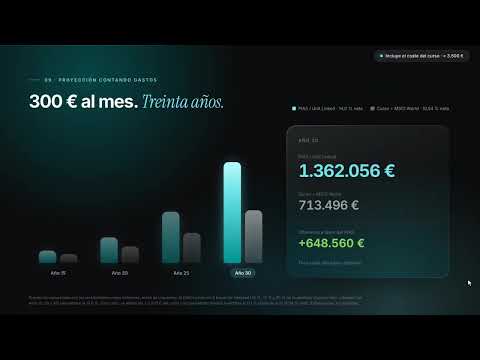
- A comparison is made between saving €300 monthly over 30 years in a PIAS versus an index fund. Key differences include initial costs and liquidity options.
Detailed Cost Analysis of PIAS vs. Index Funds
- Specific figures show how a PIAS incurs different expenses compared to index funds: initial percentages applied to contributions and annual management fees differ significantly.
- Bonuses offered by the PIAS can offset initial costs over time while index funds lack such incentives.
Long-Term Financial Outcomes
- Over 30 years, total expenses for the PIAS amount to €5544 but yield bonuses totaling €7200, resulting in a net gain after accounting for expenses.
- In contrast, investing in an index fund incurs no entry cost but lacks bonuses or professional support throughout the investment period.
Professional Management Advantages
- With a PIAS, investors benefit from continuous professional guidance without additional charges over 30 years compared to self-managed investments which rely solely on personal judgment.
Risk Assessment Between Investment Options
- Both investment strategies involve global equity exposure but differ in management style—active management for the PIAS versus passive replication of indices like MSCI World for index funds.
Performance Metrics Comparison
- Official documents predict average returns of 16% annually before costs for the PIAS versus approximately 11.6% annualized return from MSCI World after deducting typical fees associated with index funds.
Tax Implications on Returns
- Transforming a PIAS into an annuity can exempt accumulated returns from taxes while withdrawals from index funds incur taxation on profits.
Final Financial Projections
- After 30 years with consistent contributions of €300/month under various scenarios (including tax implications), substantial differences favoring the PIAS emerge when calculating net gains post-taxation.
Behavioral Insights Affecting Investment Success
- Studies reveal behavioral biases lead individual investors to underperform relative to market averages due to poor timing decisions influenced by emotions rather than rational analysis.
Conclusion: Evaluating Value Beyond Costs
- The speaker emphasizes ethical considerations in financial advising and urges viewers to weigh long-term benefits against immediate costs when choosing investment strategies.
Turn any video into a summary like this
YouTube links, meetings, lectures. With transcripts, search, and chat.