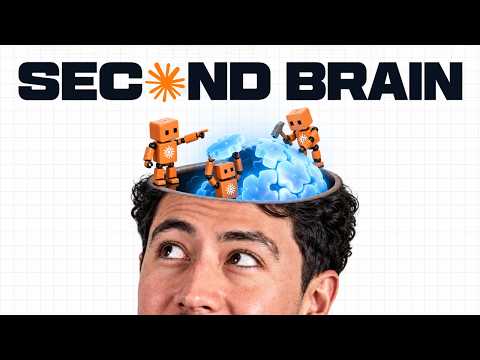
Build Your Personal Knowledge Base With AI (Step by Step)
The Concept of Second Brains and AI
Introduction to Vannevar Bush's Vision
- In 1945, engineer Vannevar Bush envisioned a machine that could store all his books, records, and communications, referring to it as an "enlarged intimate supplement" to memory.
- Fast forward 80 years, the reality is filled with overwhelming amounts of AI-generated content that often lacks substance.
Critique of Current AI Solutions
- The marketing of second brains is appealing due to their complexity and perceived necessity for engineers in development.
- They are marketed as tools for improving business productivity but often fail to deliver meaningful results.
Understanding Personal Knowledge Bases
Definition and Utility
- Personal knowledge bases can be beneficial; the speaker uses one successfully for a profitable business.
- A personal knowledge base is essentially a searchable collection of one's own information enhanced by AI retrieval capabilities.
Retrieval Augmented Generation (RAG)
- RAG refers to combining retrieval processes with AI generation, allowing models to provide more accurate responses based on context.
- Historically, RAG was crucial due to limited context windows in AI models which restricted the amount of information they could process effectively.
Context Windows and Information Management
Limitations of Large Context Windows
- Modern models can handle larger context windows (up to 35–50 books), but storing excessive data can be costly and inefficient.
- When too much information is present, older data may be treated equally important as newer data by the model.
Recency Weighting Solution
- Implementing recency weighting helps prioritize newer information over outdated entries within the knowledge base.
Addressing Context Rot in Large Language Models
Challenges with Excessive Data
- Adding too much text leads to "context rot," where performance declines as more data accumulates in the model's window.
Efficient Data Retrieval Strategies
- Instead of sending all data at once, effective systems allow models to search external databases or embeddings for relevant information first.
Building an Effective Knowledge Base System
Engram Example
- The speaker’s system called Engram maintains around 35–50 thousand records including various company interactions and video transcripts.
Maintaining Relevance
- Regularly updating the knowledge base through recency weighting ensures only valuable current information is retained.
Query Processing Efficiency
Fast Inference Mechanism
- When querying Claude (the AI model), it quickly identifies relevant search terms from the knowledge base before returning optimal matches.
Steps for Building Your Own Knowledge Base
Consistent Data Pipelines
- Establish consistent pipelines that refresh whenever new events generate data within your organization. Define sources like emails or Slack messages.
Connector Script Development
- Create a connector script that pulls only new data since its last run while stamping it with date/time for recency tracking.
Utilizing Existing Tools Effectively
Email Integration Example
- Using APIs like Gmail allows efficient integration without compromising security by granting read-only access.
Importance of Session Storage
- Storing sessions from ChatGPT or Claude enables revisiting vital conversations that contribute significantly towards project development.
Structuring Content for Searchability
Metadata Creation Process
- Transform long items into summaries along with metadata capturing key insights about each entry enhances search efficiency within your system.
Institutional Memory Development
- Consolidating implicit decisions into explicit documentation creates institutional memory which aids future workflows across teams.
Simplifying Search Mechanisms
Plain Text Search Advantages
- Utilizing plain text search algorithms like BM25 simplifies searching processes while reducing costs associated with complex vector databases.
Performance Insights
- Observations indicate plain text searches outperform other methods significantly while maintaining efficiency in inference time and cost management.
Ensuring Continuous Updates
Monitoring Connector Functionality
- Implement scripts ensuring connectors remain functional; regular checks prevent lapses in fresh data acquisition essential for operational effectiveness.
Conclusion & Resources Available
Additional Learning Resources
- For those interested in replicating this system easily, resources are available via Maker Zero linked below; these include educational materials related to AI applications without any cost involved.
Turn any video into a summary like this
YouTube links, meetings, lectures. With transcripts, search, and chat.