Las bodas del cordero y la victoria sobre la Bestia
Judgment on Babylon: An Overview
Introduction to the Study of Revelation
- The discussion begins with a greeting and an overview of the final chapters of the Book of Revelation, specifically focusing on Chapter 18, which deals with the judgment upon Babylon.
- The speaker emphasizes that only three chapters remain to be examined in this study series.
Context of Judgment
- The judgment against Babylon is linked to ten kings who will ally with the Antichrist, as mentioned in Chapter 17. These kings are depicted as seeking to fight against the Messiah.
- A reference from Chapter 17 indicates that these kings will despise Babylon, leaving it desolate and naked, ultimately consuming it by fire. This highlights God's use of these rulers to execute His judgment.
Old Testament Parallels
- The text draws parallels between judgments described in the Old Testament and their fulfillment in Revelation, suggesting that a literal interpretation of Babylon is necessary due to unfulfilled prophecies from earlier texts.
- Specific descriptions from Jeremiah about Babylon being a "golden cup" are echoed in Revelation, illustrating continuity between both texts regarding its symbolism and significance.
Symbolism and Corruption
- Babylon is portrayed as a source of corruption for nations through idolatry; its influence leads other nations into moral decline, akin to drunkenness caused by wine (symbolizing sin). This theme recurs throughout both Jeremiah and Revelation.
- The destruction foretold for Babylon is sudden and catastrophic—plagues such as death, mourning, and famine will strike her swiftly as part of divine retribution. This reflects God's ultimate authority over nations through His chosen instruments (the ten horns).
Call for Separation
- There is an urgent call for God’s people to flee from Babylon before impending judgment strikes; this warning appears both in Jeremiah and Revelation emphasizing spiritual separation from sinfulness. It serves as a dual exhortation: escape physical danger while avoiding moral compromise within sinful environments.
- Joyful proclamations follow the destruction of Babylon; heaven rejoices at God's justice being served against this corrupt city—a theme underscoring divine vindication throughout scripture. This joy contrasts sharply with the fate awaiting those who remain within her borders during judgment times.
Celestial Praise Following Judgment
Heavenly Celebrations
- Transitioning into Chapter 19, there are three significant praises heard in heaven: one celebrating the fall of Babylon, another heralding the marriage supper of the Lamb (the Bride), and finally acknowledging Christ's glorious return as King. Each praise signifies important theological themes related to redemption and divine justice following judgment events discussed previously.
The Significance of the Wedding Feast of the Lamb
The Joyful Praise in Heaven
- Heaven rejoices as judgment is pronounced against Babylon for corrupting the earth through fornication and avenging the blood of God's servants.
- The celestial praise highlights a significant moment, indicating that divine justice has been served, leading to joy among heavenly beings.
Understanding the Wedding of the Lamb
- The text introduces the concept of the "Wedding of the Lamb," emphasizing its importance in Christian eschatology. It describes a loud proclamation celebrating this event.
- This wedding symbolizes Christ's union with His church, referred to as His bride, marking a pivotal moment in spiritual history.
Elements of Ancient Weddings
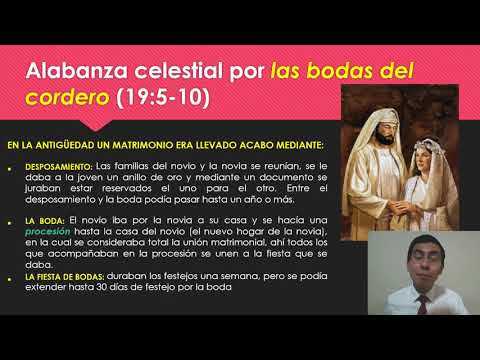
- In ancient times, weddings consisted of three main elements: engagement (desposorio), marriage ceremony (boda), and a subsequent wedding feast (fiesta de bodas). Each phase had distinct cultural significance and rituals associated with it.
- Engagement was often legally binding; couples were considered married even before living together or consummating their relationship. This reflects how spiritual engagement with Christ occurs through faith before full unity is realized.
The Procession and Celebration
- The marriage ceremony involved a procession where the groom would fetch his bride from her home to establish their new household together, symbolizing complete marital union. This procession is likened to Christ coming for His church during the rapture.
- Following this procession, an extensive celebration would take place, lasting several days—paralleling how believers will celebrate after being united with Christ at His second coming.
Spiritual Implications and Future Events
- Believers are seen as spiritually engaged to Christ through faith; they await full consummation during His return when they will be united completely as one body in Him. This mirrors ancient customs but carries profound theological implications for Christians today.
- After being taken up (raptured), believers will face judgment at Christ's tribunal where rewards are distributed based on their earthly deeds before entering into eternal celebration—the wedding feast that may extend into eternity itself.
Conclusion: Who is the Bride?
- In biblical terms, Israel represents God's wife in the Old Testament context; thus, understanding who constitutes 'the bride' becomes essential for interpreting these prophetic events accurately within scripture narratives about redemption and covenant relationships between God and humanity.
The Role of the Church and Israel in Eschatology
The Church as the Bride of Christ
- The New Testament identifies the church as the bride of Christ, supported by verses from Revelation 21:2 and 14, which highlight both Israel and the church's presence during the millennium.
- It is crucial to distinguish between Israel and the church; they are not synonymous. This distinction counters certain eschatological views that do not differentiate between them, such as historic premillennialism.
Incremental Nature of the Bride
- The concept of the bride being an incremental group of redeemed individuals is explained through Revelation 19:7, which refers to a prepared bride for Christ.
- The church is initially recognized as this bride, having been raptured and rewarded at Christ's judgment seat before returning victorious with Him.
Inclusion of All Redeemed
- Over time, all redeemed individuals—including those saved from the Old Testament, tribulation believers, and Israel—will join this collective bride.
- Revelation 19:7 can be linked to a broader understanding that ultimately includes all redeemed souls in unity with Christ.
Blessedness of Participation
- Revelation 19:9 emphasizes blessedness for those invited to the marriage supper of the Lamb, indicating that all who are called are partakers in this divine union with Christ.
Celestial Praise for Messiah’s Return
- The third praise mentioned in Revelation 19 celebrates the glorious return of Messiah on a white horse (v.11), symbolizing royalty and authority.
- Various symbols associated with His return include His eyes like flames of fire representing discernment against false messiahs introduced earlier in Revelation.
Authority and Identity
- Jesus' title "Faithful and True" contrasts with false claims made by others throughout scripture; He embodies true justice in judgment.
- A unique name known only to Him suggests an intimate identity shared within the Trinity that remains undisclosed to others.
Symbolism in His Appearance
- Jesus is depicted wearing garments dipped in blood (v.13), signifying sacrifice; He is identified as "the Word of God."
- The heavenly armies accompanying Him likely consist of angels and redeemed saints participating in His triumphant procession.
Judgment Through His Word
- A sharp sword coming from His mouth symbolizes God's word used for judgment; it connects back to Isaiah 63's imagery regarding divine wrath against nations.
The Second Coming of Christ and the Final Judgment
The Significance of the Blood and Judgment
- The imagery of blood splattering on garments symbolizes divine judgment, representing God's wrath against sin. This act is likened to crushing ripe grapes in a winepress, indicating the severity of punishment for nations due to their transgressions.
- The verse emphasizes that Jesus is identified as "the King of Kings and Lord of Lords," highlighting His supreme authority during this momentous event. This title underscores His role in executing judgment and governance over all creation.
The Battle Against the Beast
- In the second coming, Christ arrives in glory not only to judge but also to fight against evil forces represented by the beast and earthly kings who unite against Him. This confrontation signifies a climactic battle between good and evil at Armageddon.
- A coalition of ten kings aligns with the Antichrist, showcasing a significant alliance formed to oppose Christ's reign. This gathering illustrates humanity's ultimate rebellion against divine authority as they prepare for war against the Messiah.
The Fate of Evil Forces
- John’s vision reveals that both the beast (Antichrist) and the false prophet are captured and thrown alive into a lake of fire, symbolizing eternal punishment for leading others astray through deception and false miracles. Their fate serves as a warning about rejecting divine truth.
- Those who followed these deceivers face death by sword from Christ’s mouth, emphasizing His power in judgment; this act leads to their bodies being left unburied, consumed by birds—a graphic depiction of defeat and disgrace for those opposing God’s will.
Conclusion: Victory Through Divine Authority
- The narrative culminates with Christ's victorious return, reinforcing themes of justice, retribution, and sovereignty over all creation as He triumphantly defeats evil forces aligned against Him in an ultimate display of power and glory.
Turn any video into a summary like this
YouTube links, meetings, lectures. With transcripts, search, and chat.