Retina 23 de julio 2021 -Lesiones predisponentes y no predisponentes-
Introduction to Retinal Detachments
Opening Remarks
- The session begins with greetings and an introduction, indicating the presence of Dr. Chapado.
Overview of Retinal Detachments
- The discussion focuses on retinal detachments, specifically differentiating between predisposition factors and actual detachments.
- The primary predisposing factor mentioned is macular degeneration, affecting 6-10% of the population, often bilateral in one-third of cases.
Key Concepts in Macular Degeneration
Characteristics and Frequency
- Higher prevalence noted in myopic patients; familial predisposition is also highlighted.
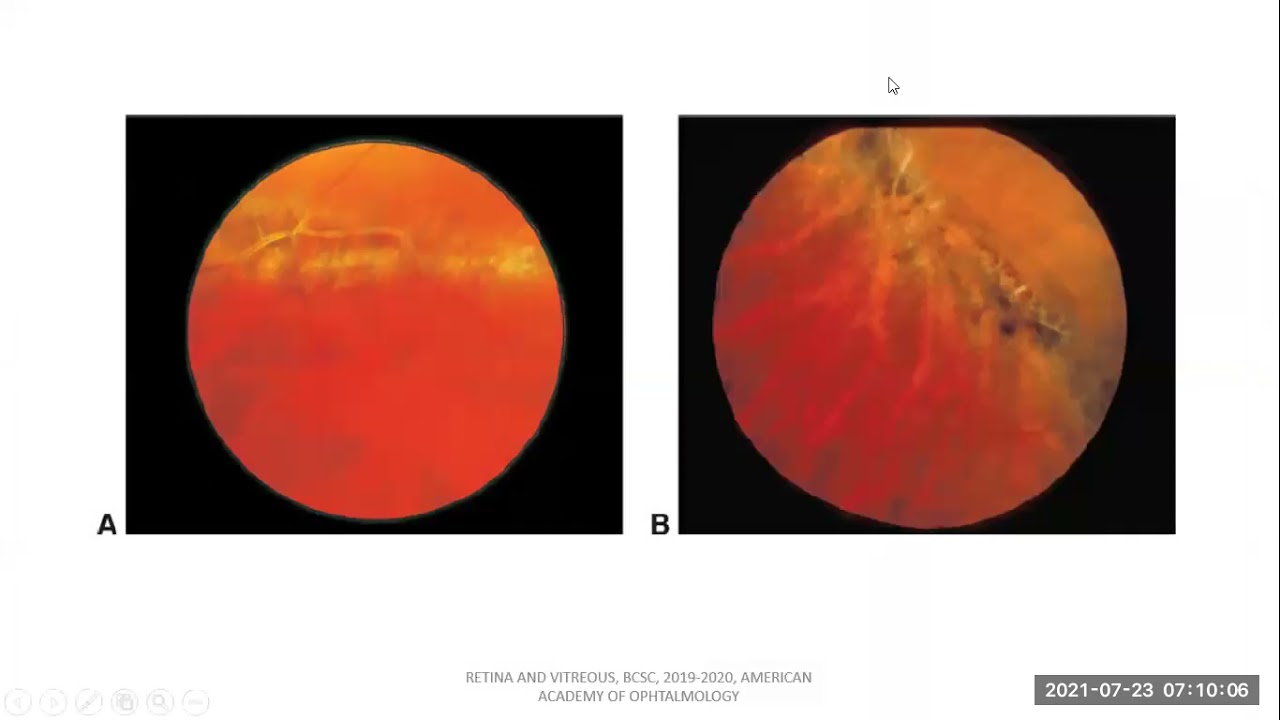
- Irregular atrophy of internal layers observed, with examples showing reticular degeneration patterns.
Clinical Implications
- Approximately 20-30% of eyes with reticular degeneration may develop retinal detachment; treatment decisions depend on specific patient conditions.
Types of Retinal Tears and Their Classifications
Mechanisms and Symptoms
- Asymptomatic until significant changes occur; various types of tears are classified based on anatomical distinctions (e.g., logistic, cystic).
Visual Examples
- Images illustrate different forms of reticular degeneration and associated symptoms like vitreous traction.
Understanding Retinal Breakage
Types of Breakages
- Describes how retinal breaks can occur due to peripheral traction or other factors leading to detachment.
Clinical Significance
- Any defect in neurosensory retina can lead to clinically significant detachments by allowing fluid entry that separates the retina from underlying layers.
Management Strategies for Retinal Issues
Treatment Approaches
- Discusses various types of retinal tears: flap tears, giant tears, holes, etc., emphasizing their clinical significance.
Timing for Intervention
- Recommendations for timely intervention vary based on symptomatology; asymptomatic conditions may require less urgent treatment compared to symptomatic ones.
Understanding Retinal Detachment and Treatment Approaches
Mechanisms of Retinal Detachment
- Post-treatment complications can arise from laser therapy, particularly if the area surrounding a retinal tear is not adequately treated, leading to potential fluid accumulation and detachment.
- An example of a poorly sealed horseshoe tear illustrates how improper treatment can result in retinal detachment.
Types of Retinal Lesions
- A significant type of lesion that does not predispose to retinal detachment is "adoquines," which appear as small peripheral atrophic areas affecting about 22% of individuals over 20 years old.
- These lesions are visually characterized by whitish-yellow spots surrounded by hypertrophic borders due to absent or hypoplastic choroidal structures.
Hiperplasia and Degenerative Changes
- Chronic low-grade traction can lead to diffuse hyperplasia of the retinal pigment epithelium, often observed in areas with focal traction.
- Degenerative changes associated with aging typically manifest in the retina's periphery, presenting as large cells with spherical melanin granules.
Risk Factors for Retinal Issues
- Microcystic zones in the peripheral retina are common among adults over 20; while they may form holes, they rarely cause detachments.
- Guidelines suggest considering factors like high myopia or previous eye issues when assessing risks for retinal problems.
Treatment Considerations
- Even minor lesions may require prophylactic treatment if there’s a history of issues in the contralateral eye, emphasizing individualized risk assessment.
- It is crucial to treat anterior edges of tears effectively since inadequate coverage can lead to further detachment progression.
Protective Lesions and Their Implications
Discussion on Reference Patterns
Contributions and Resources
- A participant mentions finding relevant information regarding reference patterns and intends to share a link with colleagues from the academy.
- The speaker refers to having created three tables in an article, indicating a structured approach to presenting data or findings.
Group Dynamics
- There is a discussion about the group's composition and how it may affect their ability to contribute effectively, hinting at logistical challenges in sharing resources.
Best Practices
- The conversation shifts towards closing lines of preferred best practices, suggesting an emphasis on established guidelines for effective collaboration or project execution.
Utility of Information
Turn any video into a summary like this
YouTube links, meetings, lectures — with transcripts, search, and chat.