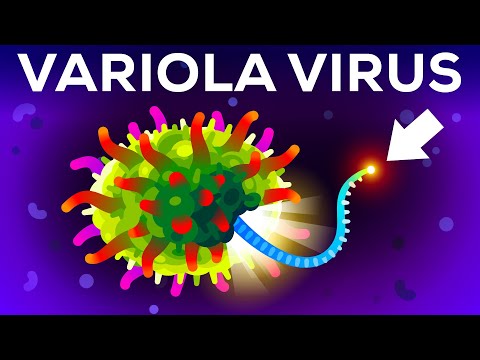
The (Second) Deadliest Virus
New Section
This section provides an introduction to the smallpox virus and its devastating impact on humanity.
The Deadly Smallpox Virus
- The variola virus, responsible for smallpox, has been one of the most successful and harmful monsters created by evolution.
- Evidence of smallpox has been found in ancient Egyptian mummies and writings from India and China dating back 3000 years.
- Smallpox was a major cause of death worldwide, killing up to a third of Japan's population 1300 years ago and causing significant mortality in Europe during the 18th century.
- Smallpox continued to be a threat even in the 20th century, claiming the lives of at least 300 million people.
- Despite its long history of devastation, smallpox is now stored for research purposes only in two laboratories - Koltsovo, Russia and Atlanta, USA.
New Section
This section explores how the variola virus infects the human body and causes severe illness.
The Infection Process
- Variola is highly infectious and primarily spreads through small droplets that are breathed in.
- The virus infects cells lining the throat, tricking the immune system into transporting it to crucial immune cells called Dendritic cells.
- Dendritic cells enter the lymphatic system, spreading throughout the body's immune bases.
- After a period of quiet infection, variola starts its attack by spreading through the lymphatic system and infecting the entire body.
New Section
This section explains how the variola virus evades and weakens the immune system's response.
Immune System Struggles
- Variola deactivates interferons, which are critical transmitters that mobilize the body against viruses.
- The virus also shuts down the complement system, which can destroy viruses.
- Variola spreads throughout the body, infecting billions of cells and causing capillaries to die in large numbers.
- Neutrophils, immune cells attracted by cell death, are not effective against smallpox and contribute to inflammation and tissue damage.
New Section
This section describes the severe symptoms and complications caused by smallpox infection.
Severe Symptoms and Complications
- Smallpox infection leads to a high fever, fluid loss from blood vessels into tissues and organs, blood clotting issues, and organ failure.
- The outcome depends on whether the immune system can regain control or if the infection overwhelms it.
- About one-third of people who contract smallpox do not survive, while survivors may experience scarring or loss of eyesight or hearing.
New Section
This section explores the measures taken to eradicate smallpox.
Eradicating Smallpox
- Smallpox was eradicated through vaccination and global efforts.
- Variolation, a dangerous practice of infecting individuals with a milder form of smallpox, was used to induce immunity.
- Vaccination campaigns and surveillance programs played a crucial role in eliminating smallpox as a public health threat.
The transcript provided does not cover the entire video.
The History of Smallpox and Vaccinations
This section discusses the history of smallpox, the development of vaccinations, and the eradication of the disease.
Variolation and Spread of Smallpox
- Variolation was a method used to protect against smallpox by intentionally infecting individuals with a milder form of the disease.
- Despite the risks, people were willing to undergo variolation due to the severity and widespread impact of smallpox.
- Variolation spread globally while smallpox continued to cause millions of deaths.
Vaccinations and Cowpox
- Scientists discovered that it was safer to use material from cowpox, a variant that affected cows, instead of using real smallpox virus for variolation.
- This led to the development of vaccinations as a revolutionary step in training the immune system using a related but milder virus.
Eradication Efforts
- Over 200 years, vaccines were delivered worldwide to combat smallpox outbreaks.
- In 1966, a global "smallpox news network" was created by the World Health Organization to tackle local outbreaks and prevent further spread.
- By stopping human transmission through vaccination efforts, smallpox was eventually eradicated.
Victory over Smallpox
- In 1980, after nearly 200 years since the first vaccine was used, smallpox was declared eradicated.
- This victory marked an incredible achievement in eliminating one of humanity's cruelest and most dangerous diseases.
The Importance of Vaccines
This section emphasizes the importance of vaccines in protecting against diseases and highlights our responsibility to maintain their effectiveness.
Living Without Disease
- We currently live in a time where smallpox no longer haunts us, thanks to the development of vaccines.
- However, this safety can lead to forgetting the existence and reality of diseases.
Potential Threats
- There is a possibility of diseases reawakening or new ones emerging from various sources such as jungles, wet markets, or laboratories.
- It is crucial to remember the incredible gift that vaccines provide and the battles fought to obtain them.
Protecting the Future
- The responsibility falls on us to ensure that the light of protection provided by vaccines does not fade away.
- By learning from past successes like eradicating smallpox, we can face future challenges and overcome them.
Further Learning Opportunities
This section offers additional learning resources for those interested in biology and invites viewers to explore more about the human body.
Human Cell Poster
- Kurzgesagt has created a human cell poster in collaboration with molecular biologist James Gurney.
- The poster provides an easy-to-understand overview of organelles and their functions within cells.
- It aims to inspire curiosity and promote learning about biology, space, humans, and life itself.
Timestamps are associated with each bullet point.