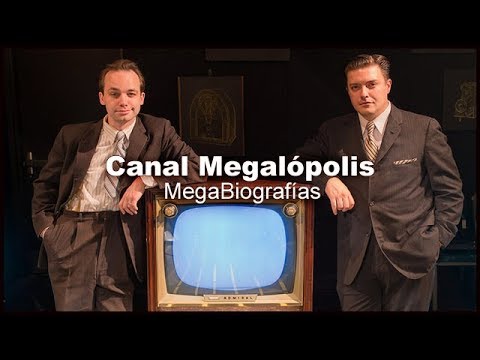
GENIOS (Farnsworth Vs. Sarnoff) La Televisión - Documentales
The Birth of Television: A Revolutionary Technology
Introduction to the Impact of Inventions
- The era is defined by its inventions, with significant advancements emerging from fierce rivalries. This moment marks the announcement of a technology that will profoundly impact society.
The Story of Television's Creation
- Television is likened to a beacon of hope in a challenging world and is considered one of the most revolutionary inventions. Its creation mirrors the David vs. Goliath narrative, involving a decade-long battle between media moguls and an ambitious young farmer from Idaho.
The Rise of Radio
- At the beginning of the 20th century, radio transformed America by allowing real-time participation in events nationwide, eliminating delays previously experienced by those far from Washington D.C.
Ambition in Media: David Sarnoff
- David Sarnoff, director general of RCA, was an ambitious figure who sought to dominate the burgeoning radio industry through strategic patent control and innovation. He envisioned turning competitors into clients by licensing patents for radio technology.
Farnsworth's Vision for Television
- Far away from RCA’s empire, a teenage farmer named Philo Farnsworth began dreaming about creating television—a concept that had eluded many inventors before him. His childhood fascination with electronics fueled his ambition to combine images with sound in a new medium.
Farnsworth's Journey Towards Innovation
Early Inspirations and Challenges
- Despite previous failures by renowned inventors, Farnsworth found inspiration in his surroundings—specifically while working on his father's potato farm—and developed an idea for scanning images electronically line-by-line like reading text on a page.
Obsession with Creation
- As he balanced schoolwork and farm duties, Farnsworth became increasingly obsessed with perfecting his invention—a device capable of transmitting images wirelessly at high speeds—demonstrating how creativity can consume one's time and focus entirely.
Support from Mentorship
- Sharing his groundbreaking idea with science teacher Justin Tolman led to validation; Tolman recognized the brilliance behind Farnsworth’s vision despite skepticism surrounding its feasibility among established scientists at that time.
Pursuing His Dream
The Journey of Television Invention
The Initial Struggles of Farnsworth
- Farnsworth faced a difficult decision, needing funds to build and present his television prototype. He partially relinquished ownership of his invention to secure investment.
- After securing capital, Farnsworth's team worked against competitors aiming to crush their efforts. They prepared to test the prototype, hoping for a breakthrough.
- The first attempt at demonstrating the television failed, putting Farnsworth's dream in jeopardy as nothing appeared on screen.
Competition and Innovation
- David Sarnoff had built RCA into a radio empire while Farnsworth developed a television prototype that could challenge radio's dominance; however, it was non-functional.
- To make the television work, Farnsworth needed electrons from the cathode ray tube to adhere to the screen surface effectively.
- Recognizing that opposites attract, he focused on cesium as the most electropositive element necessary for his design—this became a pivotal step toward functionality.
Demonstrating Potential
- With improvements made, Farnsworth was ready to show investors what they had been waiting for—a working model of his invention.
- His success demonstrated not only technical skill but also strong conviction; one investor noted that this young inventor’s ideas would astonish the world and generate significant profits.
Control Over Invention
- Farnsworth aimed to use patent licensing revenue for further innovations rather than selling outright. He wanted control over his invention akin to Edison’s legacy in electricity.
- A press conference led by Farnsworth garnered national attention when San Francisco Chronicle featured him and his groundbreaking machine.
The Race for Patents
- Sarnoff reacted with panic upon learning about Farnsworth's progress since it threatened RCA's radio monopoly; he sought patents quickly to maintain control over emerging technology.
- Understanding patent significance in shaping technological futures, Sarnoff looked for an equally brilliant engineer—Vladimir Zworykin—to help develop RCA’s own version of electronic television.
Strategic Maneuvers by Sarnoff
- Zworykin had designed an electronic TV prototype but struggled with functionality. Sarnoff offered him significantly more funding than what was available to Farnsworth.
- As competition intensified in late 1920s America, both inventors raced towards making television a reality under their respective banners.
Patent Victory and Future Goals
- By August 1930, after years of effort, Farnsworth secured a patent for electronic television—marking him as its official inventor with ambitions for widespread adoption across American homes.
- Despite holding the patent rights, Sarnoff invested heavily in developing RCA’s version of television while attempting various tactics against competitors like Farnsworth.
Conclusion: The Battle Continues
The Battle for Television: Farnsworth vs. Sarnoff
The Dilemma of Innovation
- Farnsworth faces a critical decision: either produce television sets independently or license his patents to a radio company that can manufacture them.
- In an effort to launch his television before the RDA, Farnsworth collaborates with Circo, a Philadelphia radio manufacturer, but encounters obstacles due to David Sarnoff's influence.
Sarnoff's Pressure Tactics
- Sarnoff exerts pressure on Circo to cease production of televisions by threatening to revoke their RCA patent licenses if they continue working with Farnsworth.
- Faced with mounting challenges, Farnsworth decides to take legal action against Sarnoff and RCA, aiming to establish ownership over the invention of television.
The Patent War Begins
- The narrative highlights the contrasting backgrounds of inventors; while RCA employs top lawyers, Farnsworth is driven by what he believes is just.
- A pivotal point in the case revolves around who created a functional television design first—Vladimir Working (1923) or Farnsworth (1927).
Legal Struggles and Personal Toll
- The lengthy patent dispute stretches over 15 months, costing Farnsworth $30,000 in legal fees (equivalent to over half a million today), impacting him both financially and emotionally.
- As deliberations drag on, Sarnoff benefits from time as it keeps Farnsworth away from his laboratory and inventions.
Turning Point in Court
- A key witness testifies about their early interactions with Farnsworth during high school science classes, supporting his claim of having conceived the idea for television earlier than Working.
- This testimony revitalizes hope for Farnsworth as it suggests he had developed an operational concept for television before Working’s patent.
Victory and Continued Challenges
- On July 22, 1935, the court grants priority of invention to Farnsworth, allowing him the freedom to pursue manufacturing televisions.
- Despite this victory, Sarnoff implements strategies aimed at delaying production through legal maneuvers and political connections.
Ongoing Obstruction by Sarnoff
- Even after losing in court, Sarnoff continues efforts to prevent Farnsworth from producing televisions while simultaneously developing RCA's own version that circumvents his patents.
The Birth of American Television
Foundations of a New Empire
- Sarnoff lays the groundwork for his television empire by establishing a new laboratory in Manhattan and testing a transmitter atop the Empire State Building.
- He has ambitious plans to launch the first American television network, National Broadcasting Company (NBC), but requires a functioning television from Vladimir Zworykin.
The Challenge of Innovation
- Sarnoff expresses urgency for a sellable television, seeing himself among 19th-century industrial magnates like the Vanderbilts and Morgans, willing to invest heavily in promising technology.
- Working improves resolution on his prototype to 441 lines at 30 frames per second, matching contemporary standards while Sarnoff invests significantly—equivalent to $165 million today.
Personal Struggles and Sacrifices
- By 1939, Farnsworth endures extreme work hours over 15 years, leading to personal issues as he attempts to balance his dedication with coping mechanisms like alcohol.
- Despite facing numerous setbacks and high costs, Farnsworth remains resilient in pursuit of his vision for television.
Historic Announcements
- As Farnsworth works towards his dream, Sarnoff prepares to unveil his creation at the 1939 New York World's Fair—a pivotal moment for technology.
- With humility, Sarnoff announces this groundbreaking technology that promises societal impact: "Television is a torch of hope in difficult times."
Competition and Recognition
- While Farnsworth is recognized legally as the inventor of television, it is Sarnoff who reaps public success due to effective marketing strategies.
- The hidden power of television lies in its ability to create perceived reality; this advantage proves insurmountable against competitors.
Licensing Challenges
- Despite public victory, Sarnoff faces dissatisfaction with RCA's current model; he must license patents from Farnsworth’s designs contrary to their usual practices.
War Impact on Technology Development
- World War II halts American television production as resources shift towards military equipment; this pause lasts six years.
Post-War Boom
- After the war ends and Farnsworth's patents expire in 1946, RCA capitalizes on newfound freedom by launching consumer televisions that quickly gain popularity.
- RCA sells nearly 10,000 units within its first year post-war; TV evolves into an essential medium surpassing radio capabilities.
Television's Cultural Integration
- Within three years post-war, U.S. households with televisions surge from 40,000 to over nine million—transforming entertainment consumption dramatically.
Historical Significance of the Moon Landing
The Role of Television in Uniting People
- The moon landing was witnessed by 600 million viewers, marking a historic event that showcased the power of television to connect people through impactful imagery.
- This broadcast allowed audiences to experience the lunar landing from their homes, emphasizing the unprecedented scale of viewership for such an event.
- The moment is described as one of the largest audiences ever gathered in history, highlighting its cultural and social significance.
- The phrase "reunir a la gente alrededor de imágenes poderosas" underscores how media can create shared experiences among diverse populations.