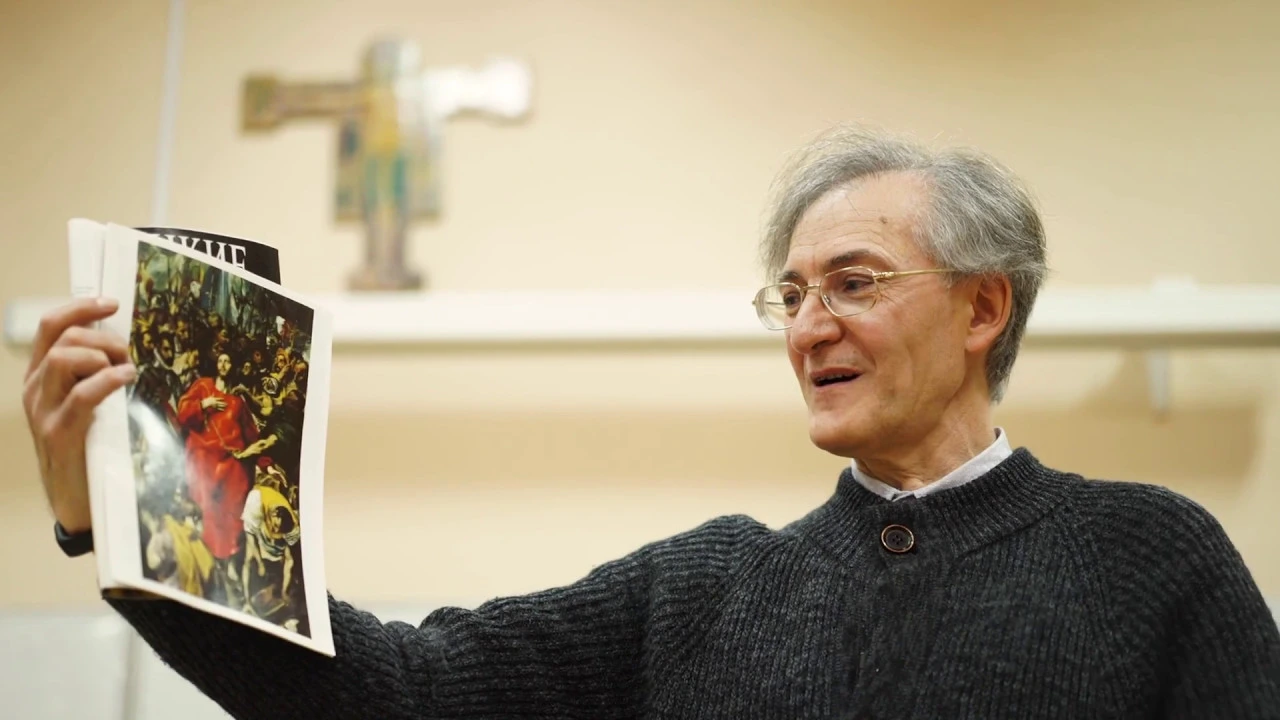
Эстетика классицизма и барокко, лекция 10/12, Пустовит, курс "Эстетика"
Aesthetic of Classicism and Baroque
Overview of Artistic Styles in Europe
- The lecture discusses the aesthetics of classicism, focusing on artistic styles in Europe before the 17th century, which exhibited a certain unity, including styles like antiquity, Romanesque, Gothic, and Renaissance.
- The 17th century marks the first era where two major artistic styles—classicism and baroque—coexisted and influenced each other. Classicism is primarily associated with France.
Characteristics of Classicism and Baroque
- The term "classicism" derives from the Latin word "classicus," meaning exemplary. For classicists, ancient art serves as the ultimate model that artists should strive to emulate.
- Central to classicist art is reason; Aristotle's philosophy emphasizes that humans are distinguished by their rationality compared to plants (growth needs) and animals (instincts).
Human Nature in Art
- In contrast to classical views emphasizing reason, medieval Christian thought prioritized faith and the immortal soul over rationality.
- The 17th-century perspective highlights a conflict between reason and passions within human nature. This dichotomy becomes crucial for artists during this period.
Reason vs. Passions
- Reason is viewed as divine or noble while passions are seen as base or animalistic. This reflects a duality in human nature: between angelic qualities (reason) and animalistic instincts (passions).
- For classicists, reason is paramount; conversely, baroque artists focus more on expressing passions.
Religious Context: Protestant Reformation vs. Catholic Church
- The 16th century saw significant religious upheaval with Martin Luther's actions leading to a split in Christianity between Protestant countries and those remaining loyal to Catholicism.
- The core difference lies in church hierarchy; Catholicism features a structured hierarchy while Protestantism advocates for direct communication with God without intermediaries.
Impact of Reformation on Society
- The Catholic Church's hierarchical structure faced criticism due to contradictions with its teachings on humility and poverty amidst wealth among clergy.
- Protestants proposed that sincere believers do not need church hierarchy but can connect directly with God through personal faith.
Consequences of Direct Communication with God
- This revolutionary idea challenged established norms within the powerful Catholic Church structure, leading to tensions during the Reformation.
- Protestants emphasized individual engagement with scripture (the Bible), promoting intellectual activity rather than reliance on clerical authority for spiritual guidance.
Understanding Protestant Ethics and Capitalism
The Nature of Protestants and Their Beliefs
- The speaker discusses the leniency shown towards a child's misbehavior, contrasting it with the serious nature of Protestant beliefs, emphasizing that God (referred to as "Apple") judges individuals.
- Reference is made to Max Weber's influential book "The Protestant Ethic and the Spirit of Capitalism," highlighting how responsible adults shaped capitalism through self-denial and rationality.
Characteristics of Protestant Culture
- Protestants are described as individuals capable of delaying gratification for extended periods, which is crucial in forming a capitalist society.
- The discussion shifts to the Catholic Church's struggle against its diminishing influence, noting that violence was not the only method employed to retain followers.
Engaging Human Nature: Reason vs. Passion
- The speaker emphasizes that human nature consists of both reason and passion; thus, engaging an audience requires appealing to their passions rather than just their intellect.
- Catholic rituals are designed to be visually captivating and emotionally engaging, using elaborate interiors and artistic expressions to attract believers.
Artistic Representations in Baroque Culture
- Baroque artists often depict themes of miracles and martyrdom due to their emotional impact on viewers.
- An example is given with Bartolomé Murillo’s painting "Martyrdom of Saint Andrew," showcasing dramatic scenes intended to evoke strong emotions from devout viewers.
Emotional Impact Through Art
- The emotional intensity in artworks like Annibale Carracci’s "Martyrdom of Saint Catherine" illustrates how visual storytelling can deeply affect audiences.
- El Greco's work is highlighted for its powerful color contrasts and dynamic compositions that convey profound spiritual experiences.
Comparing Artistic Eras: Renaissance vs. Baroque
- A comparison between different representations of Saint Sebastian reveals a shift from serene Renaissance depictions by Antonello da Messina to more dramatic portrayals in later works.
Understanding Baroque and Classicism in Literature
Theatrical Nature of Baroque
- The Baroque style is characterized by its theatricality, appealing to emotions and passions to engage the audience effectively.
- Artists like Nicolas Boileau, a leading theorist of Classicism, emphasized the importance of emotional connection in their works.
Key Theorists of Classicism
- Nicolas Boileau's influential work "L'Art Poétique" serves as a guide on how to write poetry and create literary works within the framework of Classicism.
- Classicism is grounded in reason, with strict norms dictating what constitutes good taste versus bad taste.
Rational Foundations of Classicism
- Good taste in literature requires clarity, logic, and rationality; these principles are rooted in the philosophical ideas introduced by René Descartes.
- Descartes challenged traditional beliefs by asserting that knowledge should be derived from reason rather than sensory experience.
Importance of Reason in Literature
- The emphasis on reason over emotion marks a significant shift from previous artistic expressions dominated by faith and miracles.
- Clarity and logical consistency are essential qualities expected from writers within the Classical tradition.
Central Role of Drama
- Both Baroque and Classical movements place drama at the center of their artistic endeavors, with playwrights meticulously crafting their narratives.
- To illustrate differences between Baroque and Classical methods, two specific works will be analyzed: Shakespeare's "Hamlet" (Baroque) and Racine's "Andromaque" (Classic).
Exploring Racine's "Andromaque"
Overview of Racine’s Tragedy
- Jean Racine’s tragedy "Andromaque," written between 1639–1699, exemplifies Classical drama through its adherence to ancient themes.
Plot Summary
- The narrative revolves around characters from Homer's epics during the aftermath of the Trojan War. Andromache is depicted as a widow captured after Hector's death.
Character Dynamics
- Pyrrhus, son of Achilles, desires Andromache despite her status as a captive. His internal conflict arises due to his obligations as a ruler versus his personal feelings for her.
Tensions Between Duty and Desire
- Pyrrhus faces pressure from various fronts: he has political duties towards his kingdom while being romantically entangled with both Andromache and Hermione.
Diplomatic Complications
Complex Relationships and Emotional Turmoil in "Andromache"
The Love Quadrangle
- Hermione is in love with Pyrrhus, who is unrequitedly in love with Andromache. This sets up a complex emotional dynamic among the characters.
- Pyrrhus is desperate as he seeks to win Andromache's affection, but she despises him for killing her husband, creating a tension-filled relationship.
Desperation and Threats
- Driven by despair, Pyrrhus threatens Andromache, demanding that she marry him or risk losing her son. His motivations are rooted in his own hopelessness.
- Andromache faces an agonizing choice between loyalty to her deceased husband and the safety of her child amidst Pyrrhus's threats.
Hope and Betrayal
- Despite the turmoil, Hermione clings to hope that Pyrrhus will choose her. However, this hope proves illusory as events unfold.
- Hermione expresses deep resentment towards Pyrrhus for his betrayal and contemplates revenge against him if he does not die.
The Climax of Conflict
- As tensions escalate, Andromache pretends to agree to marry Pyrrhus while secretly planning his demise after securing promises regarding her child's welfare.
- The wedding ceremony takes place under false pretenses; immediately afterward, Pyrrhus is killed by Orestes’s warriors at Hermione's behest.
Aftermath and Reflection
- Following the chaos, Orestes confronts Hermione about the outcome of their plans. Their dialogue reveals deeper themes of morality and consequence within the narrative.
- The play contrasts strict logical structure with chaotic emotions, highlighting how these elements coexist within human experience.
Themes of Duty vs. Passion
- The narrative explores the conflict between reason (duty) and passion (love), showcasing how different characters navigate these opposing forces.
- Characters like Andromache embody nobility through self-sacrifice for her son while others succumb to destructive passions leading to tragedy.
Conclusion: A Study of Character Dynamics
- Hermione’s powerful monologue condemns Orestes for his actions while asserting her independence from toxic relationships.
Character Development in Classical and Baroque Drama
The Nature of Heroes in Classical Drama
- The concept of a hero is discussed, emphasizing that they should remain true to themselves, reflecting the legacy of antiquity. This notion suggests that characters are often portrayed as static entities driven by their passions or duties.
- Russian playwright Denis Fonvizin exemplifies this with character names in his comedy "The Minor," where names like Pravdin (truthful) and Skotinin (foolish) directly reflect their traits, showcasing how classical dramaturgy uses naming for characterization.
- The aesthetics of classicism demand adherence to the three unities: action, time, and place. A play must maintain a singular focus on events that logically follow one another within a 24-hour timeframe and occur in one location.
- The insistence on these unities is rooted in the belief that deviation leads to implausibility; for instance, spanning 30 years within a single play would be considered unrealistic.
- Additionally, classical drama requires clear motivation behind all actions. The emphasis is placed on meaning over mere beauty in poetry; every event must serve a purpose within the narrative structure.
Contrasting Approaches in Baroque Drama
- In contrast to classical norms, baroque drama—exemplified by Shakespeare—often disregards the three unities. His plays can span extensive periods and feature complex character developments across various life stages.
- Shakespeare's characters are multifaceted and paradoxical; they embody diverse emotions and traits rather than fitting into rigid archetypes. This complexity allows them to evolve throughout the narrative.
- An example highlighted is Falstaff from Shakespeare's works, illustrating how characters possess rich inner lives filled with conflicting desires and motivations.
Character Complexity: Romeo and Juliet
- The tragic ending of "Romeo and Juliet" raises questions about love's dual nature—Juliet’s suicide reflects both beauty and cruelty. Her act demonstrates profound love but also highlights her disregard for her parents' feelings.
- This duality prompts reflection on morality; an act can be seen as beautiful yet simultaneously cruel without negating either quality.
Hamlet: A Study in Character Development
- Shakespeare presents characters through development rather than static portrayals. For instance, "Hamlet" begins with military guards discussing sightings of a ghost—a setup that introduces tension early on.
- Hamlet himself starts as a fortunate young man poised for kingship but faces turmoil following his father's mysterious death and his mother's hasty remarriage to his uncle Claudius.
- As Hamlet navigates these challenges, he transforms from an optimistic prince into someone burdened by existential questions after learning about his father's murder at Claudius's hands.
The Complexity of Hamlet's Character
Hamlet's Dramatic Strategy
- Hamlet utilizes the arrival of actors to create a dramatic scene that reflects the circumstances surrounding the king's death, showcasing his cunning and theatricality.
The King's Guilt Revealed
- During the play, Hamlet aims to expose King Claudius’s guilt; he believes that if Claudius is truly guilty, he will react negatively to the performance.
Moral Ambiguity of Hamlet
- A discussion arises about whether Hamlet is a positive hero. Despite his quest for justice, he causes multiple deaths throughout the play, raising questions about his morality.
Count of Casualties
- An analysis reveals that Hamlet has indirectly caused several deaths: Rosencrantz and Guildenstern, Polonius (accidentally), Laertes in a duel, and ultimately King Claudius—leading to a total of five deaths attributed to him.
Transformation Through Violence
- The speaker notes how each murder changes Hamlet’s character significantly; by the end of the play, he is not who he was at its beginning due to the weight of his actions.
Shakespeare's Exploration of Character
Dialectical Development
- Ivan Smirnov describes Shakespeare as an artist who views character as evolving through dialectical processes rather than being static or unchanging.
Contrasting Views on Character
- The contrast between classical views (fixed character traits) and Shakespearean views (characters undergoing transformation due to internal struggles).
Tolstoy's Critique
- Leo Tolstoy critiques Shakespeare by arguing that Hamlet lacks distinct character traits; instead, he represents a person in deep psychological turmoil without fixed characteristics.
Artistic Systems: Classicism vs. Baroque
Differences in Aesthetic Ideals
- The discussion highlights differences between classical aesthetics (focused on harmony and proportion from antiquity) versus baroque aesthetics (embracing complexity and infinity).
Synthesis in Masterpieces
- Notable works like Mozart’s compositions exemplify how both classical and baroque ideals can coexist harmoniously within art despite their apparent contradictions.
Pushkin’s Tragedy as an Example