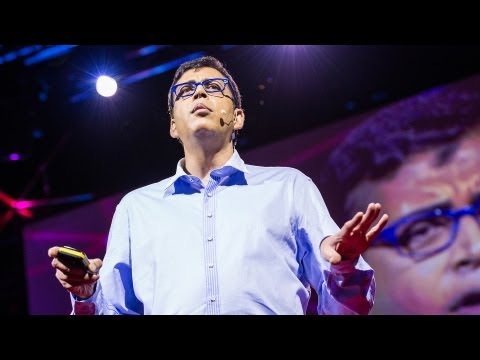
Pankaj Ghemawat: Actually, the world isn't flat
How Globalized Are We?
Introduction to Globalization Perspectives
- The speaker discusses the importance of accurately assessing globalization, highlighting a prevalent view that national borders are becoming less significant.
- This perspective is shared by both pro-globalizers and anti-globalizers, indicating a widespread belief in the impact of globalization on national boundaries.
Historical Context of Globalization
- The speaker references David Livingstone's observations from the 1850s about technological advancements integrating East Africa with the world, suggesting that concerns about globalization are not new.
- Emphasizes the need to question how globalized we truly are before making future predictions.
Data Analysis on Globalization
- The speaker presents data on various flows (information, people, capital, trade), starting with voice-calling minutes where only 2% were cross-border calls.
- Discusses first-generation immigrants representing about 3% of the world's population and foreign direct investment accounting for nearly 10% of global investments.
Trade Statistics and Misinterpretations
- Highlights discrepancies in export-to-GDP ratios due to double-counting in official statistics; suggests actual exports may be under 20%.
- Argues that current perceptions overstate internationalization levels compared to historical benchmarks.
Public Perception vs. Reality
- Shares findings from surveys indicating a tendency for people to overestimate globalization metrics significantly.
- Introduces the term "globaloney" to describe this phenomenon of inflated perceptions regarding globalization statistics.
Reasons Behind Overestimations
- Points out a lack of comprehensive data contributing to misconceptions about globalization; mentions critique from Tom Friedman regarding narrow data usage.
Why the World Isn't Flat: A Critical Examination
The Lack of Data in Globalization Discussions
- The speaker highlights a significant absence of data in discussions about globalization, urging listeners to seek their own information to evaluate commonly accepted insights.
- This lack of empirical evidence contributes to misconceptions and oversimplifications regarding global interconnectedness.
Peer Pressure and Perceptions
- The speaker recounts an interview experience where he was questioned about his belief in a "round world," illustrating societal pressure to conform to popular narratives about globalization.
- He notes that questioning the idea of a flat world can lead to being perceived as outdated or out of touch with modern views.
Technology's Role in Globalization Misconceptions
- The concept of "techno-trances" is introduced, suggesting that prolonged exposure to technology can distort perceptions of its impact on cultural and geographical barriers.
- An analysis of Facebook friendships reveals that only 10-15% are international, contradicting the notion that technology has fully globalized social interactions.
Understanding the Limits of Globalization
- Recognizing the limited extent of globalization (10-20% full glass analogy) is crucial for identifying potential areas for further integration and improvement.
- Overstating globalization can lead to complacency, hindering efforts toward achieving greater global welfare.
Addressing Fears Around Globalization
- Accurate representations help mitigate fears associated with globalization; understanding actual statistics can reduce anxiety around issues like immigration.
- Examples from France show how misperceptions about immigrant populations can fuel heated debates; correcting these figures may foster more rational discussions.
Insights on Foreign Aid Perception
- A survey revealed Americans overestimate foreign aid spending at 30%, while actual contributions are closer to 1%, indicating a disconnect between perception and reality.
- Awareness of these discrepancies may encourage more support for foreign aid initiatives, highlighting the importance of accurate information in shaping public opinion.
Turn any video into a summary like this
YouTube links, meetings, lectures. With transcripts, search, and chat.