Avi Reichental: What’s next in 3D printing
New Section
The speaker reflects on their grandfather's craftsmanship, the impact of the Industrial Revolution on traditional skills, and introduces the concept of 3D printing as a means to reconnect with heritage through localized manufacturing.
Impact of Industrial Revolution
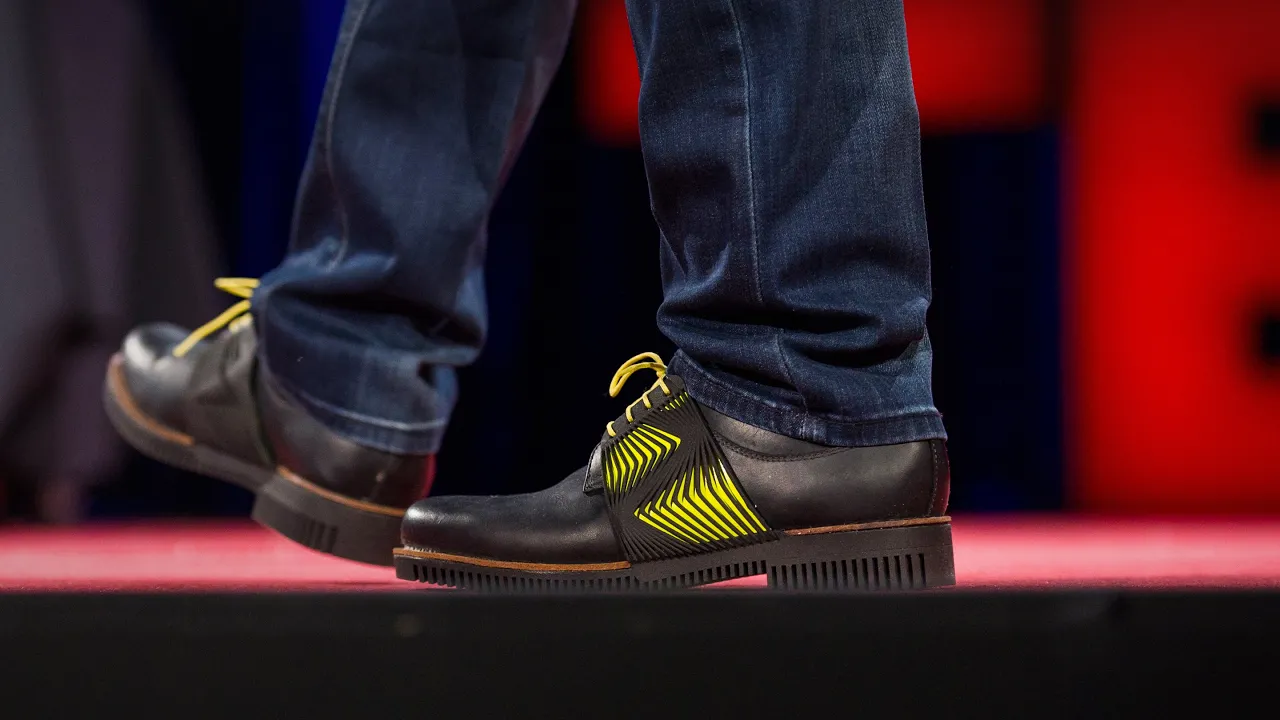
- The speaker's grandfather was a cobbler who made custom shoes, highlighting traditional craftsmanship.
- The Industrial Revolution improved humanity but led to the decline of traditional skills like shoemaking.
Introduction to 3D Printing
- Chuck Hull invented 3D printing in 1983, marking a shift towards digital fabrication.
- Emphasizes that 3D printing will not just propel us into the future but also connect us with our heritage through localized manufacturing.
The Power of Personalization
Discusses how 3D printing enables personalized products such as eyewear and medical devices, emphasizing its potential to enhance comfort and functionality for individuals.
Personalized Products
- Highlights the ability of 3D printing to create perfectly fitting eyewear without hinge assembly.
- Shares a story about creating a customized robotic suit for Amanda, showcasing the importance of tailored solutions for individuals' needs.
Revolutionizing Medical Devices
Explores how 3D printing is transforming medical device production by enabling personalized and innovative solutions for conditions like scoliosis and amputations.
Medical Innovations
- Describes advancements in personalized medical devices like scoliosis braces and dental restorations.
- Mentions applications in full knee replacements and aircraft engine production, highlighting cost savings and efficiency gains.
Expanding Possibilities Beyond Earth
Examines how 3D printing extends beyond Earth into space exploration, showcasing examples from companies like Planetary Resources and Google's Ara project.
Space Exploration
- Discusses Planetary Resources' cost-effective space probe made using 3D printing technology.
- Mentions Google's Ara project enabled by high-speed 3D printing for modular phone components.
Innovating Food Industry
Explores the potential impact of 3D printing on food production, introducing concepts like edible creations and personalized nutrition through additive manufacturing techniques.
Food Applications
- Envisions creating edible designs with intricate details using 3D printing technology.
Turn any video into a summary like this
YouTube links, meetings, lectures. With transcripts, search, and chat.