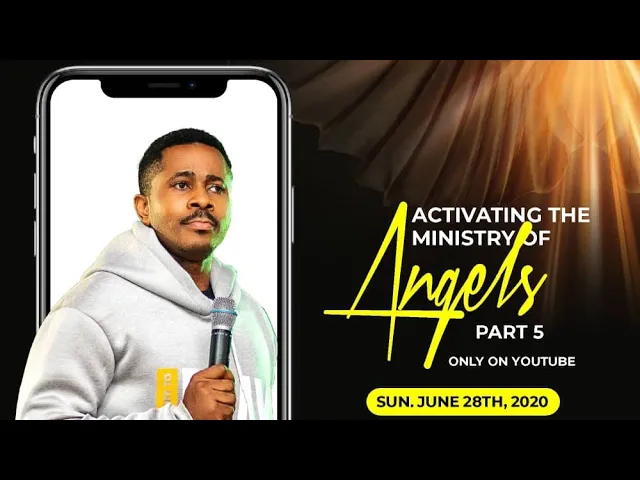
ACTIVATING THE MINISTRY OF ANGELS (PART 5) with Bishop Feyi Daniels
Understanding the Ministry of Angels
Introduction to God's Word and Prayer
- The speaker opens with a prayer, asking for alignment between their words and God's will, emphasizing the importance of divine guidance in delivering the message.
- The speaker expresses gratitude for the privilege of sharing the gospel and highlights that transformation comes through light and revelation.
Revelation as a Spiritual Tool
- The concept of revelation is introduced as a "ladder in the spirit," essential for personal growth and understanding one's dominion over angels.
- Reference to Hebrews 1:14 emphasizes that angels are ministering spirits sent to assist those who will inherit salvation, indicating their role in human affairs.
Understanding Angelic Activities
- Acknowledgment of various biblical accounts where angels performed significant acts, such as parting the Red Sea and providing sustenance during journeys.
- The speaker stresses that understanding angelic ministry is crucial for Christians; ignorance can limit supernatural activities in one’s life.
Consciousness and Activation of Angels
- Discussion on how believers exist among innumerable angels, highlighting the need for awareness of this spiritual reality.
- Emphasis on consciousness as a key factor in activating angelic assistance; mere prayer without understanding may not yield results.
The Role of Words and Heart Alignment
- Importance placed on aligning one's heart with spoken words; what resides deeply within influences external manifestations.
- Jesus' example with the fig tree illustrates how faith must be rooted in both heart and speech to activate spiritual principles effectively.
Dominion Over Creation
- Exploration of humanity's dominion over creation as stated in Genesis 1:28, which includes authority over spiritual beings like angels.
- Reiteration that God designed man to have control over all created things, including angelic forces.
Controlling Angelic Activity
- Discussion on how humans can allow or disallow angelic activity based on their own spiritual state and authority given by God.
- Insight into how mastery over oneself translates into control over servant spirits (angels), linking personal discipline with spiritual influence.
Conclusion: Mastery Through Control
- The principle that whatever controls an individual also governs their dominion; self-control leads to effective management of spiritual resources.
The Power of Words and Language
The Influence of Words
- The speaker discusses how words can control actions, comparing them to a bit in a horse's mouth that directs its movement.
- A small rudder can steer a large ship, illustrating that even minor elements (like the tongue) can have significant influence over larger entities.
- The tone and words spoken by an individual can dictate the course of their life, emphasizing the importance of language in shaping outcomes.
Dominion Over Life Through Words
- Humans are under the dominion of their own words; what controls man also governs his dominion over others.
- Words confer dominion upon humans; they are essential for exercising authority and blessings given by God.
- The devil tempted Jesus through conversation, highlighting the power and significance of words in spiritual contexts.
Language as a Bridge Between Realms
- The speaker references Paul's writings about speaking with tongues, suggesting that language connects humans with divine beings (angels).
- There is a distinction between human languages and spiritual tongues; both serve to unify man with higher realms.
Sound and Spirit Interaction
- Language creates relationships that facilitate emotional and thought transmission between spirits and humans.
- Sound is crucial for communication; it is not just letters but sound itself that resonates with spiritual entities.
The Role of Sound in Spiritual Communication
- Spirits respond to sound rather than written words; this emphasizes the auditory nature of divine interaction.
- Biblical references indicate that God responds to calls made through sound, reinforcing the idea that vocal expressions hold power.
Case Study: Blind Man's Cry for Help
- An example from Luke illustrates how sound (the blind man's cries for mercy) prompted Jesus to act, showcasing the potency of vocal expression in invoking divine response.
Understanding the Ministry of Angels
The Role of Angels in Response to God's Word
- The speaker references Psalm 103:20, emphasizing that angels excel in strength and obey God's commands, highlighting their responsiveness to His word.
- The description of angels as "mighty warriors" who carry out God's commands illustrates their active role in the spiritual realm, obedient to the sound of His words.
- Achieving a proper posture—alignment of heart and mouth—is crucial for believers to effectively release sound words that activate angelic ministry.
- To turn God's Word into sound, one must speak it aloud; this act creates a connection between human beings and the spirit realm through vocalization.
- Speaking God’s Word gives it power; it is equally potent when spoken by humans as when spoken by God Himself.
The Power of Spoken Words
- The significance lies not in who speaks but in what is spoken; Daniel's experience exemplifies how his words were heard by God and prompted angelic response.
- In Daniel 10:12, an angel tells Daniel that his words were heard from the first day he sought understanding, underscoring the importance of prayerful communication with God.
- Consistency and persistence in prayer are vital; Daniel's consciousness and faith led to divine intervention despite initial delays.
- Believers must understand that speaking with intention activates angels; they respond only when there is a conscious declaration aligned with faith.
- Angels surround those who fear the Lord but will only act upon hearing declarations made by believers.
Activation and Confusion Surrounding Angelic Activity
- Many people misunderstand or deactivate angelic activity through their speech; clarity in communication is essential for effective ministry from angels.
- The speaker emphasizes that angels do not operate independently but require verbal activation from humans to fulfill their roles.
- An example given is Mary’s encounter with an angel regarding Jesus’ birth, illustrating how human words can facilitate divine action through angelic messengers.
Understanding Redemption and Angelic Legality
- Jesus mentions His ability to call upon legions of angels (Matthew 26:53), which should not be confused with Hebrews' teaching on innumerable angels available due to redemption.
- Redemption has established legal grounds for angelic assistance; believers can claim this authority based on Christ's sacrifice.
Understanding the Authority of Prayer and Angels
The Role of Prayer in Directing Angels
- The speaker emphasizes the importance of directing prayers to the Father, similar to how Jesus prayed, rather than relying on external organizations.
- Believers have authority in prayer; they can decree commands for angels to act according to their requests.
- The concept of "the place of words" is introduced, highlighting that effective prayer involves conscious faith and understanding.
Biblical Examples of Angelic Intervention
- Reference is made to Acts 12, where an angel intervenes during Peter's imprisonment, showcasing divine assistance through prayer.
- Peter's response to the angel’s command illustrates a combination of faith and action leading to miraculous deliverance.
The Power of Specific Requests in Prayer
- The speaker discusses how specific prayers yield specific results, using the metaphor of praying for sunlight at night as an example.
- Emphasizes that clarity in requests leads to clear answers from God regarding supernatural interventions.
Sound Energy and Its Impact on Deliverance
- Words are described as sound energy that can influence angelic actions; consistent prayer generates significant spiritual energy.
- The narrative highlights that many perceived angelic interventions may actually stem from human prayers filled with faith.
Faith and Response in Prayer Dynamics
- A discussion arises about whether God responds based on reality or faith; it is suggested that sound released during prayer impacts outcomes more than the speaker's intent.
Understanding the Role of Angels in Spiritual Context
The Nature and Function of Angels
- The speaker reflects on a previous discussion about the supply of spiritual knowledge, emphasizing the importance of understanding angelic functions to enhance one's spiritual life.
- There is a mention of fallen angels and their lack of awareness regarding their loss of glory, suggesting that they did not fully comprehend what they forfeited.
- The speaker highlights that while angels possess significant intellectual abilities, they have existed for thousands of years, accumulating vast experience which informs their insights.
Knowledge and Limitations of Angels
- It is stated that God selectively reveals messages to angels; thus, they are not all-knowing but rather limited by divine revelation.
- A biblical reference (2 Samuel 14:20) illustrates that angels have wisdom akin to God's understanding but are still bound by certain limitations in knowledge.
Angels' Influence on Human Thoughts
- The speaker discusses how angels can influence human thoughts and decisions without direct intervention, citing examples from scripture where thoughts were dropped into people's hearts.
- In 1 Peter 1:12, it is noted that angels desire to learn and understand more about human experiences and God's plans.
Practical Implications for Believers
- The speaker shares a personal anecdote about how understanding angelic communication transformed their prayer life and spiritual results.
- It is suggested that angels can communicate through thoughts in Hebrew or other languages, indicating a unique ability to connect with humans spiritually.
Engaging with Angelic Assistance
- The concept is introduced that believers can activate angelic assistance through prayer and speaking in tongues, creating a connection between humans and angels.
The Power of Words and Authority
The Role of Divine Authority in Human Affairs
- The speaker emphasizes the significance of words, suggesting that just as they came for Daniel's words, they will come for the audience's words in the name of Jesus.
- An analogy is drawn between divine judgment and earthly law; a judge's decree leads to death, illustrating how laws operate through human agency.
- The concept of sin and death is introduced, explaining that it is not merely the act but the law itself that enforces consequences.
- The speaker claims authority as a man to enact spiritual laws, stating that he can invoke these laws without being the direct cause of death.
- A personal anecdote illustrates this authority: after confronting a lecturer who threatened his daughter’s graduation, he asserts that divine law executed judgment on those who opposed her.
Testimonies of Divine Intervention
- The speaker recounts an incident where he demanded change from a lecturer, leading to dire consequences for those who resisted.
- He describes how three lecturers died on the same night after refusing to release results, attributing their deaths to divine law rather than personal malice.
- This narrative reinforces his belief in the power of spoken authority and its alignment with divine will.
- He reflects on his understanding of angels' activities in enforcing God's will through human declarations and actions.
Confrontation with Evil Forces
- A story unfolds about a confrontation with individuals intending harm; despite threats against him, he maintains faith in his protection through divine authority.
- The speaker recalls an intense moment when faced with gun violence but refuses to succumb to fear or relinquish his faith.
- His steadfastness is highlighted as he believes that what resides within one's heart manifests outwardly; thus maintaining purity is crucial amidst danger.
Conclusion and Future Discussions