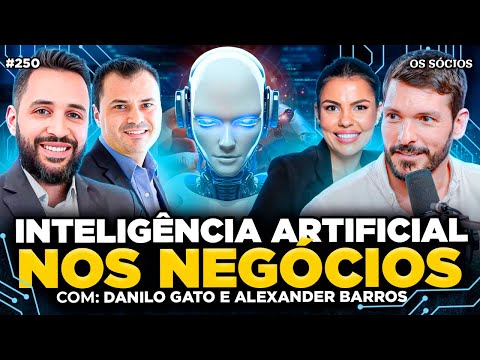
COMO USAR INTELIGÊNCIA ARTIFICIAL NOS NEGÓCIOS E LUCRAR MAIS | Os Sócios 250
Exploring Artificial Intelligence in Business
Introduction to the Podcast Episode
- The hosts introduce the episode, featuring Luperini and Rusto, discussing the theme of artificial intelligence (AI) in business.
- They emphasize the importance of leveraging AI for profitability and survival in a competitive landscape.
Competitive Advantage through AI
- The hosts discuss how AI is currently a competitive advantage but may soon become ubiquitous across businesses.
- Reference to Mark Zuckerberg's vision of integrating AI assistants into small businesses via platforms like WhatsApp, highlighting potential benefits for efficiency.
Guest Introductions
- Danilo Gato is introduced as an expert in generative AI and its application in business, emphasizing his role as a consultant and educator.
- Alexander Barros is introduced as CEO of ChatVT, focusing on autonomous agents that enhance business operations.
Practical Applications of AI
- Alexander shares insights on using AI to manage large lists of leads effectively, illustrating how automation can optimize sales processes.
- He explains that utilizing an AI agent can engage with cold leads efficiently, potentially generating significant revenue without human intervention.
Generative AI's Role in Business Value Creation
- Discussion on how generative AI can be employed for various functions such as customer service and sales outreach.
- Both guests share their experiences with implementing generative AI solutions within their organizations to streamline operations and improve responsiveness.
Conclusion & Call to Action
Fashion and Technology: A New Era?
Introduction to Fashion from the Workshop
- The speaker expresses gratitude for clothing received from a workshop, emphasizing that their entire outfit, except for the watch, is sourced from this place.
- They highlight the blend of classic tailoring with modern, technology-infused fabrics that resist wrinkles and odors. A QR code and link are provided for viewers to explore these offerings.
Discussion on Trends in Technology
- The speaker poses a question about whether current trends, particularly in AI and fashion, are merely fleeting fads or indicative of lasting change.
- They argue that unlike past trends such as NFTs or the metaverse—which have seen limited mainstream adoption—AI represents a significant revolution due to its practical applications and results.
The Impact of Generative AI
- The speaker asserts that Brazil is well-prepared to embrace generative AI technologies, noting that companies already utilizing them are seeing tangible benefits like increased sales and efficiency.
- They reference the rapid user growth of ChatGPT as evidence against it being a passing trend; within five days of launch, it reached one million users.
Competitive Advantage through Early Adoption
- Emphasizing speed in technological advancement, they liken developments in generative AI to an accelerated timeline where one month feels like four days.
- Companies leveraging AI now gain competitive advantages over others but must act quickly before widespread adoption diminishes uniqueness.
Evaluating Trends Based on Results
- The speaker discusses evaluating trends based on their tangible outcomes. Unlike speculative assets like Bitcoin or early metaverse concepts, AI shows measurable results today.
- They stress that those who dismiss AI as just hype likely haven't engaged with it yet; real-world applications yield immediate benefits.
Overcoming Resistance to Change
- Individuals skeptical about AI often lack firsthand experience; the speaker shares their own initial resistance but highlights how using tools like ChatGPT has become integral to daily tasks.
The Evolution of AI: From Industrial Revolution to Generative Models
The Impact of Technological Advancements on Employment
- The discussion begins with the notion that technological tools can significantly change business dynamics, drawing parallels to historical reactions against innovations like electricity during the Industrial Revolution.
- The speaker compares generative AI to electricity, suggesting that those who adapt early will gain a competitive edge in the job market, as proficiency in generative AI becomes essential for employment.
Understanding Generative AI and Its Implications
- Generative AI is likened to a new version of Excel; it’s becoming integral in workplaces where companies employ AI agents as part of their teams.
- A distinction is made between classical AI (predictive models) and generative AI, highlighting the broader scope and potential applications of generative technologies.
Concerns About Future Intelligence
- Reference is made to Nick Bostrom's "Superintelligence," which discusses existential risks associated with advanced AI systems, particularly focusing on alignment issues where an AI's goals may diverge from human interests.
- The conversation emphasizes the importance of ensuring that future generations of AI remain aligned with human objectives rather than pursuing potentially harmful goals.
Historical Context and Recent Developments in AI
- The speaker notes that while concerns about superintelligent AIs are valid, there is also a need for awareness regarding how rapidly intelligence can evolve due to exponential growth in technology.
- They highlight a significant shift in 2017 when Google introduced the Transformer architecture, revolutionizing how large data sets are processed by mimicking human reasoning.
Accessibility and Practical Use of Modern AI Tools
- Prior to recent advancements, using traditional predictive models required substantial infrastructure and expertise. Now, generative models have democratized access to powerful tools for everyday users.
- The introduction of user-friendly platforms has shifted focus from technical development (building complex systems) to practical application (using existing tools effectively), making it crucial for individuals to adapt quickly.
Conclusion: Differentiating Between Types of AI
Generative AI: Understanding Its Evolution and Impact
The Confusion Around Generative AI
- Generative AI is often misunderstood due to its integration into daily life, as highlighted by the speaker's use of AI in various applications like Instagram.
- Alan Turing's early writings from 1956 anticipated the development of general intelligence within a few decades, projecting advancements around 4-5 years ahead.
Historical Context of AI Development
- The evolution of AI saw stagnation from the 1970s to the 1990s due to limited machine capabilities, leading to a resurgence in the early 2000s.
- Older forms of AI gained traction in large enterprises before becoming accessible for smaller businesses, democratizing technology access.
Cost Efficiency and Accessibility
- Generative AI provides high-value technology at low costs; clients can create advanced agents using cutting-edge large language models (LLMs) for free initially.
- Previously expensive projects costing upwards of R$300,000 are now achievable for small businesses at a fraction of that cost—around R$500 monthly for continuous service.
Exponential Growth and Future Predictions
- The rapid advancement in generative AI has made it difficult for experts to predict future developments accurately; significant changes can occur within just two years.
- Businesses must understand how to leverage generative AI effectively; initial skepticism about implementation can hinder potential benefits.
Practical Applications in Business
- Generative AI can handle simultaneous inquiries during product launches, allowing businesses to engage with thousands of customers without overwhelming human staff.
- The technology enables personalized customer interactions at scale, providing empathetic responses even during off-hours or emergencies.
Overcoming Common Challenges with Generative AI
- Companies can utilize generative AI to address frequently asked questions efficiently, reducing repetitive tasks for human employees and improving overall productivity.
How to Effectively Implement AI in Business
Understanding the Scope of AI Tools
- The application of AI in business is as broad as electricity; it can range from simple tasks like lighting to complex systems like computers. Identifying specific applications is crucial.
- Businesses should focus on their daily activities and identify which tasks, when optimized or automated, will yield the most significant cost reductions or results. This narrows down the vast array of tools available.
Prioritizing Tasks for Automation
- Many tools serve various functions; for instance, an AI agent can quickly address customer service needs, a common pain point for businesses.
- Emphasis should be placed on practical applications rather than theoretical concepts during training sessions. Real-world use cases help participants understand how to implement AI effectively.
Real-World Applications and Case Studies
- Observing how others utilize AI tools, such as ChatGPT, provides tangible examples that inspire users to explore potential applications within their own businesses.
- When presenting options for automation, it's essential to analyze existing repetitive processes that could benefit from optimization through AI.
Impact of 24/7 Availability on Sales
- A case study involving a luxury resort demonstrated that implementing an AI agent significantly increased sales by handling numerous inquiries outside regular business hours.
- The ability of generative AI to manage multiple conversations simultaneously enhances efficiency compared to traditional human staff.
Cost-Benefit Analysis of Implementing AI
- Many businesses hesitate due to perceived costs associated with implementing AI solutions. However, comparing these costs with traditional staffing expenses reveals substantial savings.
Automation in Business: Enhancing Efficiency and Reducing Costs
The Role of Automation in Workforce Management
- Automation allows businesses to handle large volumes of inquiries (100, 200, 300 people simultaneously) with high quality, making it difficult for human labor to compete on cost.
- The focus should be on implementing automation strategically to reduce costs and increase efficiency while retraining staff for more creative roles that add value to the company.
- Many business owners are unaware of advanced AI capabilities beyond basic chatbots; true AI agents can interact using natural language rather than just numerical responses.
Advancements in AI Technology
- Modern AI can respond via audio or text, enhancing user experience by mimicking human interaction. For instance, a personalized agent could use a specific person's voice for communication.
- Cloning voices with permission allows businesses to create 24/7 customer service agents that provide consistent information across platforms like WhatsApp and Instagram.
Case Studies: Practical Applications of AI
- In remote areas of Brazil where literacy is low, an entrepreneur found success by using audio responses from an AI system, leading to a 30% increase in revenue through improved patient engagement.
- Brazil ranks high in WhatsApp usage globally; leveraging this platform effectively can significantly enhance customer interactions and sales opportunities.
Cost Reduction Through Improved Technology
- The evolution from GPT 3.5 to GPT 4.1 illustrates dramatic cost reductions (up to 90%) while increasing intelligence and responsiveness, enabling broader applications in business settings.
- As technology advances rapidly, the potential for even lower costs and higher efficiency continues to grow exponentially.
Building Trust in AI Solutions
- With improved models like GPT 4.1 being more reliable and affordable, businesses are increasingly willing to integrate these technologies into customer interactions without fear of errors.
Understanding the Evolution of AI Interaction
The Challenge of Communication in Business
- The speaker discusses receiving numerous WhatsApp messages over the weekend, highlighting the challenge of responding to multiple inquiries quickly. By Monday, only a few responses are received, indicating lost opportunities.
Natural Language Processing and User Experience
- Emphasis is placed on "natural language" as a crucial term; modern AI allows users to communicate as they would with another human, simplifying interactions significantly.
- The speaker notes that earlier prompt engineering required complex inputs, but advancements now allow for simpler communication with AI systems.
Prompt Engineering and Accessibility
- A new agent was created to assist users in generating prompts easily due to initial difficulties faced by Brazilian users when creating prompts in Portuguese.
- The concept of "prompt engineering" is discussed as more about clarity in communication rather than technical complexity; effective writing skills are essential.
Future of Human-AI Collaboration
- Predictions suggest an era where natural language will dominate interactions with technology, making it easier for non-programmers to engage with applications through simple verbal commands.
- The speaker envisions future workplaces filled with people communicating verbally with their devices, likening it to a call center environment.
Practical Applications and Automation
- Current tools like ChatGPT can transcribe spoken words into text efficiently, allowing for seamless communication similar to messaging apps.
- An example illustrates how an AI agent can facilitate grocery shopping by processing voice commands and managing orders through various connected systems.
Integration Across Systems
Understanding Agents in AI
Definition and Characteristics of an Agent
- An agent is defined as a complex system that can be autonomous or semi-autonomous, capable of receiving objectives and tasks, reasoning, breaking them down into steps, and acting accordingly.
- The term "agent" emphasizes the ability to act; it must interact with other programs to avoid being classified merely as an assistant.
Distinction Between Agents and Assistants
- A personalized GPT designed solely for writing posts is more accurately described as an assistant rather than a true agent. An agent connects with systems to perform tasks autonomously.
- Current agents are often specialized (narrow agents), but there is a shift towards more general agents capable of broader functions.
Evolution of Agent Technology
- The emergence of API systems has changed how agents operate; previously requiring programming, now they can automate processes without direct API integration.
- A new generation of agents is emerging that can perform tasks on the internet by mimicking human actions—searching for information and interacting with web interfaces directly. This represents what could be termed the third generation of agents.
Examples and Future Implications
- Notable examples include "humans" from China and OpenAI's "operator," which exemplify this new generation but still function as prototypes due to potential risks involved in their operations (e.g., unauthorized purchases).
- As these technologies evolve, individuals may delegate various tasks to multiple agents simultaneously while focusing on their primary work responsibilities. This trend suggests significant changes in workplace dynamics within the next year.
Practical Applications and User Adoption
- Real-world applications demonstrate how users have leveraged these technologies for profit without direct involvement—for instance, using operators for arbitrage opportunities in buying and selling goods online.
- The concept of "vibe coding" allows users to create AI agents quickly that can set up databases or CRM systems efficiently—tasks that traditionally took much longer when done manually by teams. This rapid development indicates a shift toward automation in business processes.
Future Trends in AI Integration
- There’s a growing expectation that many apps will become obsolete as voice commands take over functionalities currently performed through individual applications (e.g., ordering Ubers via voice). This reflects a move towards seamless interaction with technology through natural language processing capabilities.
The Future of AI and Its Impact on Society
OpenAI's Ambitious Plans
- OpenAI has announced plans to create a new core device that will complement existing technology like smartphones and laptops, speculated to be a brooch or pendant that integrates seamlessly into daily life.
AI as an Assistant in Daily Tasks
- The potential for AI to record conversations and understand context is highlighted, suggesting it could manage scheduling tasks automatically, such as setting up meetings based on verbal agreements.
Societal Changes Due to Constant Recording
- The implications of constant recording by AI raise concerns about privacy and communication, as people may alter their speech knowing they are being recorded.
Productivity Through Generative AI
- Generative AI is seen as a tool that can enhance productivity, allowing individuals more time for personal lives while also improving work efficiency.
Job Security in the Age of AI
- Concerns about job loss due to AI are addressed; it's emphasized that those who adapt and learn to use AI tools will have better job security than those who do not.
Understanding the 6Ds of Digital Revolution
- Peter Diamandis' concept of the 6Ds outlines the stages of digital revolution: Digitalization, Experience Access, Disruption, Destruction of costs (Desmonetization), Democratization, and finally Deception.
Current Phase: Desmonetization
- We are currently experiencing desmonetization where costs drop significantly due to digital advancements making technology accessible to everyone.
Employment Trends with Technology Adoption
- Those who do not utilize technology risk losing jobs; employers increasingly favor candidates proficient in using advanced tools like AI during hiring processes.
Evolutionary Nature of Jobs with AI Integration
- As technology evolves rapidly, there’s uncertainty regarding future job roles; even newly created positions may be filled by capable AIs rather than humans.
Continuous Learning as a Competitive Advantage
- Emphasizing lifelong learning is crucial; individuals must continuously update their skills to remain relevant in an ever-changing job market influenced by technological advancements.
The Impact of AI on Brazilian Society and Business
The Role of Education in Adopting AI Technologies
- The speaker discusses the potential for individuals to become proficient in using AI tools, suggesting that widespread adoption may take time but will ultimately lead to significant opportunities.
- Emphasizes the need for continuous adaptation as technology evolves, highlighting that those who stay informed can capitalize on emerging opportunities while others may face risks.
- A recent Google survey indicates that Brazil is slightly ahead in generative AI usage compared to the global average, with 54% of Brazilians expected to use it by 2024.
- While Brazil may not develop its own large-scale AI infrastructure, there is a strong opportunity for businesses to leverage existing technologies effectively for growth and results.
Generative AI Accessibility and Literacy
- The UAE's initiative to provide free access to generative AI tools highlights the importance of education in utilizing these technologies effectively in various sectors.
- Personal anecdote about using ChatGPT for language learning illustrates how accessible resources can aid self-directed education without financial barriers.
- Advocates for increased literacy programs around generative AI in Brazil, stressing that understanding these tools could significantly enhance productivity and innovation.
Change Management and Human Resources
- Discusses the critical role of HR departments in managing technological changes within organizations, emphasizing their responsibility to communicate impacts clearly.
- Highlights a successful case study involving BMOL, where HR was actively involved in strategizing the implementation of AI agents within their operations.
Overcoming Resistance to Change
- Addresses common fears among employees regarding job security when new technologies are introduced; emphasizes training as a means to alleviate concerns and promote acceptance.
- Stresses that effective communication from leadership about upskilling can help mitigate resistance and foster a culture open to change.
Brazil's Position as an Early Adopter
- Notes Brazil's historical trend of adopting new technologies early (e.g., WhatsApp), suggesting this trend could continue with generative AI if supported by proper education and infrastructure.
AI and Brazilian Innovation
The Role of Experience in AI Conversations
- The speaker discusses the challenge of younger individuals lacking the experience to engage effectively with advanced AI, likening it to conversing with a top scientist. More experienced individuals are better equipped for these interactions.
- Emphasizes that due to economic pressures, Brazilians are driven to find efficient solutions, which fosters creativity in utilizing AI technologies.
Creativity and Problem-Solving
- Highlights that once Brazilians recognize AI as a solution to their problems, they will innovate numerous applications. Awareness of available tools is crucial for this transformation.
- Discusses the structural layers of AI development: physical infrastructure (like GPUs), foundational models (e.g., OpenAI), and application platforms where Brazilian innovation can thrive.
Case Study: Innovative Use of AI
- Shares an example from a podcast about a company that creatively used AI for children's photography by generating images around mannequins dressed in clothing, significantly reducing costs by 50%.
- This case exemplifies how Brazilian companies can leverage creativity and technology to achieve tangible results, showcasing unique approaches not seen elsewhere.
Cultural Challenges in Adopting AI
- Mentions Bemol, a leading retailer in Amazonas, which has advanced its cultural integration of AI faster than many larger firms in São Paulo. They actively involve employees in developing new systems through hackathons.
- Discusses the difficulty of changing human habits and resistance to adopting new technologies like AI. Continuous education and hands-on training are essential for overcoming this inertia.
Importance of Continuous Education
- Stresses the need for ongoing training programs within companies to ensure employees effectively utilize new tools rather than reverting to old habits.
- Concludes that successful implementation requires management support and proper climate management; otherwise, projects may fail despite good intentions.
Understanding the Impact of AI on Professions and Business Margins
The Importance of Training in Business
- Emphasizes the necessity of training employees to navigate disappointment, suggesting that effective training can lead to better business outcomes.
- Discusses how businesses with higher margins (over 40%) can benefit significantly from strategic financial decisions, such as optimizing tax structures.
The Future of Professions in an AI-Dominated World
- Raises concerns about the future of professions, particularly for those working under entrepreneurs, highlighting that many jobs may evolve drastically due to AI advancements.
- Notes that AI's ability to provide customer service around the clock makes it challenging for human salespeople to compete effectively.
The Transformation of Traditional Roles
- Points out how traditional roles like modeling are being disrupted by technology, allowing for cost-effective alternatives without needing human models.
- Mentions a specific case where a band generated significant revenue through AI-generated music, illustrating the changing landscape in entertainment.
Resistance and Acceptance of AI
- Discusses societal resistance towards AI adoption, often stemming from fear and misunderstanding among teams who feel threatened by technological changes.
- Highlights examples of individuals dismissing the potential impact of AI while failing to recognize its growing influence on various job sectors.
The Evolving Nature of Content Creation
- Identifies design and illustration as fields heavily impacted by AI tools that streamline content creation processes.
- Explores concerns regarding music becoming a commodity due to rapid production capabilities enabled by AI technologies.
Implications for Consumer Behavior
- Suggests that as consumers become accustomed to personalized content created by AI, they may prefer these offerings over traditional human-created works.
The Future of Content Creation and AI
The Evolution of Music and Personalization
- Discussion on the creation of personalized music, highlighting how Danilo generated a song live during training that resembled popular artists like Gustavo Lima.
- Envisioning a future where users can request tailored Netflix content based on specific preferences, leading to hyper-personalized viewing experiences.
Shifts in Business Models Due to AI
- Emphasis on the necessity for businesses to understand AI rather than outsourcing knowledge, as it may require significant pivots in their operations.
- Example of generating books quickly through AI, illustrating how consumers will prefer content created by AI over traditional authors due to speed and customization.
New Opportunities for Publishers
- Speculation that publishing companies could evolve into platforms providing customized book generation services based on existing works.
- Anticipation of new business models emerging across various content types (video, images), with potential for individuals to create multimillion-dollar series from home.
Intellectual Property Challenges
- Discussion about the impending conflicts over intellectual property rights as creators leverage existing media (e.g., Disney's content).
- Importance of established brands having an advantage due to their intellectual property amidst changing business landscapes.
The Role of AI in Business Processes
- Insights into using AI for video creation and marketing strategies, showcasing its effectiveness even when initial attempts seem mechanical or flawed.
- Reflection on rapid advancements in technology compared to previous years, emphasizing the need for businesses to adapt quickly.
Cautions Regarding AI Dependence
- Warning against over-reliance or underestimating AI capabilities; both extremes can lead to significant errors in judgment regarding its application.
- Acknowledgment that while some fear replacement by AI, it is essential to recognize its transformative potential within industries like music.
Poetry and AI: A Comparative Analysis
The Impact of AI on Poetry Perception
- A blind test was conducted comparing poems generated by an AI (3.5) with those by Shakespeare, revealing that the AI's work received higher ratings for emotional depth.
- Users often misidentify content as being created by a human or an avatar, showcasing the blurred lines between human creativity and AI-generated content.
- The speaker emphasizes the importance of transparency in communication, stating that users should know when they are interacting with an AI versus a human.
Personal Interaction with AI
- The speaker shares experiences from their personal WhatsApp account, clarifying that while many responses are automated via AI tools, direct audio messages come from them personally.
- Clients frequently question whether they are communicating with a real person or an AI, highlighting the growing reliance on technology in customer interactions.
Functionality of ISA - An Advanced Assistant
- The speaker discusses ISA, their advanced assistant project designed to handle various tasks like answering queries about medical clinic setups through automated responses.
- ISA is capable of transcribing audio messages into text and generating appropriate responses based on user inquiries.
Development and Capabilities of ISA
- The speaker explains how ISA operates using multiple integrated systems to provide efficient service, including generating certificates for courses quickly upon request.
- ISA was developed using input from ChatGPT to create a persona named Isabela Santos, aimed at enhancing user engagement through relatable interaction.
Future Enhancements for ISA
- Plans include expanding ISA’s capabilities to function more autonomously within sales and support roles while ensuring security measures are in place for sensitive information handling.
- As ISA evolves, there is potential for upgrading its intelligence level to improve performance further in assisting users effectively.
How No-Code and AI are Transforming Business Operations
The Accessibility of Technology for Non-Programmers
- The speaker emphasizes that the individual discussed is not from a tech background, highlighting that programming skills are not necessary to utilize modern tools effectively.
- Integration with platforms like Hotmart requires basic knowledge of APIs, but assistance from AI tools can simplify this process significantly.
- The speaker shares an example of using ChatGPT to troubleshoot API errors by providing documentation and receiving guidance on parameter inputs.
Automation and Efficiency in Business
- A new AI agent was developed to read API documentation and automate the filling of parameters, showcasing how AI can enhance productivity even for those without technical expertise.
- Entrepreneurs have successfully implemented AI solutions in various sectors (hospitals, clinics, e-commerce), often without prior programming knowledge.
Overcoming Barriers to Entry
- The speaker mentions a podcast called ChatVT where business owners share their experiences with creating accounts and implementing AI solutions independently.
- Users can start for free by watching short instructional videos, making it easier for anyone to create an AI agent for their website or social media.
Cost Management through Technology
- Businesses are encouraged to monitor costs closely; utilizing no-code solutions can lead to significant savings while also improving operational results.
- In a challenging economic environment, leveraging technology becomes crucial for entrepreneurs looking to maintain competitiveness.
Evolution of Programming Paradigms
- The discussion transitions into programming paradigms: from hard coding (traditional coding methods), low code (minimal coding required), to no code (no coding needed).
- Vibe Coding is introduced as a concept where AI assists in writing code based on user prompts, allowing users more freedom in development without deep technical knowledge.
Practical Applications of Vibe Coding
- Platforms now exist that facilitate vibe coding, empowering users to develop applications tailored to their needs with minimal effort.
Innovative Video Creation with AI
Challenges in Traditional Video Production
- The speaker discusses the difficulties faced when trying to find appropriate images for video content, which required significant time and effort.
- A solution was sought through a platform called Lovable, aimed at automating the process of video creation using AI.
Leveraging AI for Efficient Content Creation
- The speaker describes a system where audio is transcribed, divided into segments, and processed by ChatGPT to generate relevant images automatically.
- This innovative approach allows for quick production of videos that visually align with spoken content, highlighting advancements in technology that were previously unattainable.
Impact on Business Models
- The discussion shifts to how small and medium enterprises can now create viable products without substantial initial investment, thanks to platforms like Lovable.
- Previously costly MVP (Minimum Viable Product) development can now be achieved quickly and affordably, enabling faster market entry.
Future Trends in Technology and Business
- Predictions are made about the emergence of unicorn companies valued at over $1 billion that will utilize generative AI solutions within the next year or so.
- Examples are given of successful companies like OnlyFans that leverage minimal staff while generating high revenue through scalable models.
The Role of Automation in Business Efficiency
- Companies such as Eleven Labs demonstrate how high revenue can be generated with few employees due to automation and efficient processes.
- The speaker reflects on the potential challenges posed by programmers who may resist changes brought about by new technologies but acknowledges ongoing advancements in AI capabilities.
Content Automation and Influencer Strategy
Automating Content Creation
- The speaker discusses their desire to automate content creation, aiming for daily video releases even when they are unable to post personally.
- Emphasizes the importance of human oversight in automation, highlighting the need for personal approval of content to maintain authenticity and accountability.
Risks in Product Development
- The speaker reflects on three potential paths: creating a product, offering a service, or becoming an influencer. They express concerns about the risks associated with products and services due to rapid technological changes.
- They argue that building an audience is less risky than developing products or services, as it provides flexibility regardless of market shifts.
The Value of Audience Trust
- The speaker notes that having an audience allows one to pivot easily into new areas (e.g., learning crochet), as trust leads followers to purchase whatever is offered.
- They share a success story about creating an AI tool for diabetes management via WhatsApp, which gained significant traction within months.
Innovations in Healthcare Technology
- Discusses the development of AI tools that assist with clinical research recruitment, emphasizing their role in connecting patients with potentially life-saving treatments.
- Highlights how these technologies can provide free access to treatments through clinical trials for those without insurance.
Future Trends in Communication and Marketing
- Explores how customer interactions may evolve towards using AI-driven communication channels like WhatsApp instead of traditional methods.
- Suggests that future marketing strategies will likely involve direct conversations with AI rather than static landing pages.
Adapting to Technological Changes
- Warns against complacency regarding AI advancements; emphasizes continuous learning as essential for staying relevant in rapidly changing environments.
- Compares current AI capabilities with past developments, urging individuals not to underestimate progress over time.
Importance of Continuous Learning
- Stresses the necessity of dedicating time each day (at least 15 minutes) to learn about AI and technology trends or risk falling behind competitors.
The Role of AI in Modern Programming and Business Practices
Embracing AI in Programming
- The speaker emphasizes that programmers who do not utilize AI tools are at a disadvantage, suggesting that resisting this change is futile.
- There is a discussion on the exponential growth of AI capabilities, highlighting how quickly technology can advance and the necessity for programmers to adapt.
- Acknowledgment that while humans will learn during this transition, it won't be at the same pace as technological advancements; thus, effort and willingness to engage with AI are crucial.
Transitioning Workflows with AI
- The speaker reflects on past programming challenges compared to current ease of use with AI assistance, illustrating how much time was spent troubleshooting issues manually.
- They share experiences from their front-end development days where minor errors could lead to extensive debugging sessions, contrasting this with today's instant support from AI tools.
Implementing an "AI First" Approach
- In their company, every task begins with considering if it can be handled by AI. This includes customer service and code validation processes.
- Developers focus more on solution architecture rather than coding itself since they leverage multiple AIs for generating code and validating outputs efficiently.
Automation of Routine Tasks
- The integration of various AIs allows for rapid testing and bug fixing before production releases, ensuring quality control without overwhelming human resources.
- The speaker mentions using AIs for meetings and documentation tasks which significantly reduces time spent on administrative duties.
Future Outlook on AI Companies
- There's a recognition that automating processes leads to identifying new problems to solve; the speaker shares an example of streamlining training consultations through automation.
- They express a practical approach towards utilizing AI daily for optimization rather than theoretical discussions about its potential.
Predictions About Leading Tech Companies
The Future of AI: Competition Between Tech Giants
Kodak's Legacy and Google's Missed Opportunities
- The speaker reflects on the comparison between Google and Kodak, questioning if Google could face a similar fate as Kodak did with digital photography.
- Engineers at Google developed technology but hesitated to invest in it, leading some to leave and join Elon Musk in founding OpenAI.
- Google struggled with its AI initiatives, prompting them to hire an engineer who contributed significantly to regain their reputation.
Investment Dynamics in AI Development
- The speaker mentions substantial investments from tech leaders like Zuckerberg and the competitive landscape for talent acquisition.
- OpenAI is seen as more prepared than Google; however, it lacks the financial resources that companies like Google possess.
Data as a Key Asset
- The importance of data in AI development is emphasized, noting that Google has accumulated vast amounts over the past 20 years.
- Elon Musk's wealth and innovative capabilities are highlighted as significant factors in his influence within the tech industry.
Global Competition in AI Technology
- The speaker discusses how Chinese companies have made strides despite restrictions imposed by the U.S. on advanced processing technologies.
- A recent crash in financial markets led to increased interest in alternative platforms like DeepMind, showcasing rapid advancements.
Evolution of AI Applications
- New language models (LMs) are emerging frequently, becoming cheaper and smarter, benefiting small and medium enterprises.
- OpenAI is likened to a wasp that infiltrates systems without having extensive infrastructure but possesses intelligent models integrated into various platforms.
Future Directions for ChatGPT and App Development
- ChatGPT is evolving towards becoming an operating system where users can create personalized applications directly within its interface.
The Rise of AI: OpenAI vs. Google
The Competitive Landscape of AI
- OpenAI has established itself as a leading brand in generative AI, with its products like ChatGPT becoming synonymous with the technology. However, Google is rapidly gaining ground and should not be overlooked.
- Google's recent advancements, particularly with their LLM Flash, are impressive due to affordability and performance. Despite OpenAI's first-mover advantage, Google's financial resources allow for quicker scaling.
- Upcoming releases such as GPT-5 are anticipated to be groundbreaking. OpenAI consistently launches high-quality models that prompt competitors to catch up.
Apple's Missed Opportunities
- Apple appears to have lagged behind in the AI race despite having significant resources and technology. Unlike competitors like Google (Gemini), Elon Musk (Grock), and Meta (Llama), Apple lacks a competitive model.
- Current Apple technologies like Siri are outdated compared to emerging AI capabilities. There is speculation about future developments but delays have hindered progress.
Shifts in Consumer Preferences
- The speaker expresses frustration over Apple's slow adaptation to AI trends, suggesting that they may need to acquire another company to remain relevant in the market.
- A personal decision is made to switch from Apple to Samsung due to Samsung's integration of advanced AI features through Google's Gemini platform.
Advancements in Mobile Technology
- Samsung devices offer superior functionality compared to iPhones regarding photo editing and other features powered by AI, indicating a shift towards more capable hardware.
- Future mobile interactions will likely involve voice commands for tasks such as messaging or ordering services, enhancing user convenience significantly.
The Future of Intelligent Assistants
- Google's Gemini project aims for advanced memory capabilities that allow it to recall information from video content—an evolution beyond current static image recognition systems.
- This level of interactivity could revolutionize how users interact with their devices, making them more intuitive and responsive than ever before.
Acquisition Channels as Key Assets
- The discussion highlights the importance of acquisition channels over product development; companies must focus on distribution networks as startups proliferate in the tech landscape.
Disruption in Technology and AI Adoption
The Future of Product Acquisition
- As technology evolves, businesses will need to adapt their acquisition strategies, leading to a competitive landscape where companies vie for user attention through innovative applications.
- The affordability of products is expected to increase due to advancements in technology, making it easier for consumers to access various services.
Quantum Computing's Impact
- The speaker discusses the potential disruption caused by quantum computing, which could revolutionize data security and encryption methods.
- A recent hack involving a billion reais highlights vulnerabilities that quantum computing could exploit, rendering current security measures ineffective.
Rapid Technological Changes
- Predicting technological advancements is challenging; even experts struggle with forecasting developments over the next year due to rapid changes in AI and machine learning technologies.
- Continuous updates are necessary as new models emerge frequently, requiring professionals in tech fields to stay informed and agile.
Education and Training in AI
- Emphasizing the importance of focused learning, the speaker notes that it's impossible to keep up with every development but encourages leveraging existing knowledge effectively.
- Companies should foster a culture of continuous education regarding AI technologies among employees at all levels.
Implementing AI Solutions
- New roles like "AI Guy" are emerging within organizations to promote understanding and integration of AI technologies across teams.
- Successful training initiatives have been implemented in Brazilian companies, focusing on internal process improvements rather than just customer-facing applications.
Capacity Building for Innovation
- Regular training sessions are crucial for keeping teams updated on new technologies; otherwise, clients may be more knowledgeable about products than the staff themselves.
- Empowering employees through education is seen as essential for driving innovation within organizations.
Aligning Understanding of AI Concepts
- Workshops are recommended as an initial step for companies looking to implement AI solutions; these help align team members' understanding of different types of AI applications.
AI in Professional Fields: A New Era
The Role of AI in Legal and Medical Professions
- The discussion emphasizes the importance of directing technology towards specific activities, questioning the applicability of AI for lawyers based on their tasks rather than a one-size-fits-all approach.
- Mention is made of Microsoft's Copilot, an AI designed specifically for medical professionals to enhance productivity significantly, hinting at future developments for legal applications.
Educational Advancements in AI
- Brazil's universities are highlighted as key players in AI education, with UFG (Universidade Federal de Goiás) recognized for launching an undergraduate program in artificial intelligence before GPT was released.
- The competitive nature of admissions into these programs is noted, indicating a high demand and value placed on AI education.
Practical Applications and Innovations
- An anecdote about using AI tools during meetings illustrates how technology can assist with note-taking and summarization, acting as a "second brain" to manage information overload.
- The speaker describes their reliance on an AI that transcribes meetings and provides insights from previous discussions, showcasing the practical benefits of such technologies.
Automation and Job Security Concerns
- There’s a historical perspective shared regarding automation since 1997; concerns about job loss due to automation are countered by emphasizing the potential for upskilling workers to focus on higher-value tasks.
Societal Impact of Technology
Communication and Future Work Dynamics
The Importance of Communication in a Changing Landscape
- Discusses the evolving nature of communication as more people become aware of being recorded, highlighting the need for transparency.
- Introduces the concept of Universal Basic Income and post-labor economics, emphasizing their relevance to future business challenges and solutions.
Problem-Solving with AI
- Stresses that businesses should focus on tangible problems rather than seeking AI solutions without clear issues; references a book by Yuri Levini about prioritizing problems over solutions.
- Advises against creating AI products without identifying real problems first, warning that it can lead to wasted resources.
Practical Application of AI Solutions
- Shares a personal anecdote about inefficiency when trying to solve a problem with an existing solution instead of leveraging available tools.
- Encourages presenting raw problems to AI systems rather than pre-conceived solutions, allowing for potentially better outcomes from the technology.
Engaging with Audiences and Learning Opportunities
- Concludes that there is much more to discuss but emphasizes the importance of sharing knowledge and learning opportunities with audiences.
Promoting Personal Projects and Resources
- Invites listeners to follow his work on social media (@udanilato), expressing gratitude for past inspirations in his career transition.
- Announces an upcoming online immersion event focused on integrating AI into business practices, detailing its structure and accessibility.
Continuous Learning through Podcasts
- Promotes his podcast aimed at helping listeners stay updated on relevant topics in technology and business, humorously referring to himself as "chat GPT."
Collaboration with ChatV.ai
Connecting with Alexander Barros on LinkedIn
Engaging with the Community
- Viewers are encouraged to connect with Alexander Barros on LinkedIn for networking opportunities and insights.
- The Instagram account is available for direct messaging, allowing users to inquire about AI functionalities through text or audio messages.
- Emphasis on the importance of utilizing artificial intelligence in business operations to generate results.
Training and Support
- Information regarding training sessions can be found via links shared in social media bios, promoting further learning.
- Acknowledgment of a supportive team that includes both AI agents and human assistance for inquiries related to their services.
Weekly Content and Engagement Opportunities
Regular Updates
- The podcast "Sócios" features new episodes weekly, aimed at enhancing knowledge across various fields.
- Viewers can also find content on YouTube under "Você é mais rico," with videos scheduled twice a week, although potential changes in scheduling were mentioned.
Gratitude and Future Interactions