Chemical Weathering: Acid Rain
Introduction to Chemical Weathering
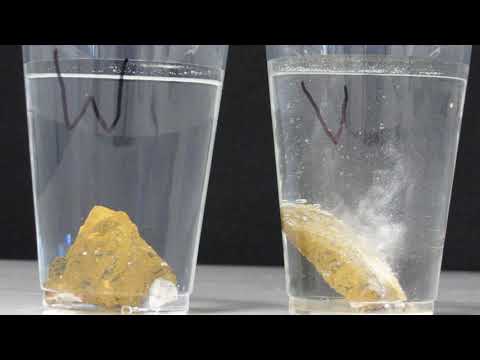
In this video, we will explore the effects of acid rain on rocks like limestone and marble. The experiment requires two pieces of limestone (or cement), cups or jars, white vinegar (acid), water, and a marking pin.
Acid Rain Experiment Setup
- Place two rocks in separate cups.
- Label one cup as "V" for vinegar and the other as "W" for water.
- Add water to the W cup and vinegar to the V cup.
- The cup with water serves as the control group.
Observation of Rocks
- Observe the appearance of the rocks in each cup.
- Note that limestone has a yellow-brown color due to clay content.
- Look for any signs of a chemical reaction, such as carbon dioxide gas release.
Leave the experiment overnight and check on it the next day.
Effects of Acid Rain
- Notice that the rock in vinegar becomes weak and easy to break.
- Clay residue may be present on hands after handling dissolved limestone.
- The rock in water remains strong without leaving clay residue.
Causes of Acid Rain
- Burning fossil fuels releases gases like carbon dioxide, which reacts with water to form carbonic acid.
- Sulfur dioxide forms sulfuric acid, while nitrous oxide contributes to acid rain formation.