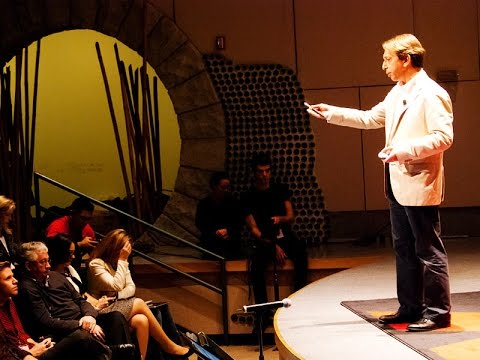
Ami Klin: A new way to diagnose autism
Understanding Social Engagement and Autism
The Nature of Social Resonance
- The speaker expresses a desire to be a "walking laboratory" of social engagement, emphasizing the importance of resonating with others' feelings and intentions.
- Humans intuitively understand others' emotions and actions almost instantaneously, highlighting our inherent social nature.
- The speaker's journey into autism began in a residential unit for adults with profound intellectual disabilities, illustrating the severe isolation experienced by many individuals with autism.
Isolation in Autism
- Individuals with autism often engage in solitary activities, such as repetitive movements or staring at objects, which leads to extreme isolation from their environment and peers.
- Autism is described as a disruption of social resonance—essential survival skills that have evolved over time.
Early Development and Caregiver Interaction
- Babies are born fragile and rely on caregivers for survival; they develop mechanisms to seek attention from these caregivers.
- Infants prefer human sounds and eye contact, indicating an innate drive towards social interaction that is crucial for cognitive development.
Attention Mechanisms
- Attention becomes critical early in life; babies learn to direct their focus to gain desired outcomes from interactions.
- Through shared experiences, children begin to build meanings associated with social cues like gaze direction or pointing.
Divergence in Learning Paths
- A specific example illustrates how a 15-month-old girl with autism remains oblivious to human interaction while being drawn to objects instead.
Understanding Autism: Insights into Its Nature and Impact
The Genetic Basis of Autism
- Autism is identified as the most genetically influenced condition among developmental disorders, indicating a strong hereditary component.
- It is characterized as a brain disorder that manifests before birth, suggesting early developmental origins.
Spectrum of Autism
- There exists a broad spectrum of autism, ranging from individuals with profound intellectual disabilities to those who are exceptionally gifted.
- Behavioral manifestations vary widely; some individuals may be non-verbal while others may exhibit excessive verbal communication or engage in repetitive behaviors.
Prevalence and Societal Costs
- The prevalence of autism has increased significantly, now estimated at 1 in 100 individuals compared to earlier estimates of 4 in 10,000. This indicates a growing recognition and diagnosis of the condition.
- The financial burden on society is substantial, with costs in the U.S. alone estimated between $35 billion to $80 billion annually, primarily for services required by severely disabled adolescents and adults.
Importance of Early Intervention
- Early identification and intervention are crucial; without them, many individuals do not benefit from necessary treatments that could mitigate their conditions over time.
- The critical window for effective intervention occurs within the first three years of life when the brain's malleability is at its peak; however, the median age for diagnosis remains around five years old in the U.S., particularly affecting disadvantaged populations.
Ethical Imperatives and Community Impact
- There exists a bioethical imperative to leverage scientific knowledge for community benefit; failing to act on this knowledge risks perpetuating severe outcomes for affected communities.
- Interventions made during childhood can have lasting positive effects not only on individual children but also on families and broader communities as these children transition into adulthood with autism.
Genetic Complexity and Developmental Pathways
- Over 100 genes are associated with autism, with projections suggesting there could be between 300 to 600 relevant genes involved along with various genetic anomalies contributing to its manifestation.
- Understanding how diverse genetic liabilities translate into a cohesive syndrome involves examining developmental processes during early life stages where interventions might prevent or lessen symptoms of autism.
Engaging with Children’s Perspectives
- Effective engagement requires understanding how children perceive their world; technologies such as eye tracking have been developed to observe children's focus areas moment by moment during interactions.
Understanding Early Detection of Autism
Growth Charts for Social Engagement
- The concept of growth charts, traditionally used in pediatric care to track physical development, has been adapted to measure social engagement in children.
- These charts track the percentage of viewing time that infants focus on people's eyes from birth until 24 months, highlighting developmental milestones.
Differences in Social Engagement
- Infants who later develop autism show a significant decline in eye contact over time, starting with an initial interest that rapidly decreases. This contrasts sharply with typical peers who maintain stable eye contact.
- The data suggests that while autistic infants may have an innate reflex to orient towards people, this ability does not develop further as they grow.
Early Identification of Autism
- Research indicates that by measuring early-emerging social behaviors within the first six months of life, it is possible to identify autism much earlier than previously thought—before the second year when typical behaviors manifest.
- Utilizing evolutionarily conserved measures allows for early detection and intervention strategies aimed at improving outcomes for affected children and their families.
Importance of Intervention Infrastructure
- Identifying children early is only effective if there is a robust infrastructure for intervention and treatment available to families; universal access to these resources is essential.
- Primary care physicians play a crucial role in deploying these technologies effectively within their practices to ensure no child is overlooked during screening processes.
Changing Perspectives on Autism
- The goal is not to cure autism but rather to mitigate its more severe consequences such as intellectual disabilities and social isolation while recognizing the unique perspectives individuals with autism bring to society.
Turn any video into a summary like this
YouTube links, meetings, lectures. With transcripts, search, and chat.