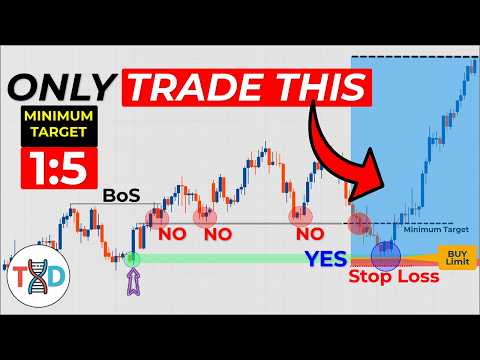
🔴 This ICT Order Block Entry Catches 300+ Pip Explosions
Mastering Order Blocks: A Comprehensive Guide
Understanding Order Blocks
- An order block is a critical zone on the chart where significant capital is executed, typically by institutions or banks, referred to as "smart money" .
- These zones are characterized by sharp price movements indicating that large buy or sell orders have entered the market, leading to explosive price changes .
- There are two types of order blocks:
- Bullish Order Blocks (formed by aggressive buy orders)
- Bearish Order Blocks (formed by powerful sell orders) .
Differences Between Order Blocks and Support/Resistance
- While both mark important levels on charts, they differ in formation:
- Order blocks arise from explosive moves; Support/Resistance form after multiple rejections at a level .
- The drawing method also varies:
- Order blocks are thick zones; support/resistance are usually thin lines or areas .
- Retesting frequency differs:
- Order blocks are generally one-time use; support/resistance can be tested multiple times .
Identifying Valid Order Blocks
Key Rules for Spotting Validity
- An order block must create a gap post-move, known as inefficiency or imbalance. This gap indicates potential validity .
- It must remain untested; if price touches it even once, it becomes invalid .
- It should lead to either a break of structure or change of character in the market trend following its formation .
Market Structure Insights
- In an uptrend, higher highs and higher lows define movement; breaking above previous highs confirms strength while breaking below indicates a shift to bearish trends .
- Conversely, downtrends consist of lower highs and lower lows with similar rules for breaks and changes in character .
Practical Application of Order Block Strategies
Strategy One: Multi-Time Frame Confirmation
- Start on a higher time frame to identify valid order blocks before confirming them on lower time frames like the 15-minute chart for entry signals [].
- Look for bearish momentum indicators such as MACD shifts or candlestick patterns like bearish engulfing candles before entering trades .
Strategy Two: Inducement Traps
- Identify minor key levels near major order blocks that show multiple rejections. Price often breaks these minor levels before dropping into major order blocks for better entries [].
- Place buy orders within major order blocks only if price taps into them after triggering stop losses at minor levels [].
Strategy Three: Breaker Blocks
- Previously valid order blocks can act as resistance when broken. When price retraces back to these levels after being broken, they provide opportunities for short entries [].
- Set stop losses just above breaker blocks and target profits at least twice the risk size [].
Tools and Resources Provided
- An all-in-one indicator is available that automatically marks different types of order blocks on trading platforms, simplifying identification processes [].
- A ready-to-use template is included for easy setup without complicated configurations [], ensuring traders can quickly implement strategies discussed.
This structured approach provides traders with essential insights into mastering order block strategies effectively while enhancing their trading skills through practical applications.