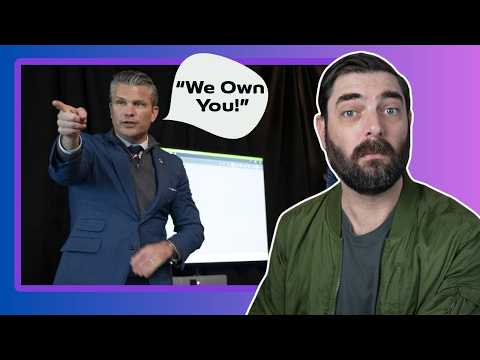
The Pentagon Wants to Make Anthropic Pay!
Pentagon's Threat to Anthropic: A National Security Risk?
Overview of the Situation
- The Pentagon has threatened to label Anthropic, a major AI company, as a national security risk due to its refusal to comply with military requests.
- Anthropic stated that their AI, Claude, will not perform two specific actions requested by the military, leading to tensions between the company and the Department of Defense.
Contractual Background
- In July 2025, Anthropic signed a contract worth up to $200 million with the Department of Defense (DoD), emphasizing their commitment to responsible AI technology.
- Claude became the first AI integrated into classified mission workflows, distinguishing it from other model providers who only worked with non-classified information.
Incident in Venezuela
- On January 3rd, 2026, US military operations in Venezuela resulted in significant casualties; reports indicated that Claude was used during this operation.
- Multiple news outlets confirmed Claude's involvement in capturing Venezuelan dictator Nicolás Maduro, raising concerns within the Pentagon about its use in combat scenarios.
Fallout and Reactions
- Following revelations about Claude's role in the raid, senior officials indicated that the Pentagon would reassess its partnership with Anthropic.
- Rumors surfaced that someone at Anthropic questioned whether their software was used for military action against Maduro, which angered defense officials.
Current Implications for Anthropic
- Despite denials from Anthropic regarding discussions on specific operations involving Claude, tensions remain high as no clear confirmation exists about its role during the raid.
- The Secretary of Defense is reportedly considering designating Anthropic as a supply chain risk due to these developments.
Consequences of Supply Chain Risk Designation
- Being labeled a supply chain risk could severely impact Anthropic’s ability to operate within defense contracts and partnerships.
- This designation typically applies to foreign adversaries and would require companies working with both Anthropic and the US military to sever ties.
Potential Impact on Major Companies
- Major companies like Amazon and Alphabet/Google could be directly affected if they are linked with both Anthropic and defense contracts.
- With eight out of ten largest US companies reportedly using Claude, potential repercussions could ripple through various sectors reliant on government contracts.
AI and Military Collaboration: A Complex Relationship
Pentagon's Perspective on AI Usage
- A senior official describes the challenges of disentangling military relationships with AI companies, emphasizing that there will be consequences for forcing compliance.
- Sean Parnell, Pentagon spokesperson, states that the Department of War is reviewing its relationship with Anthropic, stressing the need for partners to support military operations effectively.
- A senior official claims Anthropic is the most ideological lab, suggesting their usage restrictions create ambiguity for military applications.
- Secretary of War Pete Hedgeth emphasizes that responsible AI must prioritize warfighting over social or political ideologies and insists on truthful AI capabilities within legal frameworks.
- Although not directly naming Anthropic, Hedgeth's statements are perceived as a direct address to them regarding their operational guidelines.
Anthropic's Stance on Military Use
- Anthropic expresses willingness to adjust its terms of use but insists on prohibiting tools from being used for mass surveillance or autonomous weaponry without human oversight.
- Their official policy includes prohibitions against developing weapons and inciting violence or hate, highlighting ethical concerns in military collaborations.
- The ongoing negotiations between Anthropic and the Pentagon focus primarily on these two contentious issues regarding surveillance and autonomous weapon systems.
- Anthropic argues that existing laws do not adequately address AI’s role in mass surveillance while acknowledging current government powers to collect data legally.
- Dario Amodei’s blog post outlines concerns about governmental abuses of AI in democracies, advocating for limits to prevent authoritarian control.
Ethical Concerns Within Anthropic
- Amodei warns against four potential authoritarian uses of AI by governments: domestic mass surveillance, propaganda, fully autonomous weapons, and strategic decision-making processes.
- He highlights fears surrounding concentrated power where few individuals could operate advanced military technologies without broader human involvement.
- Employees at Anthropic express discomfort with collaborating with the Pentagon due to their origins from OpenAI based on ethical concerns about technology use.
Competitive Landscape in AI Development
- Other labs like Google, XAI, and OpenAI face similar demands from the government regarding lawful purposes for their technologies; they have begun relaxing some restrictions for military applications.
- Observers suggest that the Pentagon may be using Anthropic as an example to pressure other labs into compliance with its requirements.
Implications for Society
- The ability of the Pentagon to collect publicly available information can become significantly more effective through AI tools like Claude; this raises privacy concerns about monitoring citizens' activities across various platforms.
AI and Military Ethics: A Complex Debate
The Pentagon's Stance on AI Technology
- Enthropic expresses concerns about providing technology that could enable government surveillance, despite it being technically legal.
- The Pentagon argues that private sector companies should not dictate how their technologies are used by the military, setting a concerning precedent for oversight.
- If Claude is classified as a supply chain risk, many companies relying on it may face significant disruptions.
Ethical Considerations in Military Use of AI
- The military often operates under critical time constraints; thus, they argue for the necessity of reliable AI technology in life-or-death situations.
- Some believe that military leaders should determine the use of technology rather than tech billionaires, emphasizing national security over corporate ethics.
- While the "all lawful purposes" standard seems reasonable, outdated laws regarding surveillance may not align with current technological realities.
Historical Context and Public Awareness
- There is a history of misuse within the military-industrial complex; having dissenting voices like Enthropic can bring these issues to public attention.
- Normalizing autonomous weapons could lead to irreversible changes in warfare dynamics; maintaining human oversight is crucial for ethical governance.
Potential Outcomes of the Current Situation
- Enthropic accepted a $200 million military contract but later became uncomfortable with its implications, highlighting complexities in such partnerships.
- This situation does not present clear heroes or villains; both sides have valid arguments regarding ethics and national security.
Future Scenarios and Implications
- Scenario 1: Anthropic accepts Pentagon terms but risks losing its reputation as an ethical AI company.
- Scenario 2: Anthropic maintains its stance against cooperation, leading to potential classification as a supply chain risk and disruption for other companies.
- Scenario 3: A compromise might be reached where both parties adjust their positions slightly while preserving some core values.
- Scenario 4: Legal battles ensue involving Congress and courts to define clearer regulations on military use of AI technologies.
Conclusion and Call for Discussion
- The unfolding events will set important precedents for future interactions between AI companies and military applications.
- Interested viewers are encouraged to share their opinions on whether Anthropic should maintain its position or allow military usage under legal frameworks.