ICT Forex - Implementing The Asian Range
Introduction to Implementing the Asian Range
In this section, the speaker introduces the concept of implementing the Asian range in trading. The speaker explains that they did not create or author this concept and that it was introduced to them by another trader.
Definition of the Asian Range
- The price action prior to the Frankfurt open or London opening can be very indicative of future intraday price movement.
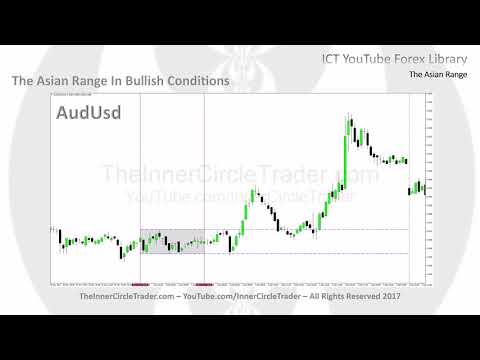
- The Asian range is a little piece of price action that delineates with a gray shaded box on a chart.
- The range begins at 7:00 p.m. New York time and ends at midnight New York time.
- The height of the range is the highest high between 7:00 p.m. to midnight in New York time.
Using the Asian Range for Contextual Trading
In this section, the speaker explains how traders can use the Asian range to build or frame a context or storyline for market intentions.
Benefits of Using the Asian Range
- When there is a directional bias, traders can use this range to build or frame a context or storyline for market intentions.
- There is stillness in price many times right before an intraday directional impulse price swing.
- Utilizing consolidations in certain periods of a training 24-hour period can produce magical results.
Learning from Chris Laurie's Teachings on Asian Range
In this section, the speaker talks about Chris Laurie's teachings on using consolidations and ranges in trading.
Learning from Chris Laurie's Teachings
- Chris Laurie taught about using consolidations and ranges in his free teachings, including his website ChrisLaurie.com.
- The implementation of these concepts can be useful for developing traders but requires some context behind it.
- While there are similarities between what Chris Laurie teaches and what the speaker does, they are not the same.
Defining the Asian Range
In this section, the speaker provides a more detailed definition of the Asian range and how it can be used in trading.
Defining the Asian Range
- The range begins at 7:00 p.m. New York time and ends at midnight New York time.
- The height of the range is the highest high between 7:00 p.m. to midnight in New York time.
- Chris Laurie had his Asian range pushed beyond midnight, but the speaker believes that intraday price action really begins at midnight New York time.
- The range can be used to draw attention to price action prior to market openings.
Understanding the Asian Range
In this section, the speaker explains how to use the Asian range to filter out trades and avoid taking losses.
Using the Asian Range
- Focus on 7:00 p.m. New York time and find that same time on your charts.
- Put a vertical line at the beginning of the Asian session and another one five hours later at midnight in New York time.
- The highest high and lowest low define the Asian range.
- Orders stack up above and below the market relative to that range, building up market sentiment.
Trading Strategies
- Above this range, there are buy orders that act as breakout artists.
- Short sellers have their sell orders below this range.
- After midnight, we look for which side they will work on with the highest probability.
Narrow Consolidation
- A very narrow consolidation between 7:00 p.m. and midnight sets up a huge possibility of the algorithm going into a trending model.
Utilizing Asian Range in a Bullish Condition
In this section, the speaker explains how to utilize the Asian range in a bullish condition. The speaker shows an example of how to anticipate institutional buying when price returns back to the Asian range high.
Using Opening Price for Trading
- The speaker draws out the opening price until 11 o'clock in the morning New York time.
- The understanding is that we want to figure out what Larry Williams said he couldn't do as a teacher. We want to buy below the opening price.
- As price was dropping down, the speaker would buy right there. If he missed the opportunity, he would wait for a specific price or put a buy stop right before the drop down.
Tapereading and Intuition
- The speaker talks about tapereading and intuition and how it helps him understand specific times of day and generic concepts or characteristics that should manifest themselves.
- Once you know what you're looking for, you wait for that scenario to unfold.
Evolution of Trading Strategy
- The speaker talks about his evolution of trading strategy since 1994.
- He used this individual specific element (buying below opening price when it's bullish or selling above opening price when it's bearish) to trade S&P, bond market, and currency futures.
Importance of London Close
- Drawing out the opening price until 11 o'clock in the morning New York time overlaps conveniently with London close scenario which creates an opportunity for manipulation and profit taking.
Trading Strategy
In this section, the speaker discusses his trading strategy and how he enters trades.
Entering Trades
- The speaker waits for the price to break down after midnight and go back below the opening price.
- As soon as it starts to break down, he adds a buy stop to half of the position he wants to trade at.
- If his full position was 10 standard lots, he would go in with a buy stop at five standard lots.
- He tries to take the stop-off if he gets his full position on down here.
Implementation of Asian Range
In this section, the speaker talks about how he evolved and gained a clearer view on price action using the range as defined by him.
Asian Range
- The Asian range is defined from 7:00 PM New York time to midnight zero zero level.
- The algorithm goes through a reset if it's bullish or bearish.
- If bullish, it will go below that opening price to seek liquidity and then go higher for the rest of the day.
- If bearish, it'll go above the opening price at midnight to reach for liquidity and then move lower for several hours going into London closed or New York open.
Implementation
- After midnight, price goes up and taps the Asian range high.
- A tight Asian range is expected in this model.
- By odors are above the range sellers are below the range.
- Your stop-loss which will be right that low or just below it will be tagged right there even though it reflects here your broker.
Utilizing the Asian Range in Bullish Conditions
In this section, the speaker discusses how to utilize the Asian range in bullish conditions. They explain that when they are bullish, they look for a specific movement that sets the tone for their trading strategy. They also discuss how to enter trades using a day trader's approach and long-term model.
Optimal Trade Entry
- The speaker explains that they look for a specific movement that sets the tone when they are bullish.
- They suggest buying at a specific price level or putting in a buy stop order if it gets filled.
- The optimal trade entry is from the low to high retrace back down New York open overlap with the Asian range high with the storyline being bullish on higher time frames.
Institutional Buying
- The speaker explains that institutional buying will step in at certain points, such as when price trades back to the Asian range high during New York open.
- This is because of the initial range set between 7:00 p.m. and midnight, which resets HIPAA interbank price delivery algorithm.
Rules for Entering Trades
- The speaker emphasizes that there are rules for entering trades using this strategy.
- For example, if you want to place a buy stop order above the Asian range, you must wait until after the Asian range low breaks before doing so.
- If you do not follow these rules, you will likely get burned and stopped out.
Utilizing the Asian Range in Bearish Conditions
In this section, the speaker discusses how to utilize the Asian range in bearish conditions. They explain what to look for and emphasize following rules when entering trades.
Quiet Period Before Frankfurt and London Open
- When it's bearish, there is a quiet period right before Frankfurt and London open.
- The speaker suggests focusing on this period.
Tight Narrow Consolidation
- When the market is in a tight narrow consolidation, the speaker suggests looking for some measure of movement to set the tone for trading strategy.
- They emphasize following rules when entering trades, such as waiting for certain price levels to be reached before placing orders.
Naked Price Action Trading
In this section, the speaker discusses his approach to naked price action trading and how he identifies bearish price movement.
Identifying Bearish Price Movement
- The speaker looks for bearish price movement above the opening price.
- He learned that double tops were fake outs and uses the turtle soup trading pattern to identify them.
- He looks for equal highs and lows to identify potential rallies above the opening price.
Entry Technique
- If he sees a rally above the opening price, he sells short.
- He executes market orders when the market is trading against his directional bias for the day.
- If he cannot be in front of his charts, he puts a limit order about two pips above equal highs with a stop-loss of 35 to 40 pips.
Take Profit Objective
- The speaker aims for 50 to 75 pips as a weekly objective.
- Once he reaches his objective, he stops trading.
Bearish Trading Strategy
In this section, the speaker discusses a bearish trading strategy using sell stops and protective buy stops.
Using Sell Stops
- A sell stop is used as a protective mechanism to protect long positions.
- Placing a sell stop without a long position will put you in short.
- The speaker expects the price to drop, so he places a sell stop to go short.
- Stop-loss would be above the high of the day.
Missed Opportunity
- If an opportunity is missed, place a sell stop at a little swing low right before the rally.
- Expectation is that if this order fails, it will place a protective buy stop above the high + 3 pips.
- Take profit of 50 tips which is a low and make weekly objective.
Trailing Stop Losses
- The speaker does not trail his stop loss because he believes taking partials is better.
- Manage risk from taking partials and then slowly move it down after New York trading starts.
Utilizing Asian Range for Trading
In this section, the speaker discusses how to use Asian range for trading and two ways of using it.
Tight Narrow Consolidation
- We have tight narrow consolidation and are bearish now.
- Folks want to buy on breakout but get tripped in with move above Asian range high here.
- Long positions' stop loss would be right below that low mark goes conveniently 10 pips below it.
Short Sellers Making Money
- Short sellers who sold short at top of channel or trading range are making money here.
- They run on their stops which would be a buy-stop run above these highs.
- Lowest risk high probability entry for using Asian range is selling above Asian range high when we're bearish best scenario.
Utilizing Asian Range
- Wait for the Asian range low to be broken and it reads back up to it that's the other entry point using the Asian range.
- Two ways of using this range selling above the Asian range high when we're bearish best scenario especially if you have centering that's been outlined here.
- Do not change gears based on all this little movement here. Stick to what your analysis is calling for.
Tape Reading and Building Context Behind Price
In this section, the speaker discusses the importance of drawing levels manually and typing out notations to focus on specific movements. He also talks about the significance of having a trading bias for any given day.
Drawing Levels Manually
- It is important to draw levels manually and remind yourself to focus on specific movements.
- Typing out notations can help you remember to focus on moves above or below a certain range.
- Focusing primarily on moves above the Asian range high when bearish can be helpful.
Importance of Trading Bias
- Having a trading bias is crucial for any given day.
- You can arrive at a daily bias using various methods, such as adding time of day kill zones, focusing on the Asian range, and using power three to build the entire model for the daily range.
- Waiting for conditions like those outlined in this section can increase your directional bias accuracy to 65-70%.
Benefits of Spending Time in Charts
- Spending time in charts helps you interpret price action better and develop forecasting skills.
- Forecasting skills are essential but cannot be learned from reading books or watching videos alone.
Conclusion
In this section, the speaker concludes by encouraging viewers to spend more time in charts if they want to improve their forecasting skills.
Spend Time in Charts
- Spending time in charts is essential if you want to improve your forecasting skills.
- Gleaning insights from charts is more valuable than anything else you could study.
Turn any video into a summary like this
YouTube links, meetings, lectures. With transcripts, search, and chat.