Understanding Modulation! | ICT #7
Modulation Techniques
This section introduces the concept of modulation and its importance in communication technology. It explains how frequency and wavelength are connected, the need for modulation to transmit electromagnetic waves efficiently, and the basic principles of modulation techniques.
Basics of Modulation Techniques
- Modulation is used to transmit electromagnetic waves efficiently.
- Frequency and wavelength are inversely connected.
- Antenna size is proportional to wavelength.
- Modulation uses a high-frequency carrier signal to vary one of its properties according to the message signal.
- Frequency modulation (FM) varies the frequency of the carrier signal based on the amplitude of the message signal.
- The modulated signal has a high frequency and energy.
Analog Modulation Techniques
This section discusses analog modulation techniques, their limitations, and their obsolescence in modern electronic instruments.
Analog Modulation Techniques
- Analog modulation techniques include amplitude modulation (AM), frequency modulation (FM), and phase shift keying (PSK).
- AM adjusts the amplitude of the carrier signal based on the value of the message signal.
- FM varies the frequency of the carrier signal according to the amplitude of the message signal.
- PSK changes the phase of the carrier signal when transitioning between digital pulses.
Limitations of Analog Modulation
- Analog modulation is susceptible to noise, degrading signal quality.
- Modern electronic instruments operate in digital form, using binary signals.
Digital Modulation Techniques
This section explores digital modulation techniques that are currently used due to their advantages over analog techniques. It covers amplitude shift keying (ASK), frequency shift keying (FSK), phase shift keying (PSK), and quadrature amplitude modulation (QAM).
Digital Modulation Techniques
- ASK adjusts carrier signal amplitude based on digital pulses.
- FSK adjusts carrier signal frequency based on digital pulses.
- PSK changes carrier signal phase when transitioning between digital pulses.
Quadrature Amplitude Modulation (QAM)
- QAM allows the modulation of two different signals as a single signal, saving bandwidth.
- In QAM, two signals are amplitude modulated with carrier waves of the same frequency and amplitude but with a 90-degree phase shift.
- The modulated signals are mixed to form a multiplexed signal that can be easily separated at the receiver end.
Digital QAM
This section focuses on digital quadrature amplitude modulation (QAM) and its application in transmitting data efficiently.
Digital QAM
- Digital QAM uses combinations of bits to produce a multiplexed signal.
- Different levels of amplitude and phase shifts represent different combinations of bits.
- Higher levels of QAM allow for higher data transfer speeds.
Conclusion
This section concludes the video by summarizing the concepts discussed and highlighting the importance of modulation techniques in communication technology.
Key Takeaways
- Modulation is essential for efficient transmission of electromagnetic waves.
- Analog modulation techniques have limitations and are obsolete in modern electronic instruments.
- Digital modulation techniques, such as ASK, FSK, PSK, and QAM, offer advantages over analog techniques.
- QAM allows for efficient transmission by combining multiple signals into a single waveform.
New Section Introduction to 16 QAM
In this section, we will learn about 16 QAM (Quadrature Amplitude Modulation) and its applications in data transmission.
Understanding 16 QAM
- In 16 QAM, 16-bit values are represented by adjusting the phase and amplitude of a multiplex signal.
- The multiplexed signal, with different amplitude and phase electromagnetic signals, represents four bits of data.
- Similar to analog modulation techniques, amplitude modulated signals are mixed together to produce a single output. Quadrature refers to the use of two carrier signals that are out of phase by 90 degrees.
Advantages of 16 QAM
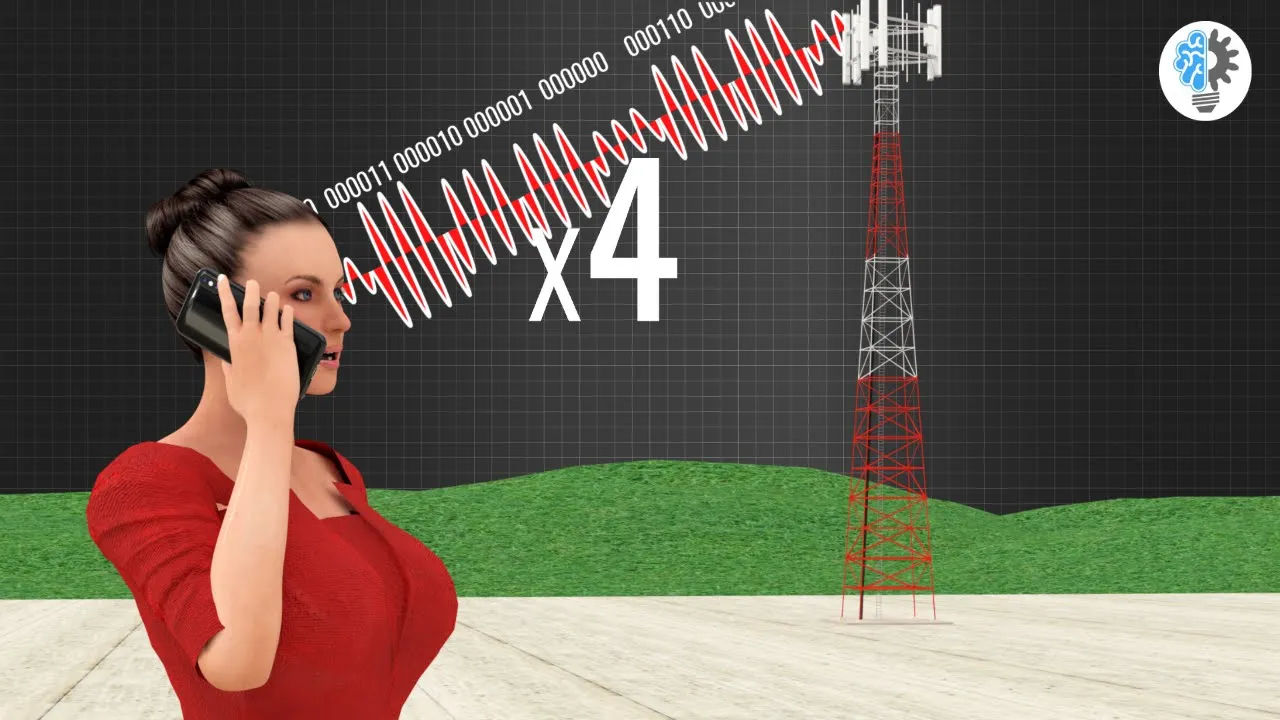
- Compared to normal modulation techniques, using 16 QAM increases data transfer speed by four times.
- Scientists have achieved even higher levels of QAM such as 64 QAM used in 4G communications. It uses six bits of data at a time, resulting in six times faster data transfer compared to normal modulation techniques.
Applications of Modulation Techniques
- Modulation techniques like QAM are not limited to cellular communication and FM radio but also find applications in television broadcasting, Wi-Fi, optical fibers, etc.
New Section Conclusion
This section concludes the discussion on the benefits and applications of modulation techniques like QAM.
Key Takeaways
- 16 QAM allows for efficient representation and transmission of data through adjustments in phase and amplitude.
- Higher levels of QAM can further increase data transfer speeds significantly.
- Modulation techniques have widespread applications beyond cellular communication and FM radio.
The timestamps provided are approximate and should be adjusted based on the actual video duration.