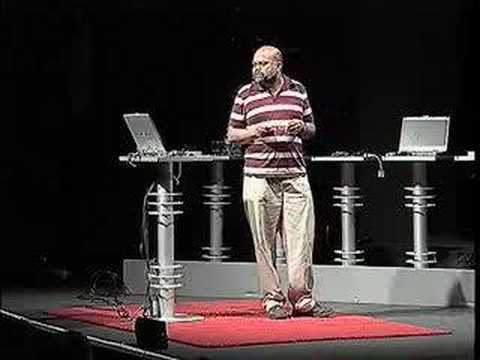
Iqbal Quadir: The power of the mobile phone to end poverty
New Section
In this section, the speaker introduces the topic of poverty and discusses the failure of traditional aid in addressing it.
Why does poverty exist?
- The speaker raises the question of why poverty still exists despite advancements in knowledge and technology.
- Traditional aid from rich countries to poor countries has largely failed to alleviate poverty.
- Economic growth has been elusive in many countries, even with aid.
Lessons from European history
- The speaker highlights the struggle in Europe where citizens demanded authorities to come down from their high horses and empower them.
- This led to better bargaining between authorities and citizens, resulting in flourishing democracies and capitalism.
- In contrast, traditional aid has empowered authorities while marginalizing citizens.
Recognizing economic development as a people-driven process
- The speaker suggests that economic development should be recognized as a process driven by the people, for the people.
- Empowering citizens through networking and organization can lead to improvements in these countries.
- Contrasting this perspective with institutions like the World Bank, which are government-centric.
The role of connectivity in productivity
- The speaker shares his realization that connectivity is productivity, whether in modern offices or underdeveloped villages.
- He emphasizes that telephones can be a powerful tool against poverty.
- At that time, there was a lack of telephone access in rural areas of Bangladesh, leading to wasted resources and lost productivity.
Evidence on connectivity increasing productivity
- The speaker mentions finding a graph produced by the International Telecommunication Union showing that increased telephone access had a significant impact on poorer countries' GNP per capita compared to wealthier nations.
- Installing a new telephone cost $2,000 at that time but had an estimated impact of $5,000-$6,000 on GNP per capita.
- The decreasing cost of installing telephones due to the digital revolution further emphasized their potential impact.
New Section
...
Continue summarizing the transcript in a similar manner, following the provided structure.
New Section
In this section, the speaker discusses the importance of connectivity and how it leads to dependability and specialization. They also question why lack of buying power is a concern when considering telephones as a production tool.
Connectivity and Dependability
- Connectivity is essential for expanding economic spheres.
- Rivers, highways, and telephone lines are examples of infrastructure that enable connectivity.
- Dependability arises from connectivity, leading to specialization and productivity.
Lack of Buying Power
- Poor people are often considered lacking in buying power.
- The speaker questions why purchasing power should be a concern if telephones are viewed as production tools.
- Shared access or community-based models can overcome initial buying power limitations.
New Section
In this section, the speaker challenges paternalistic views regarding the allocation of resources. They emphasize the need for individuals to have agency in deciding how to use their income. Additionally, they highlight the importance of other infrastructures in enabling the adoption of new technologies.
Paternalistic Views on Resource Allocation
- People argue that primary needs like food, clothing, and shelter should take precedence over telecommunication services.
- The speaker advocates for raising income levels and allowing individuals to decide how to allocate their money.
Importance of Other Infrastructures
- Lack of other infrastructures hinders the adoption of new technologies in poor countries.
- Examples include credit checks, banking services for bill collection, etc.
- The Grameen Bank's extensive network provides# New Section
In this section, the speaker discusses the importance of connectivity and how it leads to dependability and specialization. They also question why lack of buying power is a concern when considering telephones as a production tool.
Connectivity and Dependability
- The speaker emphasizes that connectivity is crucial for expanding economic spheres.
- They mention that rivers, highways, and telephone lines are examples of infrastructure that enable connectivity.
- Connectivity leads to dependability and specialization, which in turn increases productivity.
Lack of Buying Power
- The speaker questions why lack of buying power is seen as an obstacle for telephones as a production tool.
- They compare it to people buying cars in America with little money down and paying for them over time through their work salaries.
- If telephones are considered production tools, purchasing power should not be a major concern.
Shared Access
- The speaker suggests the idea of shared access to telephones, similar to how banking services are shared by communities.
- They argue that instead of focusing on paternalistic approaches, raising income and allowing individuals to decide how they spend their money would be more beneficial.
Infrastructure Challenges in Poor Countries
- The speaker highlights the lack of infrastructure in poor countries as a barrier to introducing new technologies like the Internet.
- They mention Grameen Bank as an example of an institution providing infrastructure for poor people in Bangladesh.
- The speaker proposes using cell towers to create a network using Grameen Bank's existing branches.
New Section
In this section, the speaker explains their approach to connecting Grameen Bank's branches through cell towers. They discuss the initial resistance from Grameen Bank due to its decentralized structure and focus on understanding the bank's core activities.
Connecting Grameen Bank Branches
- The speaker initially proposed connecting all Grameen Bank branches to make them more efficient.
- However, due to the bank's decentralized nature and evolution in a country without telephones, they were not initially interested in this idea.
Understanding Grameen Bank's Core Activities
- The speaker shifted their focus to understanding what Grameen Bank actually does.
- They discovered that borrowers typically use the loans to buy cows, which provide milk for sale and loan repayment.
- This realization led the speaker to consider cell phones as a similar business model, where one phone could serve an entire community.
Establishing Gonofone
- The speaker wrote to Grameen Bank with their idea of using cell phones as a business tool.
- After careful consideration, Grameen Bank agreed and allowed the speaker to make it happen.
- The speaker quit their job, returned to Bangladesh, and created a company called Gonofone (meaning "people's phone" in Bengali).
- Angel investors from America provided funding for Gonofone.
New Section
In this section, the speaker discusses their journey of securing investments and forming partnerships for expanding telephone services. They highlight the challenges faced and the coverage achieved by their company.
Securing Investments and Partnerships
- The speaker traveled extensively and faced rejections while seeking investments for expanding telephone services in poor areas.
- After many efforts, they formed a consortium involving the Norwegian telephone company for expertise and Grameen Bank for infrastructure support.
Coverage Achieved
- The speaker showcases a map of Bangladesh with extensive coverage by their company's telephone services.
- They mention some empty areas but also reveal plans to invest an additional $300 million that year to extend coverage further.
New Section
In this section, the speaker provides an update on the success of their business model using cell phones as a means of generating income for entrepreneurs and benefiting the community.
The "Cow Model" in Action
- Approximately 115,000 people are retailing telephone services in their neighborhoods.
- These phones serve 52,000 villages, representing around 80 million people.
- The phones generate about $100 million for the company and provide a profit of $2 per entrepreneur per day ($700 per year).
Benefits and Impact
- The business model increases income and improves welfare for individuals involved.
- The speaker highlights that this one company's contribution to the country's Gross National Product (GNP) surpasses the aid received by the country.
- They express skepticism towards aid, as it can remove government responsibility from its citizens.
New Section
In this section, the speaker shares some lessons learned from their experience with providing telephone services to poor communities. They challenge common assumptions about poor people and advocate for economically viable services.
Lessons Learned
- Private companies can provide economically viable services instead of relying solely on government support or subsidies.
- Poor people should be seen as a resource rather than just recipients of aid.
- Involving poor communities reduces costs and increases their capability to learn and adapt to new technologies.
- Businesses like theirs contribute significantly to a country's economy through taxes, surpassing the impact of traditional aid.
This summary is based on selected parts of the transcript provided.
Turn any video into a summary like this
YouTube links, meetings, lectures. With transcripts, search, and chat.