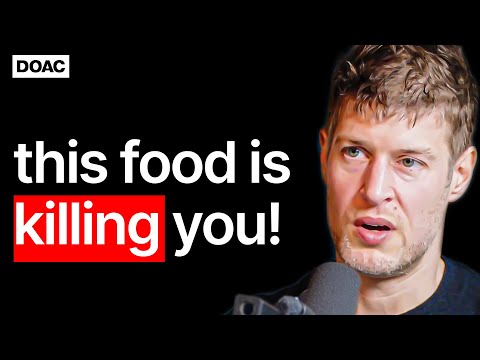
The Health Expert: The One Food (WE ALL EAT) That's Killing Us Slowly: Max Lugavere | E223
Introduction
In this section, Max Lugavere introduces himself and his passion for health and nutrition. He also discusses the impact of diet on brain health.
Max Lugavere's Passion for Health and Nutrition
- Max Lugavere is a brain food expert who is passionate about knowing what's true in the world of health and nutrition.
- Sugar consumption is a major issue, with adults consuming 77 grams of added sugar every day.
- Controversial research suggests that red meat may not be as harmful to our health as previously thought.
- Vegan diets may put people at increased risk for depression.
Impact of Diet on Brain Health
- As waistlines expand, brains shrink.
- Overconsumption of certain foods goes against millions of years of evolution.
- Food can be powerful medicine, but it can also have negative effects on health.
Max Lugavere's Personal Story
In this section, Max Lugavere shares his personal story about his mother's illness and how it inspired him to become a health and science journalist.
The Trauma of Seeing His Mother Ill
- Max Lugavere was motivated to learn about health and nutrition because his mother was very ill from a young age.
- Seeing his mother succumb to illness was traumatic for him.
Mission to Help Others Live Healthier Lives
- Max considers himself a filmmaker, podcaster, and author, but his mission in life is to help people feel better and live healthier lives.
- Max's purpose in life is to avert the kind of conditions that his mother struggled with for so many years.
The Diagnosis
- Max's mother was diagnosed with a neurodegenerative condition at the Cleveland Clinic.
- She was prescribed drugs for both Alzheimer's disease and Parkinson's disease.
Conclusion
In this section, Max Lugavere concludes by emphasizing the importance of taking control of one's health and making informed decisions about diet and lifestyle.
Taking Control of One's Health
- We have incredible agency to change our destiny and the way we age.
- Making informed decisions about diet and lifestyle can help us live longer, healthier lives.
Learning About Dementia and Health
In this section, the speaker talks about how learning about his mother's incurable progressive condition motivated him to understand more about health and nutrition. He shares his journey of researching medical literature and reaching out to experts.
Motivation for Researching Health
- The speaker's motivation for researching health was due to his mother's diagnosis of an incurable progressive condition.
- He became obsessed with understanding all he could about these conditions.
- Although he did not take an academic route, he had always been passionate about health and nutrition.
- He immediately dove into the medical literature and cross-referenced information from various sources.
Importance of Understanding Health Conditions
- Watching his mother decline over the years further cemented his mission to understand all that he could about these conditions.
- Most conditions take years if not decades to develop, suggesting that individuals have agency in changing their destiny by changing the way they age today.
Sugar: Good or Bad?
In this section, the speaker discusses sugar and its impact on health. He explains that added sugar is the most pernicious source of sugar today.
Added Sugar vs Naturally Occurring Sugar
- The biggest problem with regard to sugar is added sugar, which is added by food manufacturers to ultra processed foods usually with the intent of making those Foods hyper palatable.
- All plant foods have some quantity of sugar even kale has a tiny amount of sugar. Fruit is like the primary source of naturally occurring sugar in produce.
Impact on Brain Function
- Ultra processed foods push your brain to a bliss point beyond which self-control becomes really difficult if not altogether impossible.
- People tend to think that it's a moral failure when they're unable to moderate their consumption of those foods.
The Problem with Added Sugar
In this section, the speaker discusses how our brains are programmed to crave sweet and savory foods due to millions of years of evolution. He explains that added sugar is a major contributor to obesity and glucose dysregulation in modern society.
Evolutionary Programming
- Our brains are still operating on version 1.0 of the operating system that told us not to stop consuming sweet or savory foods because we don't know when the next feast will be.
- Millennia of evolution have programmed our palates and willpower to do exactly what they're doing, making it difficult for people to moderate their consumption of these foods.
The Problem with Added Sugar
- Added sugar tends to be over-consumed, giving food a hyper-palatable quality and causing hormonal effects that can harm health.
- One in two people in the United States is trending towards obesity, while one in two also has some degree of glucose dysregulation.
- For most people today, added sugar should be minimized if not altogether avoided due to metabolic dysfunction caused by overconsumption.
- Added sugar is hidden everywhere in modern food products, making it difficult for people to avoid consuming too much.
Sugar-Free Products
- Manufacturers use compounds like maltodextrin or fake fibers like chicory root fiber or tapioca starch fiber to make products palatable without adding sugar.
- Artificial sweeteners like Stevia or monk fruit are used as non-caloric sweeteners. However, overconsumption can cause digestive upset.
- Sugar alcohols like erythritol and xylitol are good alternatives to sugar, but others like maltitol and sorbitol can cause digestive upset if overconsumed.
Understanding Ultra Processed Foods
In this section, the speaker defines unprocessed, minimally processed, and ultra-processed foods. He explains that ultra-processed foods are those that cannot be made in a home kitchen and tend to have long shelf lives and ingredient lists with unfamiliar ingredients.
Types of Processed Foods
- Unprocessed foods include meat, fish, eggs, vegetables, and fruit.
- Minimally processed foods include ground beef and fruit smoothies.
- Ultra-processed foods are those that cannot be made in a home kitchen. They tend to have long shelf lives and ingredient lists with unfamiliar ingredients.
Identifying Ultra Processed Foods
- If you can't identify or recreate the product in question at home, it is likely an ultra-processed food.
- Most ultra-processed foods are refined grain products packed with added sugar and excess sodium.
Are All Ultra Processed Foods Bad?
- As a screening tool, it is generally best to avoid ultra-processed foods. However, some individual food products that happen to be ultra processed may not necessarily be bad by virtue of their processing.
- Examples of some good ultra processed foods include whey protein, fat-free Greek yogurt, and dark chocolate.
Personal Experience with Ketogenic Diet
The speaker shares his personal experience trying a ketogenic diet for two months. He felt great in terms of focus and performance but found it difficult to stick to the diet long-term.
Trying a Ketogenic Diet
- The speaker tried a ketogenic diet for two months.
- He felt great in terms of focus, performance, and digestion during this time.
- However, he found it difficult to stick to the diet long-term.
The Importance of the Ketogenic Diet for Brain Health
In this section, the speaker discusses the importance of the ketogenic diet in certain contexts, particularly for brain health.
The Benefits of a Ketogenic Diet for Brain Health
- The ketogenic diet is important to study and talk about from the standpoint of brain health.
- It changes the biochemistry of the brain in a significant way by providing an alternate fuel substrate to the brain which normally relies on glucose.
- It can be useful in treating certain types of neurological conditions such as traumatic brain injury and Alzheimer's disease.
- Studies have shown that it provides some degree of symptom improvement in patients with Alzheimer's disease.
Limitations and Challenges Associated with a Ketogenic Diet
- Adhering to a ketogenic diet can be difficult, especially for someone with dementia who may develop a sweet tooth.
- A low-carb diet might actually be a good therapeutic option for someone with type 2 diabetes who has gotten to a point of glucose intolerance but it's not fixing the issue.
Misconceptions About Ketogenic Diets
- Your average person does not need to be on a ketogenic diet for good health or to prevent dementia.
- Some people are against ketogenic diets because they include animal products, but if you're talking about neurology and you're not also talking about the ketogenic diet then you're doing a massive disservice to patients around the world.
Animal Products and Cognitive Decline
The consumption of animal products such as beef, chicken, and dairy is associated with a reduced risk of cognitive decline. Animal products are the richest source of choline, and higher consumption of choline is linked to a lower risk of cognitive decline.
Studies on Animal Products and Cognitive Decline
- There have been several observational studies in the past year that show a connection between animal product consumption and reduced risk of dementia and Alzheimer's disease.
- The UK Biobank study found that there was a dose-response relationship between animal product consumption and lower risk of dementia and Alzheimer's disease.
- Red meat is not associated with health problems like cancer when consumed in the context of a high-quality diet.
- A study by Maximova et al. found that when people ate meat with fresh fruits and vegetables, their risk for cancer was completely abolished.
Healthy User Bias
Healthy user bias refers to the fact that people who consume more red meat tend to be more sedentary, smoke more, eat more fast food, etc. Conversely, people who consume fresh fruits and vegetables tend to be healthier overall.
Understanding Healthy User Bias
- It is easy to draw links between meat consumption and negative health outcomes at the population level because most people who consume meat also engage in other unhealthy behaviors.
- Most meat products consumed in this country are hamburgers or chicken nuggets - ultra processed foods that are not healthy.
- People who eat quinoa regularly are likely health-conscious individuals who shop at Whole Foods or have gym memberships. This is an example of healthy user bias.
- There are very few health-conscious red meat eaters. Most people who consume red meat do so in the form of hot dogs, hamburgers, and other ultra processed foods.
The Nutritional Value of Red Meat
Red meat is a nutritious food that does not have a negative impact on clinical outcomes. In fact, it can be beneficial when consumed as part of a high-quality diet.
Studies on Red Meat
- Observational studies can be difficult to interpret because they are often influenced by healthy user bias.
- Newer studies show that when you control for factors like diet quality, there is no association between red meat consumption and negative health outcomes.
- Red meat is a pristine source of protein and can be beneficial when consumed as part of a high-quality diet.
The Importance of Red Meat in a Balanced Diet
In this section, the speaker discusses the importance of red meat in a balanced diet and how it can serve as an ultimate iron supplement. He also talks about his personal experience with vegetarianism and how it impacted his family's health.
Red Meat as an Iron Supplement
- Red meat is a highly nutritious part of a balanced diet and serves as an ultimate iron supplement.
- A low-meat diet did not protect the speaker's mother from illness, although he does not know if her lack of consuming meat was the cause.
Nutrient-Dense Foods
- Animal products tend to be our most nutrient-dense foods, according to nutrition researcher Ty Beale. Dark leafy greens are also very nutrient-dense.
- The speaker advocates for animal products as an important part of a balanced diet but does not advocate for a high meat or carnivore diet.
Clearing Out Your Kitchen
In this section, the speaker discusses clearing out your kitchen and avoiding certain foods that may be harmful to your health.
Avoiding Gluten and Industrial Grade Emulsifiers
- The speaker recommends avoiding all sources of gluten, including bread and noodles. However, he notes that his stance on this has softened since writing his book "Genius Foods."
- Industrial grade emulsifiers such as polysorbate 80 and carboxymethylcellulose should also be avoided due to their inflammatory effect on the gut lining. These compounds are often found in ultra-processed foods like nut milks, ice creams, salad dressings, and other foods that combine oil and water.
- Chronic consumption of these compounds may be worth avoiding due to their inflammatory effect on the gut.
Avoiding Fruit Juice
- The speaker recommends avoiding fruit juice due to its high sugar content. Whole fruit is self-limiting because it fills you up more than it kills you, unlike fruit juice which can contain the sugar from five or six oranges in one glass.
The Science of Satiety
In this section, the speaker discusses how fiber and water can slow down sugar absorption and blunt blood sugar spikes. They also explain why some foods are more satiating than others.
Factors that Make Food Satiating
- Protein is the most satiating macronutrient and is important for nourishing muscles.
- Fiber slows down food transit in the stomach, absorbs water, and mechanically stretches out the stomach to turn off hunger hormones.
- Water is important for weight loss and can help distinguish between hunger and thirst.
Ultra Processed Foods
- Pringles lack protein, fiber, and water which are all factors that make food satiating.
- Ultra processed foods prioritize shelf stability over nutrition by removing water from products like Pringles.
The Importance of Fiber and Hydration in Our Diet
In this section, the speaker discusses how fiber and hydration are lacking in ultra-processed foods like Pringles. He emphasizes the importance of these nutrients for our health and how they could have potentially saved the life of a hunter-gatherer.
Key Points:
- Ultra-processed foods lack fiber and hydration.
- These kinds of foods can be detrimental to our health.
- A diet rich in fiber and hydration is important for preventing chronic diseases.
Introduction to Airbnb as a Sponsor
In this section, the speaker introduces Airbnb as a new sponsor for the podcast. He talks about his personal experience using Airbnb across different aspects of his life, including business, personal travel, and even when he didn't have somewhere to live.
Key Points:
- The speaker has used Airbnb for over a decade.
- Most people think about Airbnb from a guest perspective but there's also an opportunity to create revenue by adding space from a supply side.
- The speaker will be sharing more details about this aspect of Airbnb in future episodes.
Health Span vs Lifespan
In this section, the speaker explains the difference between someone's health span and their lifespan. He emphasizes that while modern medical advances have allowed us to live longer lives, we're also spending more time sick with chronic diseases and disabilities.
Key Points:
- We're living longer thanks to modern medical advances but we're also dying longer due to chronic diseases.
- It's important not just to focus on lengthening lifespan but also on lengthening health span.
- Eating a healthy diet, exercising regularly, staying socially connected can help prevent chronic disease and disability.
The Role of Diet in Mental Health
In this section, the speaker discusses the role of diet in mental health. He talks about how our mental status is highly responsive to our environment, including the foods we eat.
Key Points:
- Observational studies show that vegan and vegetarian diets, particularly vegan diets, put people at increased risk for depression.
- Animal products contain nutrients that are supportive of good mental health.
- Eating a healthy diet can help prevent depression and anxiety.
The Importance of Whole Foods and Nutritional Psychiatry
In this section, the speaker discusses the importance of whole foods and animal products in supporting brain health. They also mention a study on using dietary interventions to treat depression.
Whole Foods and Animal Products
- Red meat contains nutrients that support brain health, such as zinc and vitamin B12.
- A whole food dietary pattern, including minimally processed foods like those found around the perimeter of supermarkets, is important for brain health.
- Mediterranean diets are beneficial for brain health regardless of the proportion of animal or plant products consumed.
Nutritional Psychiatry
- Diet can be used as an intervention to improve symptoms of depression.
- The SMILES trial was the first randomized controlled trial to use a dietary intervention to treat major depression. The intervention included a whole foods Mediterranean-style diet with red meat, fish, dark leafy greens, berries, olive oil, and eggs. Patients saw a three-fold increase in remission compared to controls treated with standard care.
Exercise as Medicine for the Brain
In this section, the speaker discusses how exercise is beneficial for cognitive function and mental health. They also explain hormesis and how it relates to saunas.
Exercise for Cognitive Function
- Exercise is like medicine for the brain and has been shown to have a positive impact on cognitive function.
- Norepinephrine (noradrenaline in some countries), which is produced in a part of the brain called locus ceruleus, has a relationship with cognitive performance.
Hormesis and Saunas
- Hormesis is the concept that low to moderate doses of a stressor can elicit an adaptive response that makes the body stronger and more resilient.
- Saunas are one type of physical stressor that can upregulate norepinephrine release and help prime the body to become more resilient.
- Using a sauna 2-3 times per week is associated with a 22% risk reduction for dementia, while using it 4-7 times per week is associated with a 65% reduced risk.
The Health Benefits of Saunas
In this section, the speaker discusses the potential health benefits of using saunas.
Saunas and Blood Pressure
- Sauna use has a positive impact on blood pressure.
Other Health Benefits of Saunas
- Saunas can reduce inflammation and get your heart rate up.
- Using a sauna is like having a mild aerobic workout while sitting still.
- Saunas help purge toxins through sweat that are not effectively excreted via stool or urine.
- More research needs to be done, but all indicators point towards a positive health effect from sauna use.
The Importance of Beneficial Stress
In this section, the speaker discusses how beneficial stress can have a positive impact on our health.
The Comfort Crisis
- Our modern lifestyles have optimized away from stresses that are critical to natural hormone and physiological responses that make us healthy human beings.
- We need to expose ourselves to beneficial stressors like exercise or hormetic stressors found in certain foods to bolster our resilience.
Chronic Stress
- Chronic stress causes sustained changes in our hormonal milieu that suppress immune function and impairs digestion, brain function, and memory function over time.
- Chronic stress comes from various sources such as work, news media consumption, relationships, financial stress etc., which are not always avoidable.
Chronic Stress is a Killer
In this section, the speaker discusses how chronic stress can have a negative impact on our health.
The Impact of Chronic Stress
- Chronic stress causes sustained changes in our hormonal milieu that suppress immune function and impairs digestion, brain function, and memory function over time.
- Chronic stress comes from various sources such as work, news media consumption, relationships, financial stress etc., which are not always avoidable.
Coping with Chronic Stress
- Coping mechanisms like exercise or hormetic stressors found in certain foods can bolster resilience to chronic stress.
The Effects of Stress on Fat Storage
In this section, the speaker discusses how stress can affect our biology and fat storage. They explain that storing fat in the midsection is particularly harmful and associated with worse cardiovascular health.
Visceral Fat and Cortisol
- Excess visceral fat is particularly harmful as it hugs internal organs and secretes pro-inflammatory hormones.
- Visceral fat has four times the cortisol receptors compared to subcutaneous fat.
- Cortisol causes chronic elevation when we self-medicate with ultra-processed foods high in sugar, leading to more midsection fat storage.
- Chronically elevated cortisol can negatively impact brain volume and other tissues.
Cortisol Production
- Cortisol comes from adrenal glands, not food.
- Certain conditions are associated with hypercortisonemia, but no food stimulates cortisol production.
- Some people anecdotally see an improvement in sleep when consuming a little bit of honey before bed because it can bring down cortisol levels.
Managing Cortisol Levels
- Chronic stress leads to reaching for sugary foods, which creates a vicious cycle of increased cortisol release.
- Pumping the brakes on cortisol release involves finding and uprooting the cause of stress rather than eating sugary foods.
Improving Sleep Quality Through Diet
In this section, the speaker provides advice on improving sleep quality through diet. They recommend not eating too close to bedtime and eating two to three hours before sleep.
Eating Before Bed
- Eat your last meal two to three hours before you go to sleep.
- Don't go to bed hungry, but find a Goldilocks Zone for eating before bedtime.
- Sleep is a time for rebuilding and restoring, so give space between your last meal and sleep.
Protein Consumption
- A meat-heavy meal right before bed can negatively impair sleep due to the thermic effect of protein being high compared to fat.
Eating Habits and Circadian Rhythm
In this section, the speaker discusses the importance of eating habits and circadian rhythm in maintaining optimal health.
Eating Before Bedtime
- Eating carbs before bed can help with sleep for people with cortisol dysregulation.
- It is recommended to avoid eating too close to bedtime.
Intermittent Fasting
- The speaker practices intermittent fasting and starts eating around 10:30-11:00 am.
- He experiments with pre-workout carbohydrates but generally doesn't eat an hour to an hour and a half after waking up.
- Waiting allows hormones to adapt and get ready for food.
Importance of Circadian Rhythm
- Melatonin hormone needs to fully subside before eating breakfast.
- Cortisol hormone is highest in the morning, making it a good time for exercise.
- Bright light exposure first thing in the morning helps set circadian rhythm.
Morning Routine
- Open blinds and check phone by window for bright light exposure.
- Wait an hour before having morning coffee.
The Pros and Cons of Coffee
In this section, the speaker discusses the benefits and drawbacks of drinking coffee.
Benefits of Coffee
- Coffee acts as a natural pcsk9 inhibitor, which can help lower cholesterol levels and protect against cardiovascular disease, Alzheimer's disease, Parkinson's, and MS.
- Coffee contains polyphenols that act as natural activators of the body's Nrf2 pathway, which is a detoxifying pathway in the body.
Drawbacks of Coffee
- Drinking coffee can add stress to an already stressed-out individual.
- Consuming coffee can negatively impact sleep quality.
- Developing caffeine dependency can lead to treating withdrawal symptoms rather than improving performance.
Finding Balance with Coffee
- It is important to regularly take inventory and determine whether or not coffee works well for your body.
- It is healthier to consume coffee an hour or two after waking up and not too late into the afternoon.
- Taking occasional breaks from caffeinated coffee and switching to decaf can help break caffeine dependency.
The Health Benefits of Traveling
In this section, the speaker discusses how traveling has positive effects on health.
Positive Effects of Traveling
- Traveling has been shown to have health benefits such as reducing stress levels, improving mental health, increasing creativity, and boosting happiness.
- Exposure to new environments helps build resilience by challenging individuals' adaptability skills.
- Traveling provides opportunities for physical activity, such as hiking or walking, which can improve overall health.
Conclusion
Traveling has numerous benefits that can positively impact an individual's mental and physical health.
Importance of Novelty and Enriched Environments
In this section, the speaker discusses the importance of doing novel things and exposing oneself to enriched environments. The speaker cites a study on mice that showed an upregulation in various indicators of neurogenesis when they were allowed to explore enriched environments.
Importance of Novelty
- Doing novel things is important for brain health.
- Routine can lead to Groundhog Day syndrome, where the brain prunes away excitement and joy.
- Our brains are efficiency machines that conserve energy by pruning away unnecessary cognitive activity.
- When we do the same things every day, our brains become less efficient and shear away joy and excitement.
Enriched Environments
- Exposing oneself to enriched environments can upregulate neurogenesis.
- Traveling is a great way to expose oneself to an enriched environment.
- Changing up one's routine by trying new things or taking on new hobbies can also help shake things up.
Habits and Cognitive Activity
In this section, the speaker discusses habits and their effect on cognitive activity. The speaker cites a study on rats that showed a decrease in cognitive activity when habits were formed.
Habits and Cognitive Activity
- Habits lead to decreased cognitive activity because the brain conserves energy by going on autopilot.
- Autopilot mode leads to decreased cognitive activity because it allows the brain to focus on other threats while conserving energy.
- A study with rats showed that there was a ton of cognitive activity when they ran through a maze for the first time but when they ran through it again, there was no cognitive activity because they were on autopilot.
Autopilot and Happiness
In this section, the speaker discusses how living life on autopilot can impact happiness and brain function. They also explore ways to break routine and maintain a sense of meaning in life.
Autopilot and Brain Function
- Living on autopilot doesn't support neuroplasticity, which is important for brain function.
- The brain becomes an efficiency machine when we live on autopilot.
Autopilot and Happiness
- Routine has benefits such as having a dialed-in diet or great connections in your community.
- However, doing the same things every day leads to habituation, which makes it difficult to maintain an appreciative relationship with something that's always there.
- Habituation leads to a decline in meaning associated with routine behaviors that are not productive or meaningful. This decline makes us unhappy because we need things to remain meaningful in our lives as creatures of meaning.
- Novelness is valuable because habituation kills it; therefore, breaking the routine can help bring back joy and excitement about life.
Ways to Break Routine
- Challenge your preferences by trying new foods or investing in things that have emotional value for you.
- Travel with your significant other or break the routine with them to maintain a sense of novelty in your relationship.
- Sign up for a new gym membership or load up on healthful food like blueberries, avocado, dark leafy greens, grass-fed beef because they do wonders for mental health exercise.
The Comfort Crisis
In this section, the speaker talks about the constant subjective balancing act of comfort and how it can have adverse effects on various aspects of life.
Balancing Comfort
- The speaker discusses the challenge of balancing comfort in life.
- They mention their love for routine and comfort but also express difficulty with planning travel due to concerns about finding a gym or healthy supermarket.
- The speaker notes that they never regret traveling despite initial discomfort.
- They discuss getting bored or taking things for granted as a common human struggle.
Attachment Style and Relationships
- The speaker talks about their struggles with commitment and attachment style in relationships due to childhood experiences.
- They express a desire to settle down with someone but acknowledge personal challenges in doing so.
- The speaker mentions witnessing unhealthy relationship dynamics between their parents, which has impacted their own attachment style.
Therapy and Limiting Beliefs
- The speaker shares that they have been seeing a therapist for the past year and a half to work through childhood trauma related to attachment style and commitment issues.
- They discuss limiting beliefs related to deserving the kind of relationship one wants.
Childhood Trauma and Emotional Attachment
In this section, the speaker talks about his experience with covert incest and how it affected his emotional attachment to women. He also discusses the impact of childhood trauma on adult relationships.
Covert Incest
- Covert incest is a term used to describe when a parent makes their child their emotional partner.
- It's not sexual but can create a strong attachment between the child and parent.
- The speaker's mother confided in him frequently, creating a strong attachment but making it difficult for him to attach emotionally to other women.
Childhood Trauma
- Childhood trauma doesn't have to be "Big T" trauma like sexual abuse; everyone experiences social injury during childhood.
- These traumas can affect adult relationships in profound ways.
- The speaker struggled with emotional attachment to women due to his experience with covert incest.
Therapy and Self-Growth
- The speaker recommends therapy for everyone, as it has been helpful for him in understanding his patterns and unraveling them.
- It's important not to let childhood trauma become a perpetual limiting belief and continue doing the work of self-growth.
Journey So Far in Life
In this section, the speaker summarizes his journey so far in life into one affirmation: "I am love." He explains that everything he does is out of love, even though it feels self-aggrandizing at times.
I Am Love
- The speaker summarizes his journey so far into one affirmation: "I am love."
- Everything he does is out of love - for his mom, for research, for people - and has been a powerful compass for navigating life.
Max Lugavere's Incredible Story
In this section, Stephen Fry thanks Max Lugavere for sharing his story and expresses his admiration for the sincerity behind Max's message.
Stephen Fry's Appreciation
- Stephen Fry expresses his admiration for Max Lugavere's incredible story and how he shares it.
- He notes that there is a real sincerity behind Max's message that he doesn't always see in other people.
- Stephen acknowledges that someone without a medical degree would have to be driven by a deep sense of curiosity and mission to go as far as Max has gone.
- He believes that Max is just at the start of his journey and will go even further.
Blue Jeans by Verizon
In this section, Stephen Fry talks about Blue Jeans by Verizon, a video conferencing tool that offers high-quality video conferencing with immersive tools.
Blue Jeans by Verizon
- Stephen Fry recommends Blue Jeans by Verizon for virtual meetings because of its seamless high-quality video conferencing.
- He mentions the immersive tools offered by Blue Jeans which make employees or customers feel more connected during virtual events.
- Stephen talks about the launch of one of their biggest feature enhancements called Blue Jean Studio which allows for simple but high-quality production virtual events.
Huel: A Game Changer
In this section, Stephen Fry talks about Huel, a nutritionally complete meal replacement drink that has been a game changer in his life.
Huel: A Nutritious Option
- Stephen Fry talks about how he has been trying to be more healthy and lose weight, and Huel has been a game changer for him.
- He mentions that having an option like Huel, which is nutritionally complete, high in fiber, protein, vitamins, and minerals within arm's reach has been incredibly helpful.
Conclusion
In this section, Stephen Fry thanks the listeners for tuning in and expresses his gratitude.
Thank You
- Stephen Fry expresses his gratitude to the listeners who have made it to the end of the podcast.
- He asks those who enjoyed the podcast to let him know by leaving a comment or review.
Turn any video into a summary like this
YouTube links, meetings, lectures — with transcripts, search, and chat.