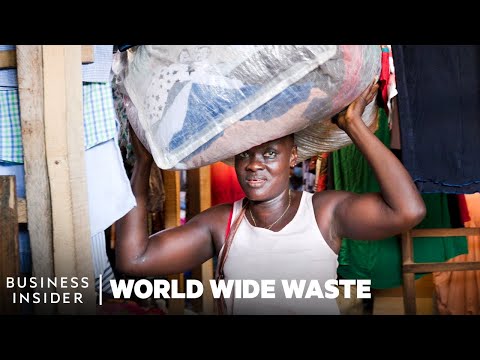
How 7.5 Million Pounds Of Donated Clothes End Up At A Market In Ghana Every Week | World Wide Waste
Welcome to Ghana's Kantamanto Market
Overview of the Market
- The Kantamanto market in Ghana is one of the largest used clothing markets globally, handling over 15 million garments weekly.
- Approximately 30,000 people work at the market, facing challenges due to competition from fast-fashion brands.
Waste and Environmental Impact
- More than a third of the garments entering Kantamanto are discarded as waste, contributing to landfills and pollution on beaches.
- The influx of used clothes leads to significant environmental issues, with many items ending up in oceanic waste.
The Process of Selling Clothes
Retail Dynamics
- Head porters transport bales weighing up to 125 pounds from shipping containers to stalls, often walking long distances.
- Vendors purchase bales for $100-$300 without knowing their contents; Janet Kyerawaa shares her experience selling clothes for low prices.
Economic Struggles
- Janet notes that rising bale prices and declining quality make it difficult for sellers to profit; she often finds herself in debt.
- Tailors like Naana assist vendors by repairing garments but face similar struggles with low-quality materials.
Challenges Faced by Sellers
Quality Concerns
- Many sellers report that the clothes they buy are not suitable for repair or resale, leading to financial losses.
- Workers employ various methods such as steaming and dyeing to improve garment appearance before sale.
Waste Management Issues
- Unsold clothes contribute significantly to local landfills, creating health hazards like malaria and cholera outbreaks.
Clothing Waste and Its Consequences
Environmental Degradation
- Clothing waste often ends up on nearby beaches, where it contributes to flooding and public health crises.
Activism and Awareness
- Activists track clothing waste's journey into oceans; Liz Ricketts highlights how this issue connects back to global supply chains.
The Global Supply Chain Connection
Donation Practices
- Donated clothes from charities like Goodwill often do not sell; these unsold items are exported for resale in other countries.
Exportation Insights
- Steven Bethel discusses his role in exporting secondhand clothing worldwide while emphasizing the need for better sorting practices.
Fashion Waste and Secondhand Clothing: A Deep Dive
The Value of Secondhand Clothing
- The narrator highlights various clothing categories, emphasizing that women's bras are the most valuable item in the secondhand market.
- Individuals are encouraged to donate bras that are damaged or no longer fit, as there is a significant demand for used bras.
Challenges in Clothing Recycling
- Liz discusses the challenges faced by retailers in managing clothing waste, noting that over 90% of a recent bale purchased was stained and unsellable.
- Due to poor quality control, more than a third of clothes at Kantamanto end up as waste, prompting efforts from organizations like Liz's to address this issue.
Innovative Solutions for Waste Management
- The OR Foundation has established a lab focused on recycling clothing waste and educating retailers on alternative uses for unsold clothes, such as insulation materials.
- Training programs are available for head porters to learn sewing skills, providing them with safer job opportunities compared to carrying heavy bales.
Broader Implications of Fast Fashion
- Liz expresses concern about the global fashion industry's role in creating excessive waste and emphasizes the need for accountability.
- The foundation aims not to eliminate secondhand trade but to improve it by addressing issues related to overproduction and consumption in fast fashion markets.
Legislative Efforts Towards Sustainable Fashion
- There is growing legislative interest in making fashion brands responsible for funding clothing recycling initiatives; France and Sweden have already implemented such laws.
- Liz suggests that learning from Accra's secondhand market could provide valuable insights into sustainable practices within the Global North's retail environments.