Chapter 13 Meiosis Part 2
Meiosis Overview
The discussion delves into the process of meiosis, highlighting key concepts such as haploid cells, zygote formation, and the role of mitosis in multicellular organism development.
Specialized Cells Resulting from Meiotic Division
- Specialized cells resulting from meiotic division are haploid.
- Haploid cells combine to form a diploid zygote.
- Multicellular organism development occurs through mitosis.
Reduction of Chromosomes in Meiosis
- Meiosis reduces the number of chromosomes from diploid (2n) to haploid.
- Replication occurs before meiosis, followed by two divisions leading to specialized sex cells with half the number of chromosomes.
Two Consecutive Divisions in Meiosis
- Meiosis consists of two consecutive divisions: meiosis one precedes meiosis two.
- Each meiotic division typically results in four daughter cells, although human females produce a single ovum due to specialization.
Chromosomal Replication and Division
This segment explores chromosomal replication and division during meiosis, emphasizing homologous pairs and sister chromatids' behavior.
Homologous Chromosomes Duplication
- Homologous chromosomes undergo duplication events similar to mitosis.
- Sister chromatids are formed after chromosome duplication.
Separation Processes in Meiosis
- During meiosis one, homologous chromosomes separate.
- Sister chromatids separate during meiosis two but remain identical until this stage.
Crossing Over and Chiasma Formation
The focus shifts to unique aspects of meiosis such as crossing over between homologous chromosomes and chiasma formation.
Crossing Over Mechanism
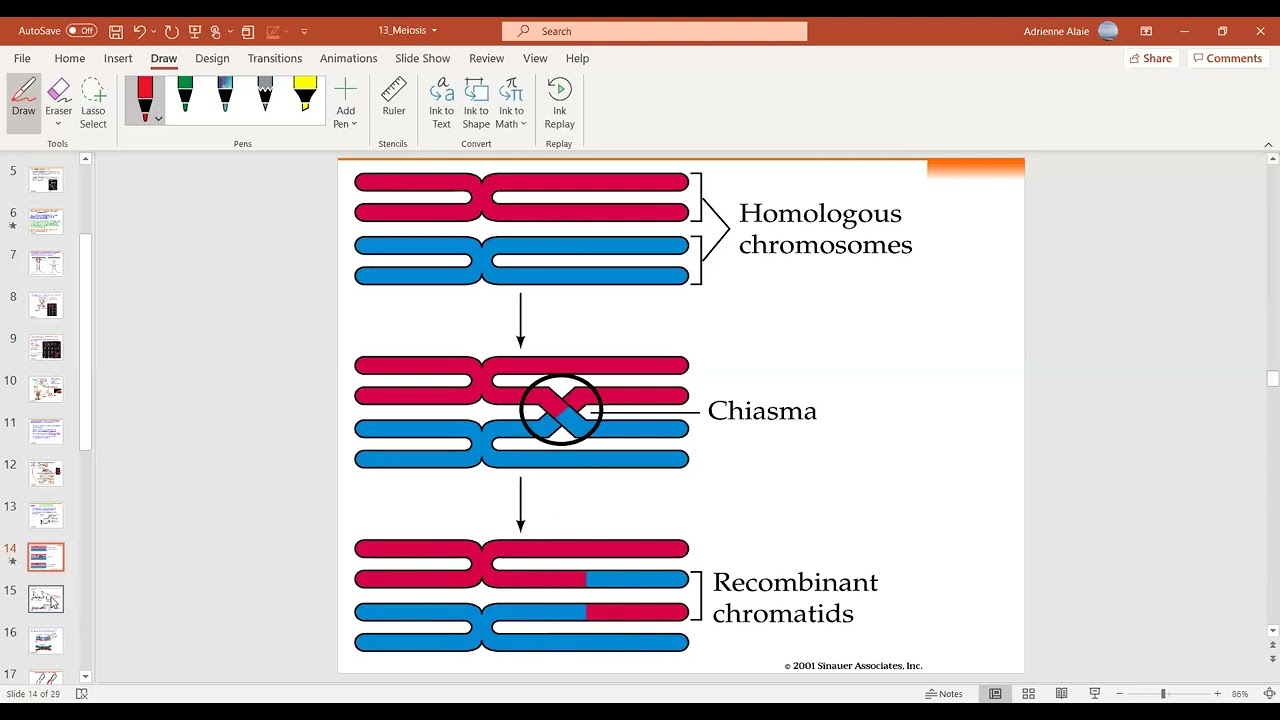
- Homologous chromosomes exchange genetic material through crossing over.
Crossover Events in Chromosomes
In this section, the speaker discusses the process of crossover events in chromosomes, highlighting the mechanisms and outcomes of chromosomal breakage and fusion during this crucial genetic process.
Understanding Crossover Events
- Crossover events occur as sisters separate from each other just before metaphase, with homologous chromosomes aligning and being held together by a complex known as the synaptonemal complex.
- Homologous chromosomes from parents align during crossovers, leading to breakages that result in recombinant chromatids where DNA pieces are exchanged between sister chromatids.
- Recombination during crossovers leads to increased genetic variability as identical sister chromatid pairs are no longer present due to fusion events.
- Unlike mitosis which aims for genetic identity in daughter cells, crossovers introduce variability through DNA breaks and fusions between non-sister chromatids.
- The exchange of DNA segments during crossovers results in non-identical sister chromatids, enhancing genetic diversity within offspring.
Mechanisms of Crossover Events
- Detailed illustrations show how DNA breaks occur at corresponding positions on non-sister chromatids, facilitating homologous recombination between chromosomes.
- Chromosomal breaks allow for fusion events where sections of different chromatids combine, creating new binding partners and increasing genetic diversity.
- The synaptonemal complex acts like a zipper structure holding homologous chromosomes together during crossovers, enabling precise breakages and fusions at corresponding positions.
- Homologous recombination involves similar regions of DNA on non-sister chromatids coming together during crossover events, further emphasizing the role of genetic similarity in these processes.
Preparing for Meiosis
The process of preparing for meiosis involves the separation and movement of chromosomes to opposite sides of the dividing cell, leading to condensed chromosomal bodies that represent maternal and paternal chromosomes.
Chromosome Separation and Homologous Pairing
- Chromosomes from the mother and father become distinct homologues during meiosis, connected by chiasmata areas where crossover events occur.
- Chiasmata serve to keep homologous pairs connected through sister chromatids, allowing them to move together to the metaphase plate.
- Crossover events can happen between any sisters, demonstrating genetic exchange possibilities.
Crossover Events in Meiosis
Crossover events in meiosis involve specific patterns of chromosome crossing over, leading to genetic diversity among sister chromatids.
Understanding Crossover Patterns
- Diagram illustrating crossover events between specific chromatids during meiosis.
- Human chromosomes typically undergo two to three crossovers along their length, contributing to genetic variation.
Unique Features of Meiosis
Meiosis presents unique features such as crossover events between heterologous pairs like X and Y chromosomes, enabling genetic linkage despite differences.
Heterologous Pair Crossovers
- Explanation of how X and Y chromosomes can have crossover events due to shared regions, facilitating their movement as a unit during meiosis.
Prophase I: Synapsis and Chiasmata Formation
Prophase I in meiosis involves synapsis where homologous pairs align closely before crossing over occurs, leading to chiasmata formation.
Prophase I Dynamics
- Description of synapsis where homologous pairs align before exchanging genetic material through crossovers.
- Appearance of chiasmata as chromosomes condense post-crossover event in prophase I.
Anaphase and Telophase in Meiosis
Anaphase and telophase stages in meiosis involve the separation of homologous pairs with visible changes in sister chromatids due to previous crossover events.
Chromatid Separation
- Homologous pairs separate during anaphase with non-identical sister chromatids due to prior crossovers.
- Illustration showing father's and mother's chromatids with exchanged DNA segments post-crossover.
Meiotic Divisions Overview
A summary of key aspects learned about meiotic divisions including duplication events preceding division cycles and potential pauses within the process.
Key Learnings on Meiotic Divisions
- Recapitulation on two meiotic divisions with a focus on duplication preceding division cycles.