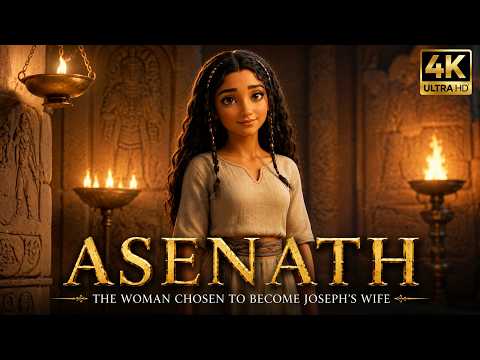
The Story of Asenath | Stunning Animated Bible Story of Love, Faith and Destiny ⭐
The Story of Asenath: An Outsider in God's Plan
Introduction to Asenath
- Asenath was not an Israelite; she grew up in an Egyptian temple as the daughter of a priest, worshipping gods unlike the God of Abraham, Isaac, and Jacob.
- Her marriage to Joseph, a foreign slave turned Egyptian ruler, intertwined her story with God's covenant plan despite her outsider status.
Joseph's Background
- Joseph, favored son of Jacob, faced severe jealousy from his brothers leading to his sale into slavery and false accusations that landed him in prison.
- Despite hardships, Joseph maintained integrity and eventually interpreted dreams for Pharaoh after being remembered by a former prisoner.
Rise to Power
- Pharaoh appointed Joseph as second-in-command over Egypt after he accurately predicted seven years of abundance followed by famine.
- In a significant political move, Pharaoh gave Asenath to Joseph as his wife without any record of her conversion or faith declaration.
Cultural Collision
- The marriage represented a clash between Joseph's devotion to God and Asenath's upbringing in pagan worship; no evidence suggests she converted before their union.
- Despite the arranged nature of their marriage for political loyalty, Joseph remained faithful to his beliefs while raising their children.
Legacy Through Their Sons
- Their sons Manasseh and Ephraim were named by Joseph reflecting his faith in God amidst adversity; these names signify forgetfulness of hardship and fruitfulness in affliction.
- Both sons were included among Jacob’s descendants during the family's relocation to Egypt during famine, highlighting their acceptance within Israel’s lineage.
Inclusion in Israel's History
- Jacob adopted Ephraim and Manasseh as his own sons, elevating them to tribal patriarch status despite their mother's lack of direct connection to Abraham’s lineage.
- This inclusion marked a significant shift where Israel would recognize tribes descended from an Egyptian woman alongside those from Jacob's biological sons.
Reflection on Faith Journeys
- Unlike other biblical figures like Rahab or Ruth who had explicit declarations of faith recorded, Asenath’s journey remains largely unchronicled yet impactful through her offspring.
- Her story illustrates that not all individuals used by God have dramatic testimonies; sometimes inclusion comes quietly through faithful presence within one's household.
Conclusion: A Broader Narrative
- The timing of Asenath's marriage before the famine underscores how God orchestrated events beyond human foresight for His greater purpose.
- Ultimately, Asenath exemplifies how outsiders can be woven into God's redemptive history without needing overt declarations or dramatic conversions.
Turn any video into a summary like this
YouTube links, meetings, lectures. With transcripts, search, and chat.