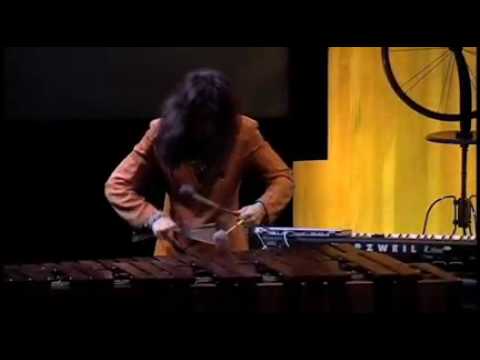
How to truly listen | Evelyn Glennie
Listening and Interpreting Music
The speaker expresses gratitude for the presentation by Herbie Hancock and discusses the combination of raw hand talent with technology, emphasizing the importance of listening to young people.
The Art of Listening
- The speaker's primary goal is to teach the world to listen, highlighting the complexity of truly understanding music beyond its visual representation.
- Reading music involves following instructions meticulously, including tempo markings, dynamics, and other nuances specified in the score.
- Interpretation of music involves understanding cues like speed, drum placement, stick usage, dynamics, and snare settings.
Beyond Musical Notation
- Musicians must delve into aspects not explicitly written in music sheets but observed through practice and exploration outside playing time.
- Transitioning from translation to interpretation in music performance enhances career longevity and depth of expression.
The Importance of Active Listening
The speaker emphasizes active listening as a crucial skill for musicians to connect deeply with their instruments and audiences.
Engaging with Sound
- Active listening involves self-awareness while playing an instrument to optimize technique and connection with the music.
- Adjusting grip on drumsticks demonstrates how physical engagement affects sound production and emotional resonance in musical performance.
Connection Through Interpretation
- By allowing natural support systems rather than forceful control, musicians achieve greater dynamic range with less effort, fostering unity with their instruments.
Describing the Journey of a Deaf Musician
In this section, the speaker shares their personal journey as a deaf musician and the challenges faced in pursuing music education due to societal perceptions.
Overcoming Challenges in Music Education
- The speaker faced rejection from the Royal Academy of Music initially due to being labeled a 'deaf musician,' challenging the institution's narrow views on musical ability.
- After persistence and re-auditioning, the acceptance criteria for music institutions changed, emphasizing musical ability over physical limitations like missing limbs or sensory impairments.
Impact on Music Institutions and Students
- The inclusive approach led to diverse students entering music institutions, with many now part of professional orchestras globally.
- The transformative power of sound is highlighted through an anecdote about a disabled young lad experiencing music vibrations differently, showcasing the universal connection to sound.
The Power of Sound Perception
This segment delves into how individuals perceive sound differently based on their proximity and interaction with musical instruments.
Unique Sound Experiences
- By positioning oneself near or under an instrument like a marimba, individuals can experience sound vibrations uniquely, offering varied perspectives compared to traditional listening positions.
- Each listener's position in a concert hall influences their auditory experience, emphasizing the importance of acoustics in creating immersive sound environments tailored for all listeners.
Revolutionizing Acoustic Design for Inclusivity
The discussion shifts towards how advancements in acoustic design cater to diverse auditory needs and enhance inclusivity in musical experiences.
Impact on Acoustic Design
- Increased accessibility to sound among the Deaf community has prompted a reevaluation of acoustics in venues, ensuring optimal sound quality for all listeners regardless of physical abilities.
Music and Fluidity
In this section, Evelyn Glennie discusses the fluid nature of music and the importance of giving pieces of music real time to understand them fully.
Understanding Music Through Experience
- Evelyn emphasizes the need to give pieces of music real time rather than hastily judging them.
- She engages the audience in an exercise where they create sounds like thunder through clapping, highlighting the experiential aspect of understanding music.
- By asking the audience to recreate sounds like snow and rain through clapping, she challenges conventional listening approaches.
Creativity in Musical Interpretation
- Evelyn encourages thinking creatively about how we experience music beyond traditional methods.
- She draws parallels between clapping exercises and listening to music, urging for a deeper exploration of sound experiences.
Exploration and Experimentation in Music
Evelyn Glennie shares her experience of learning through exploration and experimentation rather than traditional methods.
Learning Beyond Conventional Approaches
- Instead of rigid instructions, Evelyn's teacher encouraged her to explore a drum independently for seven days, fostering a hands-on learning approach.
- She experimented with various aspects of the drum, leading to bruises but providing invaluable experiential learning.
Embracing Unconventional Learning Methods
- The unconventional approach allowed for a unique learning experience not found in traditional study books or institutions.
- Contrasting her early exploratory learning with institutional education later on highlights the value of creativity in musical development.
Expressing Emotions Through Music
Evelyn delves into expressing emotions through music and connecting with audiences on an emotional level.
Communicating Through Music
- She stresses the importance of conveying emotions through music rather than just technical proficiency.
- Encourages audiences to open up emotionally during performances while acknowledging that each listener's experience is unique.
Appreciating Sound Journeys
Turn any video into a summary like this
YouTube links, meetings, lectures. With transcripts, search, and chat.