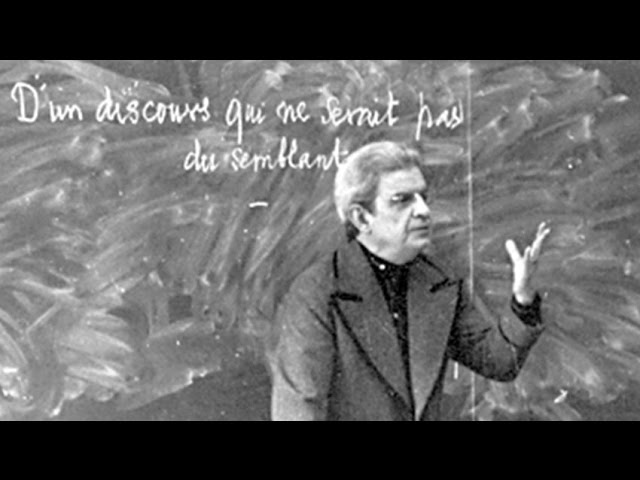
Jacques Lacan: Reinventar el Psicoanálisis
Jacques Lacan: Reinventing Psychoanalysis
The discussion delves into Jacques Lacan's reinvention of psychoanalysis, emphasizing his departure from traditional Freudian concepts and the evolution of his unique perspective on the unconscious.
Jacques Lacan's Departure from Traditional Psychoanalysis
- Freud viewed psychoanalysis as a revolution of the spirit to shake the world's consciousness, considering the unconscious as a reservoir of constrained driving forces.
- Lacan diverged from romanticized scientific views to reveal the subversive nature of psychoanalysis, transforming the unconscious into a language structure akin to Bach's fugue or Mallarmé's poem.
Reconstruction of Key Concepts in Psychoanalysis
- Lacan reconstructed fundamental concepts like subjectivity, characterizing the subject within a linguistic framework that evolved from deep introspection on self-construction.
- The concept of 'self' shifted towards understanding subjectivity through philosophical influences, notably explored in Lacan's mirror stage theory.
Mirror Stage Theory and Narcissism
- The mirror stage marks a crucial developmental phase (6-18 months), where a child anticipates bodily unity by perceiving their image in a mirror.
- Inspired by Narcissus legend, Lacan highlights how self-recognition leads to socialization while regression to primary narcissism isolates one from external reality.
Jacques Lacan: Early Life and Intellectual Journey
This segment explores Jacques Lacan's upbringing, intellectual rebellion against societal norms, and his fascination with exploring madness and paranoia within psychiatric contexts.
Early Life and Rebellion Against Norms
- Born in Paris in 1901 to a conservative Catholic bourgeois family, Lacan rebelled against societal expectations through intellectual pursuits influenced by Nietzsche and Spinoza.
Fascination with Madness and Paranoia
- Driven by an interest in exploring madness at Santé Hospital, Lacan delved into studying paranoia as a coherent form of insanity comparable to philosophical systems.
The Life and Work of Jacques Lacan
In this section, the transcript delves into the life and work of Jacques Lacan, focusing on key events such as his marriage, family life, and his contributions to psychoanalysis.
The Paranoia and Self-Punishment Narrative
- The story narrates a woman's pursuit from modest beginnings. It follows a postal worker who dreams of a different life, attempting to assassinate a famous actress but failing in her endeavor.
Lacan's Engagement with Hegelian Philosophy
- Lacan attends Alexandre Kojève's seminar on Hegel's "Phenomenology of Spirit" from 1934 onwards. Kojève offers insightful commentary on Hegel's text using contemporary political examples.
Subjectivity and Recognition
- Lacan explores subjectivity through the concept that self-awareness necessitates recognition by others. This recognition establishes the other as the master of one's existence.
Lacan's Personal Life
- In 1934, Lacan marries Marie-Louise Blondel and later falls in love with actress Sylvia Bataille during his marriage. He conceals his second family from his first wife for theoretical exploration of love and female pleasure.
Introduction of Lacanian Thought in English-Speaking World
- Juliet Mitchell introduces Lacanian thought to the English-speaking world before becoming a psychoanalyst herself. She reflects on appropriating Lacan’s ideas for political purposes.
Feminism and Psychoanalysis
This section delves into the intersection between feminism and psychoanalysis, highlighting how Jacques Lacan’s work intersected with feminist movements.
Feminist Appropriation of Lacanian Ideas
- Feminists appropriated Lacanian concepts for leftist political agendas while aiming to address gender disparities within society.
Women's Existence in Society
- During the 1960s, women were not recognized as a distinct category in societal studies or statistics. The absence of women as a category was emphasized by both feminists and early writings by Jacques Lacan.
New Section
In this section, the discussion revolves around the portrayal of female sexuality and maternal roles in contrast to traditional medical practices.
Portrayal of Female Sexuality
- The speaker emphasizes the importance of acknowledging female pleasure and sexuality without imposing naturalistic views.
- Women are not automatically assigned maternal roles but are depicted with a sense of feminine madness.
- Reference is made to breaking away from the traditional practice of exhibiting patients for medical education purposes.
New Section
This part delves into Lacan's departure from traditional clinical practices towards a more patient-centered approach.
Shift in Clinical Practices
- Lacan disrupts the conventional clinical gaze by allowing patients to speak and be heard.
- Patients were treated with respect and dignity, fostering an atmosphere of trust for open expression.
- Anecdotes highlight Lacan's compassionate approach towards patients, contrasting with the historical display of patients in medical settings.
New Section
The narrative unfolds how Lacan created a supportive environment for patients while balancing his seminar commitments.
Supportive Environment Creation
- Lacan gradually built trust with patients, encouraging them to express themselves freely.
- An anecdote illustrates Lacan's empathy towards a paranoid woman, showcasing his unique approach to patient care.
- Simultaneously managing seminars and patient care demonstrated Lacan's dedication to both aspects of his work.
New Section
This segment explores the significance of attending Lacan's seminars during that period.
Importance of Seminars
- Attending Lacan's seminars was considered pivotal for those involved in psychoanalysis.
- Despite occasional absences being frowned upon, participation was viewed as engaging in the evolution and reinvention of psychoanalysis.
- Seminars were described as intellectually stimulating and instrumental in shaping the field at that time.
New Section
Post World War II, Lacan shifts focus towards symbolic structures within subjectivity influenced by key anthropological and linguistic works.
Focus on Symbolic Structures
- Post-war, Lacan turns attention to symbolic structures within subjectivity inspired by Levi-Strauss and Jakobson's works.
- Levi-Strauss' insights on incest prohibition as a transition from nature to culture resonate with Lacanian concepts.
Detailed Analysis of Jacques Lacan's Contributions to Psychoanalysis
In this section, the transcript delves into Jacques Lacan's pivotal role in reshaping psychoanalysis, particularly in contrast to the prevailing norms of his time.
Lacan's Departure from Traditional Psychoanalytic Circles
- Lacan critiqued the dominance of an Anglophone majority within the psychoanalytic community, leading him to depart from the Paris Psychoanalytic Society.
Formation of the French Society of Psychoanalysis
- With support from Françoise Dolto, Lacan co-founded the French Society of Psychoanalysis in 1953, marking a significant departure from traditional psychoanalytic approaches.
Lacan's Renovation of Psychoanalysis
- Through his seminars at Sainte-Anne Hospital, Lacan emerged as a pioneering figure who revitalized and reinvented psychoanalysis in France.
Lacan's Reframing of Freudian Legitimacy
This segment explores how Jacques Lacan challenged established Freudian principles and positioned himself as a radical reformer within the field of psychoanalysis.
Reinterpretation of Freudian Foundations
- Lacan distinguished himself by advocating a return to Freudian origins rather than deviating or rejecting them outright.
Lacan's Unconventional Approach Within IPA
The discussion centers on how Lacan's unconventional methods were met with resistance within the International Psychoanalytical Association (IPA).
Conflict with IPA Standards
- Despite offering innovative teachings, IPA members were reluctant to embrace Lacanian ideas unless he adhered solely as a philosophical theorist rather than an educator.
Lacanian School Establishment and Leadership
This part highlights how Jacques Lacan assumed multifaceted roles upon founding and directing the Freudian School of Paris.
Unique Positioning Within School Structure
- Unlike Freud, who delegated political power to disciples, Lacan held simultaneous roles as founder, analyst, and political leader within his school.
Legacy and Closure of Freudian School in Paris
The final chapter reflects on the closure and impact of the Freudian School under Jacques Lacan's leadership.
Culmination and Legacy
- The unique journey culminated in 1980 when the adventure concluded after sixteen years under Jacque’s guidance.
New Section
In this section, the discussion revolves around the concept of priority in determining what becomes law and the symbolic function according to Levi-Strauss. The idea of being dominated by structures, whether social, symbolic, or linguistic, is explored.
Priority and Symbolic Function
- Priority determines what becomes law.
- Levi-Strauss's notion of being governed by structures - social, symbolic, or linguistic.
- Real is that which escapes symbolization.
New Section
This part delves into Lacan's realism and his connection with various philosophical schools. The interaction between Lacan and Louis Althusser regarding a structural reading of Marx's work is highlighted.
Lacan's Realism and Philosophical Connections
- Lacan viewed as a formidable realist connecting with major philosophical schools.
- Louis Althusser invites Lacan for a structural analysis of Marx's work.
New Section
The encounter between Jacques Derrida and Lacan at the Baltimore colloquium is discussed. Their differing approaches lead to tension but also mutual respect.
Encounter with Jacques Derrida
- Meeting at the Baltimore colloquium.
- Tension arises due to differing approaches.
New Section
Reflection on past interactions with Jacques Derrida post his death. Despite initial conflicts, there emerges an appreciation for the complexity of their relationship.
Reflection on Past Interactions
- Conflicts turn into silent appreciation over time.
New Section
Lacan gains recognition among students while facing opposition from adversaries. His persona is described vividly through various lenses.
Description of Lacan's Persona
- Lacan portrayed as both admired and despised figure.
- Various facets of Lacan's character are depicted in a poetic manner.
New Section
A detailed exploration of different aspects of Lacan’s personality and how they contribute to his unique wisdom.
Multifaceted Personality of Lacan
- Description of different personas within Lacan.
Detailed Summary of the Transcript
The text describes how passion is reflected in a unique way through attentive listening, even in the absence of time. It highlights experiences in different settings and the extraction of negative aspects from ultra-brief sessions.
Passionate Listening and Unique Experiences
- Lado's passion is evident in his distinct style of listening, which transcends time constraints.
- The study encompasses diverse locations like the street, law, and his apartment, offering varied experiences.