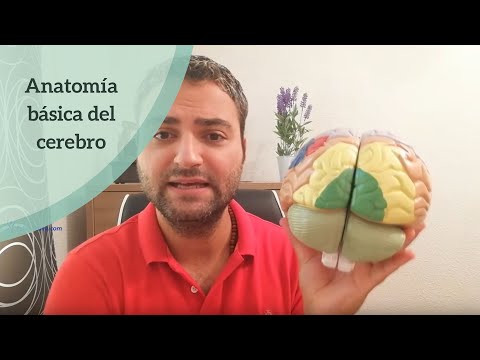
Anatomía del cerebro humano, descubre la función de las distintas zonas cerebrales
Introduction to the Human Nervous System and Brain
Overview of the Series
- The video series aims to study the human nervous system and brain, using a detailed model of the human brain for educational purposes.
- The initial focus will be on summarizing external parts of the brain before delving into internal structures in future videos.
External Structure of the Brain
- The brain can be divided into three main parts: cerebellum, brainstem, and cerebral hemispheres.
- The cerebellum is split into two hemispheres and processes sensory and motor information from the spinal cord.
Major Lobes of the Brain
Identification of Cerebral Lobes
- There are four significant lobes in the brain: frontal, occipital, parietal, and temporal.
- The frontal lobe is located at the front; it includes areas responsible for voluntary movement (primary motor cortex), movement sequencing (premotor cortex), and impulse control (prefrontal cortex).
Importance of Frontal Lobe
- A case study involving Phineas Gage illustrates how damage to the frontal lobe can drastically alter personality and behavior.
Additional Structures within Lobes
Temporal Lobe Features
- The lateral sulcus separates the temporal lobe from other lobes; it contains primary auditory cortex crucial for processing sound.
Occipital Lobe Functions
- The occipital lobe houses primary visual cortex where visual information first arrives before being processed further in secondary areas.
Parietal Lobe Role
- The parietal lobe receives sensory information related to touch, temperature, and pain through its primary somatosensory cortex.
Future Learning Directions
Upcoming Topics
- Future videos will explore additional aspects of brain anatomy including language functions associated with specific regions like Broca's area and Wernicke's area.
Turn any video into a summary like this
YouTube links, meetings, lectures — with transcripts, search, and chat.