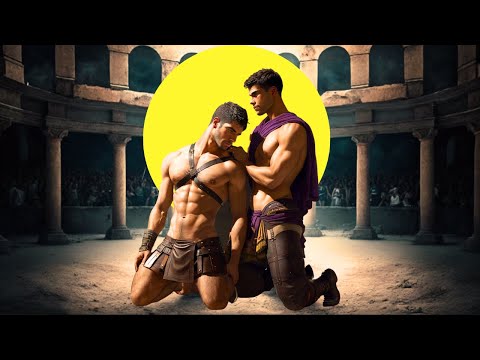
Life of Gay Roman Gladiators in Ancient Rome
Introduction to Roman Gladiators and Homosexuality
This section introduces the topic of Roman gladiators and their engagement in romantic relationships. It also discusses the Romans' fascination with pleasure and watching people fight.
Roman Gladiators and Love
- Roman gladiators were known to fall in love with each other, although physical fights were not the usual form of engagement.
- Slaves engaging in combat was a form of entertainment for Romans.
- Homosexual relationships among gladiators were not uncommon, despite the conventional gender roles in ancient Roman culture.
- Homosexual gladiators sometimes faced severe punishment for their relationships.
Perception of Roman Homosexuality
This section explores how Roman homosexuality was perceived by philosophers and writers. It highlights both admiration for romantic love and criticism for its perceived obscenity.
Admiration and Criticism of Roman Love
- Philosophers regarded Roman homosexuality as an admirable example of romantic love.
- However, words like "gross," "obscene," and "lust" were frequently used to describe their erotic customs.
- Wild orgies were associated with Roman homosexuality rather than genuine love.
- Writers like Petronius and Catullus received criticism for their works' depiction of decadence and obscenity.
Demonization of Rome's Immoral Practices
This section discusses how Rome's immoral practices were demonized by emphasizing Greek homosexuality as virtuous. It also mentions examples written in history books that shed light on homosexual relationships among gladiators.
Demonization of Rome's Immoral Practices
- Authors like Martial and Juvenal were targeted for obscenity due to their explicit works.
- By demonizing Rome's vices, the virtue of Greek homosexuality was emphasized.
- Examples of homosexual relationships among gladiators were written in history books for everyone to see and read.
Famous Love Story: Priscus and Varys
This section mentions a famous love story between two gladiators, Priscus and Varys, which was made into a play performed in front of Emperor Nero.
Love Story of Priscus and Varys
- The love story between Priscus and Varys is one of the most well-known tales of homosexuality among Roman gladiators.
- While their famous battle inside the Colosseum is often mentioned, little is known about their story beyond that.
Homosexuality Among Roman Gladiators
This section explores the prevalence of homosexuality among Roman gladiators and how it was believed to enhance their strength and fearlessness in combat.
Sexual Interactions Among Gladiators
- Gladiator sexual interactions were prioritized over works of art and literature from ancient Rome.
- Many Romans believed that engaging in sexual activity would make gladiators strong and fearless in combat.
- Most gladiators were slaves or former prisoners, limiting their options for sex with women.
- Gladiators formed groups to engage in romantic or sexual relationships, often with recruits who were taught how to manage pain.
Blood as Symbolic Prowess
This section discusses the belief that gladiator blood symbolized sexual prowess. It also mentions Emperor Marcus Aurelius' involvement in covering himself and his wife with a gladiator's blood during sex.
Blood as Symbolic Prowess
- People believed that covering themselves in a gladiator's blood before engaging in sexual activity enhanced their own sexual prowess.
- Emperor Marcus Aurelius killed a gladiator while having sex with his wife Faustina and covered her in the blood of the victim.
- It was believed that this event led to the birth of Commodus, Marcus Aurelius' son.
Conclusion
This section concludes the discussion on Roman gladiators and homosexuality, highlighting the famous love story of Priscus and Varys.
Conclusion
- The topic of homosexuality among Roman gladiators sheds light on the complexities of ancient Roman culture and its perception of love and pleasure.
- While there were criticisms and demonization, examples written in history books provide evidence of homosexual relationships among gladiators.
- The love story between Priscus and Varys remains one of the most well-known tales from this era.
Gladiators and Same-Sex Relationships in Ancient Rome
This section discusses the perception of same-sex relationships among gladiators in ancient Rome and the punishments associated with such relationships.
Same-Sex Relationships Among Gladiators
- Gladiators were seen as symbols of freedom, and rumors suggested that there was more than friendship between them.
- Same-sex relationships among warriors were not uncommon in ancient Rome, but there were limits to how far they could go.
- Roman soldiers were expected to exercise restraint when it came to sex, similar to other free and honorable Roman males.
- The Bellum Hispaniensis, a book about Caesar's Civil War, mentioned an officer who had a male concubine on a campaign.
Punishments for Same-Sex Relationships
- Augustus forbade soldiers from getting married, which remained in effect for the Imperial Army for nearly two centuries.
- Engaging in sexual activity with other soldiers went against Roman customs that prohibited sexual relations with another freeborn male.
- Homosexual activity by soldiers was punishable by severe punishments, including death. Soldiers who volunteered for penetration would receive the fustuarium or club to death punishment.
- Officers who abused their power to force soldiers into sex faced terrible repercussions.
Upholding Sexual Integrity
- Soldiers were encouraged to maintain their manly attributes by refraining from applying perfume and shaving their underarm and nostril hair.
- The story of Trebonius demonstrates a soldier's right to keep his sexual integrity. Trebonius resisted unwanted advances from his higher officer until he was sexually attacked. He defended himself by slaying his attacker but was not put to death due to evidence presented during his trial.
Conclusion
This section concludes the discussion on same-sex relationships among gladiators in ancient Rome.
Mixed Outcomes
- While gladiators were allowed to love and engage with one another, there are still stories in Roman history that didn't end well.
- The transcript ends without providing further details on these stories.
The transcript does not provide timestamps for the conclusion section.