UD2 Componentes fundamentales de los sistemas microinformáticos 7
Microprocessor Characteristics: Parallelism
Understanding Parallelism in Microprocessors
- The video discusses the concept of parallelism, highlighting it as a key feature of modern processors that allows for executing multiple instructions simultaneously.
- Traditionally, processors executed one instruction at a time sequentially. This method has been improved by integrating more devices within the CPU to enhance performance.
- Current processors utilize multi-core technology, enabling them to read and execute two or more instructions at once, thus improving efficiency.
- A core is defined as a processing unit within the CPU that contains various components such as control units and cache memory. Multi-core CPUs can have several cores working independently.
- With multi-core architecture, different cores can handle separate programs simultaneously, leading to significant improvements in processing speed and multitasking capabilities.
Evolution from Single-Core to Multi-Core Processors
- Historically, single-core processors relied on increasing clock speeds for better performance. However, this approach led to overheating issues.
- The shift towards smaller cores with lower clock speeds but higher quantities allows for enhanced performance without excessive heat generation.
- Modern multi-core systems often include shared cache memory among cores and individual caches for each core to optimize data access times.
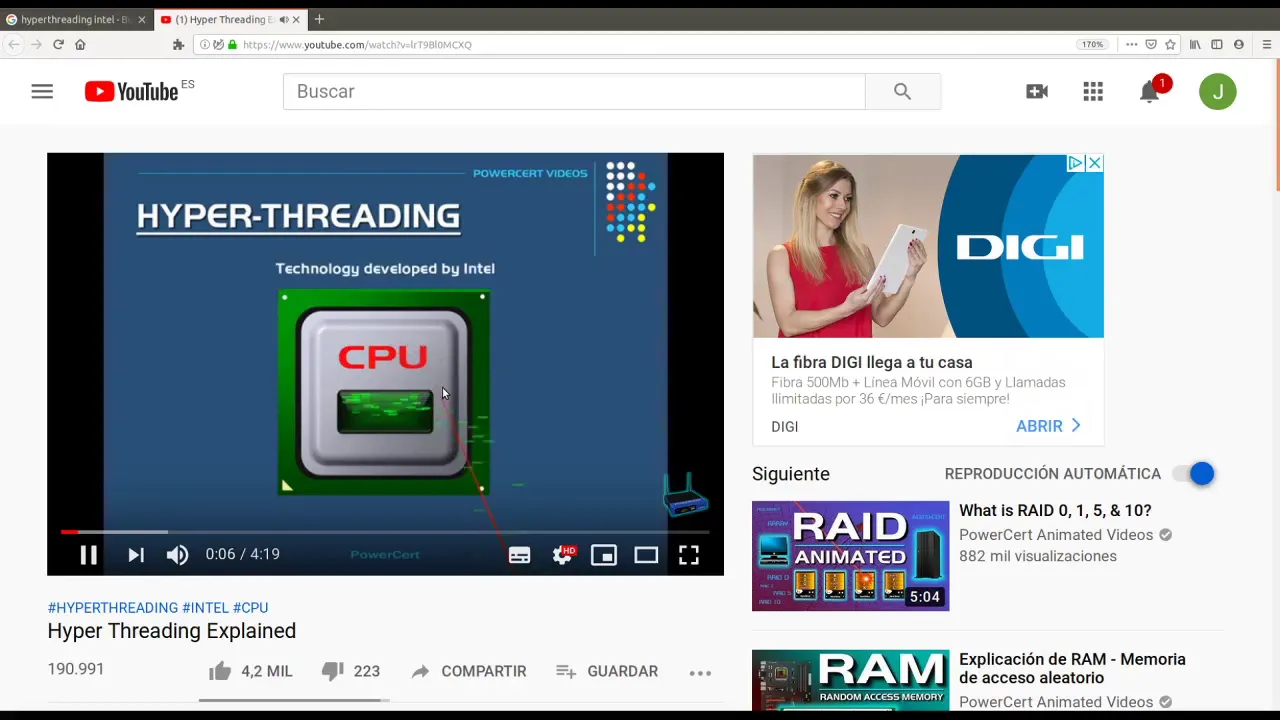
Hyper-threading Technology
- Both Intel and AMD implement multi-core technology in their processors. Additionally, they incorporate hyper-threading which allows each core to manage two threads of execution simultaneously.
- Hyper-threading enables a single program (e.g., Microsoft Word opening multiple documents) to run multiple threads rather than launching separate instances of the program itself.
- This threading technique reduces memory usage since only one instance of the program code is maintained while allowing concurrent document handling through lightweight execution threads.
- While hyper-threading improves efficiency by managing multiple tasks per core, it does not necessarily double overall performance; however, it presents an illusion of increased processor count in operating systems due to thread management capabilities.
Intel Core i3 6100: Understanding CPU Performance
Hyper-Threading Technology
- The Intel Core i3 6100 features 2 physical cores, but the operating system recognizes it as having 4 processors due to hyper-threading, which allows each core to handle two threads.
- This technology enhances performance by enabling Windows and other applications to utilize multiple threads effectively, improving overall processing capabilities.
- For more information on hyper-threading, a search online will yield extensive resources explaining its functionality and benefits.
Cache Memory Levels
- A significant advancement in CPU design is the integration of cache memory levels (L1, L2, L3), which reduces energy costs and improves efficiency by minimizing access time to data.
- Cache memory is essential for CPUs as it stores frequently accessed data closer to the processor, allowing for faster execution of programs compared to accessing main memory (RAM).
Functionality of Cache Levels
- The CPU accesses RAM initially for program instructions but utilizes L1 cache for immediate instruction execution. Each core has its own L1 and L2 caches while sharing an L3 cache.
- When executing programs, the CPU predicts subsequent instructions and loads them into the L1 cache for quick access without needing to retrieve them from slower RAM repeatedly.
Managing Multiple Programs
- The CPU dynamically manages multiple running programs by transferring inactive ones from L1 to L2 cache instead of deleting them entirely. This allows quick reactivation when needed.
Understanding CPU Cache and Its Importance
Overview of Cache Memory Functionality
- The cache memory operates by storing the most current data, allowing for quicker access. When new data fills the cache, older data is removed and sent back to main memory.
- Instruction execution speed is significantly improved through effective use of cache memory. Users are encouraged to explore online resources like YouTube for deeper insights into CPU cache technology.
Levels of Cache Memory
- There are multiple levels of cache (L1, L2, L3), each serving different purposes in speeding up data retrieval for the CPU and GPU.
- L1 cache is the fastest and located within each core, while L2 captures recent data. L3 serves as a shared resource among cores.
Structure and Design of Cache
- The design evolution shows that previously separate chips for L2 are now integrated within cores, enhancing performance.
- A silicon die diagram illustrates how caches are organized around multiple cores, with smaller caches (L1) being faster than larger ones (L2).
Intel Processor Specifications
- For detailed specifications on processors, including their caching capabilities, users can visit Intel's website.
- An example from Intel’s 10th generation Core i7 processor highlights its 8 MB internal cache as a critical parameter influencing performance.
Performance Metrics and Comparisons
- The document discusses power consumption metrics such as Thermal Design Power (TDP), which indicates how much power a processor dissipates under typical workloads.
Understanding Processor Access Speeds and Power Consumption
Access Speed of Different Processors
- The L1, L2, and L3 caches typically offer faster access speeds in the Euro context due to proximity to the control unit rather than differences in technology.
- The size comparison shows that while the L1 cache is smaller than the L2, it provides quicker access. The E3 cache is noted as being larger than E1 but smaller than E2.
Power Consumption Insights
- A notable difference in power consumption is highlighted: an Intel processor for mobile devices consumes around 9 watts, whereas a more powerful processor discussed here consumes approximately 250 watts.
- This high power consumption (250 watts) is attributed to multiple cores (32 or 64), indicating a significant processing capability with multithreading techniques.
Performance Characteristics
- The processor operates at a base frequency of 3 GHz, showcasing its high performance compared to earlier discussions about processors operating at 1 GHz.
Turn any video into a summary like this
YouTube links, meetings, lectures. With transcripts, search, and chat.