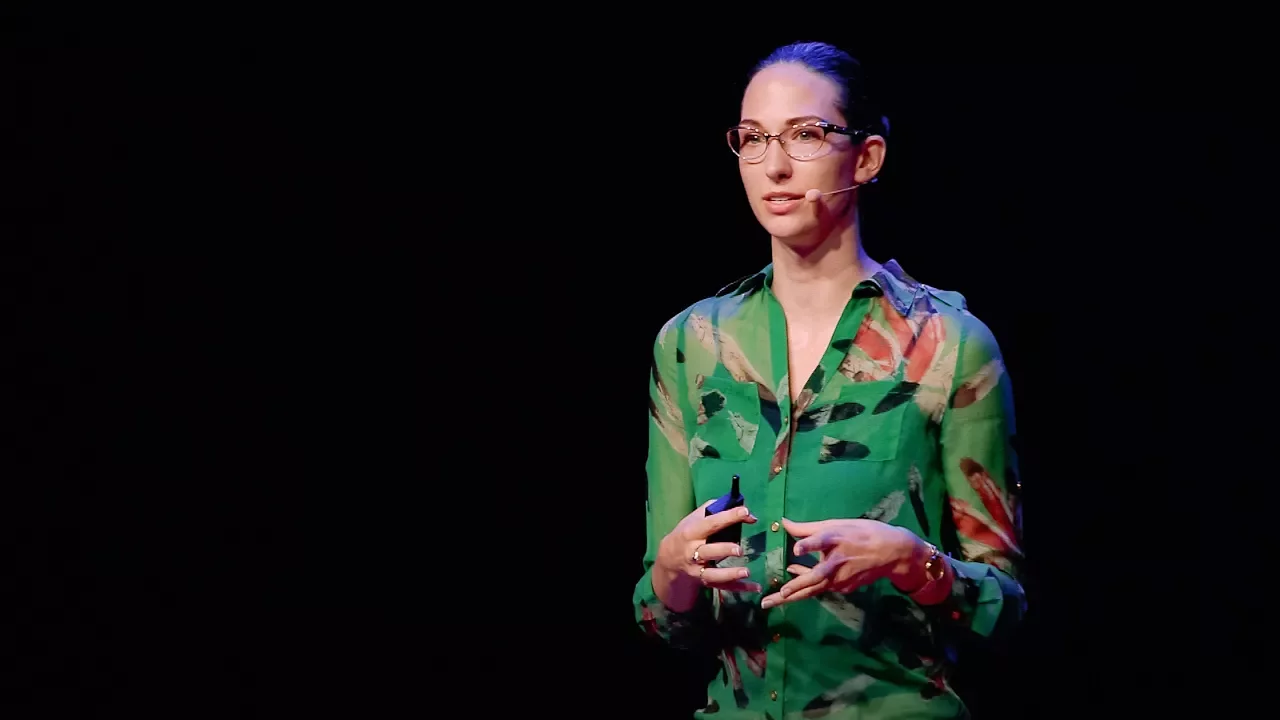
How young people join violent extremist groups -- and how to stop them | Erin Marie Saltman
Introduction and Name Change
The speaker discusses their decision to change their name in order to participate in a Far Right youth camp in Hungary.
Name Change for Participation
- In 2011, the speaker changed their name to participate in a Far Right youth camp in Hungary.
- They were conducting research on youth political socialization and were surprised to find many young people joining the Far Right.
- To better understand why people were joining, the speaker enrolled in the youth camp.
- Their colleague enrolled them, and they altered their last name to sound less Jewish.
- Their James Bond-like name became "Salty Irena," which was not a choice they would have made naturally.
Surprising Experience at the Youth Camp
The speaker shares their experience at the Far Right youth camp and how it initially seemed fun until certain topics were discussed.
Fun Atmosphere with Disturbing Discourse
- The camp focused very little on politics and instead offered activities like horse riding, archery, live music, free food, alcohol, and air-gun target practice using politicians' faces as targets.
- Initially, the group appeared friendly and inclusive until discussions about the Roma population, Jewish people, or immigrants arose.
- At that point, hate-based discourse quickly emerged.
Understanding Extremist Movements
The speaker introduces their current work on understanding why people join violent extremist movements and how to effectively counter these processes.
Questioning Extremist Motivations
- After witnessing shocking acts of violence committed by extremist groups worldwide, it is easy to assume that these individuals are sociopaths or have something wrong with their upbringing.
- However, there is no one profile for those who join extremist movements, as they come from various backgrounds and demographics.
- The speaker aims to explore the allure of these movements and discuss strategies for countering them in the modern era.
Push and Pull Factors of Radicalization
The speaker explains push and pull factors that contribute to someone's process of radicalization.
Factors Influencing Radicalization
- Research shows that there are several factors that influence an individual's process of radicalization.
- These factors can be categorized into push and pull factors.
- Push factors make individuals vulnerable to joining violent extremist groups, such as a sense of alienation, isolation, questioning identity, and feeling that their in-group is under attack without support from larger powers.
- However, push factors alone do not lead to becoming a violent extremist.
Allure of Violent Extremist Organizations
The speaker discusses the positive aspects offered by violent extremist organizations that attract individuals.
Positive Aspects Offered
- Violent extremist organizations provide seemingly empowering elements like brotherhood/sisterhood, a sense of belonging, spiritual purpose, empowerment, adventure, and the opportunity to become heroes.
- They simplify the complex world into black-and-white terms of good versus evil, with members seeing themselves as challenging what is evil.
ISIS as a Modern Movement
The speaker highlights ISIS (Daesh) as a game changer in understanding radicalization processes due to their use of social media.
Impact of ISIS
- ISIS has revolutionized how we perceive radicalization processes through their use of social media platforms like Twitter and videos depicting beheadings.
- However, it is important to note that the internet itself does not directly radicalize individuals; it serves as a catalyst.
- The internet provides tools, scale, and rapidity that were previously unavailable.
- ISIS humanized themselves through social media by sharing personal aspects of their lives, including tweets in different languages, discussions about weddings and births, and references to gaming culture.
Challenges with Censorship
The speaker discusses the challenges faced when trying to counter extremist content through censorship.
Problems with Censorship
- Governments and social media companies attempted to censor terrorist content but faced difficulties as accounts would be taken down only to resurface later.
- Violent extremists are aware of social media rules and regulations, leading them to start conversations on mainstream platforms before moving to smaller, less regulated platforms.
- This shift makes it challenging to track the progression of conversations and poses a problem for censorship efforts.
The transcript has been summarized into meaningful sections based on the provided timestamps.
New Section
The speaker discusses the increase in women joining violent extremist groups and how it changes the approach to countering extremism.
Women Joining Extremist Groups
- There has been a significant increase in the number of women joining extremist groups, especially in the last 12 months.
- In some countries, one in four individuals going to join extremist groups are now women.
- This shift in demographics requires a different approach to counter this process.
New Section
The speaker highlights the importance of prevention and counters the misconception that preventing and countering violent extremism are the same.
Preventing vs Countering Violent Extremism
- Preventing and countering violent extremism are two distinct approaches.
- Preventing focuses on building resilience among individuals to resist radicalization.
- Countering involves addressing individuals who already show signs of belonging to a violent extremist ideology.
New Section
The speaker explains that preventative measures aim to make broad groups of people resilient through exposure to ideas, while countering measures require reaching out to individuals already involved in extremist ideologies.
Different Approaches for Prevention and Counter
- Preventative measures target broad groups of people by exposing them to ideas that make them resilient against radicalization.
- Countering measures differ based on an individual's level of involvement:
- For those starting to question certain things online, alternative perspectives need to be provided.
- For individuals already embedded within extremist groups, finding ways to reach them becomes crucial.
New Section
The speaker introduces three examples illustrating new ways of engaging with different levels of individuals involved in extremism.
Examples of Engagement Strategies
- "Extreme Dialogue":
- An educational program using storytelling within classroom settings.
- Former extremists and survivors share their stories through videos, sparking conversations about extremism.
- Civil Society Voices:
- Engaging with individuals searching for information online or exploring extremist ideologies.
- Combining civil society voices with creatives, techies, and artists to create targeted content disseminated online.
- "One to One" Pilot Program:
- Former extremists reach out directly to labeled neofascists and Islamist extremists through Facebook Messenger.
- Initiating conversations, planting seeds of doubt, and providing alternatives for discussing extremist subjects.
New Section
The speaker emphasizes the importance of bringing together unlikely sectors to effectively challenge extremism.
Collaboration for Challenging Extremism
- Unlikely sectors such as activists, graphic designers, poets, marketing experts, comedians can contribute valuable skills in challenging extremism.
- Collaborations between former extremists, young people networks, tech sector professionals, artists, and creatives are essential for a robust approach against extremism.
Timestamps have been associated with bullet points where available.
Turn any video into a summary like this
YouTube links, meetings, lectures. With transcripts, search, and chat.