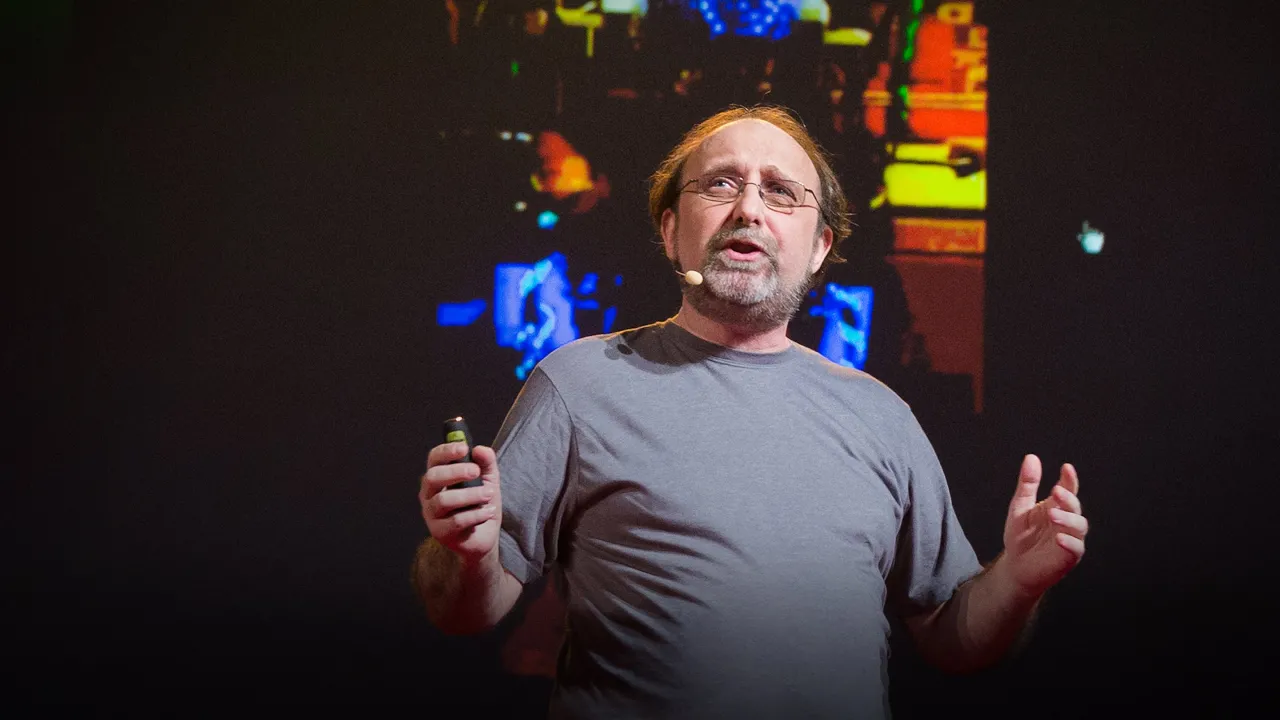
Miguel Nicolelis: Brain-to-brain communication has arrived. How we did it
New Section
This section introduces Juliano Pinto, a paralyzed young man who accomplished a remarkable feat by delivering the opening kick of the 2014 Brazilian World Soccer Cup through a brain-machine interface.
Juliano's Remarkable Achievement
- Despite being paralyzed from mid-chest to toes due to a car crash, Juliano Pinto successfully kicked the ball, defying expectations.
- Juliano achieved this by imagining the movements needed to kick the ball, utilizing his ability to dream and visualize.
- The spinal cord lesion did not rob Juliano of his dreams and aspirations.
- His accomplishment was the result of 30 years of basic research on brain-machine interfaces and electrical brainstorms.
Brain-Machine Interface Research
- Brain-machine interfaces connect the brain to devices, allowing individuals to move objects just by imagining their actions.
- Initially met with skepticism, researchers persevered in demonstrating that connecting brains to devices was possible.
- Brain-machine interfaces use sensors to read electrical brainstorms produced by about 100 billion elements in our brains.
- These signals are converted into digital commands that can be understood by mechanical, electronic, or virtual devices.
Monkey Experiment and Human Application
- In an experiment with monkeys, they learned to control a virtual arm using their brains without moving their bodies.
- Researchers proposed applying this concept to paralyzed humans using brain-machine interfaces for mobility restoration.
- Paraplegic and quadriplegic patients have the desire to move but need a way to translate those desires into actual movement.
- The idea of creating a robotic vest or body was proposed to enable paralyzed individuals to regain mobility.
New Section
This section discusses the challenges faced by paraplegic and quadriplegic patients and proposes the use of brain-machine interfaces to create new ways for them to move.
Overcoming Paralysis
- Paralyzed individuals have the desire to move but are unable to due to complete spinal cord lesions.
- Brainstorms continue to be generated in their heads, but they cannot reach their muscles.
- The goal is to extract the code from their brains and recreate movement using brain-machine interfaces.
Creating a Robotic Vest
- The proposal is to develop a robotic vest that can be controlled through brain-machine interfaces.
- Juliano's ability to kick the ball by thinking demonstrates the potential of this technology.
- The ultimate aim is for paralyzed individuals to regain mobility through these innovative solutions.
Dropped Lives, Dropped Patents: The Journey to Create a Brain-Controlled Exoskeleton
In this section, the speaker discusses the motivation behind creating a brain-controlled exoskeleton for individuals with spinal cord injuries. The goal was to showcase Brazil as a country that values science and technology and provide a gift to millions of people around the world who are unable to move due to spinal cord injuries.
Creating the Exoskeleton
- A brain-controlled exoskeleton was proposed for the opening ceremony of the 2014 World Cup in Brazil.
- Despite initial skepticism, a team of researchers and engineers came together in 18 months to build an exoskeleton from scratch.
- The first brain-controlled exoskeleton, named Bra-Santos Dumont 1 after Alberto Santos Dumont, was created with 15 degrees of freedom and hydraulic machinery.
- Electroencephalography (EEG) technology was used to record brain signals and command the exoskeleton's movements.
- An artificial skin invented by Gordon Cheng allowed for sensation feedback from joint movements and foot contact with the ground.
Walking Again
- Bruno, one of the patients, successfully walked using the brain-controlled exoskeleton after nine years of being unable to move.
- Bruno's commands were analyzed by a computer and executed by the exoskeleton under his control.
- Bruno experienced new sensations while walking, such as feeling like he was walking on sand at a beach resort he used to visit before his accident.
Showcasing During World Cup
- Juliano Pinto demonstrated kicking a ball using the exoskeleton during the World Cup opening ceremony.
- The exoskeleton received mental commands from Juliano and delivered feedback through pulsating lights.
- Juliano successfully kicked the ball and expressed that he felt the contact with it.
Future Possibilities
- Brain-actuating technology has immense potential and is limited only by imagination.
- The speaker mentions a brain-to-brain interface that allows animals to exchange mental messages, indicating ongoing advancements in this field.
This summary provides an overview of the main points discussed in the transcript. It is important to watch the video or read the full transcript for a complete understanding of the topic.
New Section
In this section, the speaker introduces the first demo where a rat is trained to press a lever in response to a light signal. The rat successfully completes the task and sends a mental message to another rat, which also learns to press the lever without directly experiencing the light signal.
First Demo: Rat Training
- The first rat is informed by a light signal on the left side of its cage and learns to press the left lever for a reward.
- The second rat, without seeing any light signal, learns from the first rat's mental message and also presses the left lever for a reward.
New Section
This section discusses an experiment involving monkeys collaborating mentally through brain activity. The monkeys combine their brain signals to control a virtual arm in 2D and later in 3D.
Monkey Collaboration Experiment
- Monkeys collaborate mentally through brain activity to control a virtual arm.
- Two monkeys synchronize their brains perfectly to move the virtual arm in 2D, with one controlling the x dimension and the other controlling the y dimension.
- Three monkeys collaborate to move the arm in 3D using different combinations of dimensions (x, y, z).
- The average of all three monkey's brain activity results in real-time movement of the virtual arm.
New Section
The speaker reflects on where this research may lead in terms of future applications and emphasizes that technology will become integrated with humans rather than humans being absorbed by technology.
Future Applications and Reflection
- Anticipates future scenarios such as surfing the internet through thought, donating eyesight to visually impaired individuals, and brain-to-brain communication.
- Acknowledges that the research is exploratory and that its ultimate direction is unknown.
- The speaker expresses a sense of curiosity and openness to discovering new possibilities.
New Section
The speaker explains the dynamics of monkey collaboration in controlling the virtual arm and highlights the unpredictability of brain networks compared to traditional computers.
Dynamics of Monkey Collaboration
- Each monkey receives visual feedback in 2D but must accomplish a 3D task of moving an arm.
- Synchronization between at least two monkeys' brains is necessary for successful control, with three monkeys being ideal.
- When one monkey's performance declines, the other monkeys compensate to maintain overall synchrony.
- Instantaneously changing the dimensions each monkey controls results in their brains adapting to focus on the new dimensions.
- Brain networks cannot be predicted by Turing machines or traditional computers.
New Section
The speaker discusses recent advancements in brain-to-brain communication experiments conducted by a European group.
Recent Advancements in Brain-to-Brain Communication
- A European group demonstrated man-to-man brain-to-brain connection using non-invasive technology.
- One subject transmitted their brain activity to another subject who received different visual stimuli based on magnetic pulses applied to their visual cortex.
Turn any video into a summary like this
YouTube links, meetings, lectures. With transcripts, search, and chat.