Organização de Computadores - Aula 02 - Desempenho de Computadores
Desempenho em Computação
In this section, the speaker delves into the concept of performance in computing, emphasizing the importance of defining metrics to evaluate performance effectively.
Defining Performance Metrics
- Performance is not a singular measure but varies based on specific criteria. For instance, comparing different aircraft models highlights the need for defined metrics to determine superiority based on factors like passenger capacity or speed.
- When assessing performance in computing, establishing precise metrics is crucial. It's insufficient to merely claim one system performs better; clarity on what constitutes performance and which metrics matter is essential.
- Key performance metrics in computing include:
- Time of response or execution: Crucial for tasks like loading a browser or running algorithms where users expect prompt results.
Impact of Performance
- Time of execution directly influences user experience and system efficiency. Whether it's loading a webpage or processing data, understanding and optimizing execution time is vital.
- Transaction throughput becomes significant for systems handling multiple requests simultaneously. Evaluating how many transactions a system can manage per unit time provides insights into its efficiency.
Hardware Influence on Performance
- Upgrading hardware components can significantly impact performance. Transitioning from older processors to newer ones with enhanced capabilities can reduce execution times and improve overall system efficiency.
- The number of processor cores plays a critical role in tasks requiring parallel processing. More cores enhance transaction handling capacity, illustrating the hardware's direct influence on system throughput.
Hardware vs. Software Impact
- Hardware factors such as processor type and architecture have a substantial impact on performance compared to software elements like algorithms or compilers. Understanding hardware nuances is crucial for optimizing system efficiency.
New Section
In this section, the speaker discusses the criteria for comparing performance based on execution time and establishes the relationship between performance and execution time in computing.
Establishing Criteria for Performance Comparison
- Comparing performance between machines of different processor generations requires running the same program on both machines to ensure coherence in methodology.
- Performance comparison is done by dividing the execution time of one machine by another to determine how much faster one machine is compared to the other.
- Performance has been historically considered reciprocal to execution time in computing, indicating an inverse relationship between the two.
New Section
This part delves into how program performance varies across different machines and systems, emphasizing the importance of establishing references for performance improvements.
Program Performance and Reference Establishment
- To consider performance improvement, a reference point (e.g., machine B) is crucial for evaluating gains in system efficiency.
- By comparing system performances relative to a reference system B, one can quantify gains achieved when transitioning from one system to another.
New Section
The discussion shifts towards understanding processor characteristics that influence execution time calculations, focusing on factors like clock rate and instruction cycles.
Understanding Processor Characteristics
- The clock rate of a processor determines the time taken to execute an instruction within the data flow.
- Calculating execution time involves considering the number of CPU cycles required for executing algorithms efficiently.
New Section
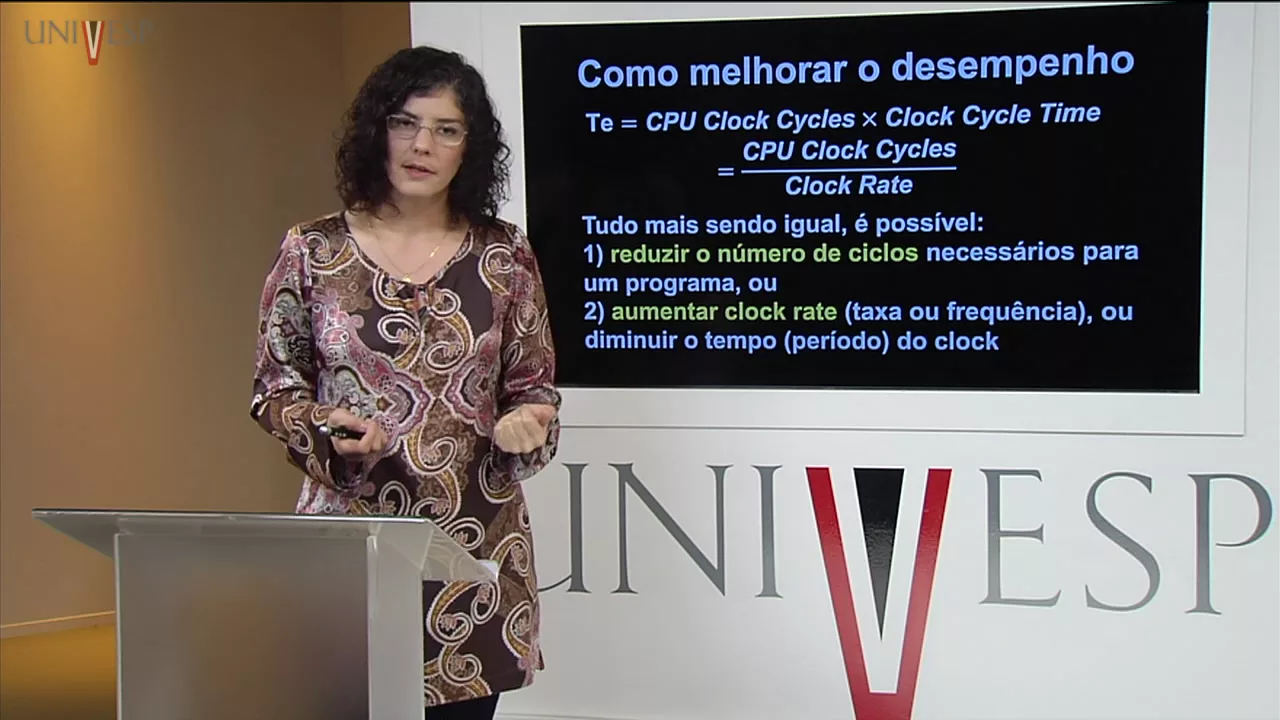
Strategies for enhancing performance through reducing CPU cycles and optimizing clock rates are explored as means to improve program efficiency.
Enhancing Performance Through Optimization
- Improving program efficiency involves streamlining data flow and selecting more efficient instructions to reduce CPU cycles.
CPI and Performance Optimization
The discussion revolves around CPI (cycles per instruction) in the context of machine instructions, highlighting how different types of instructions require varying numbers of cycles to execute. The speaker emphasizes the importance of considering architecture, instruction types, and frequency when analyzing performance for optimization.
Understanding CPI and Instruction Types
- Instructions like addition may require fewer cycles compared to more complex operations like multiplication.
- CPI values vary based on the architecture being used, impacting the number of cycles per instruction for different machine instructions.
Factors Influencing Performance Optimization
- Performance optimization involves improving instruction count, cycles per instruction, and architecture characteristics.
- Enhancing instruction count relates to algorithms and compilers, while optimizing cycles per instruction focuses on hardware advancements in processor performance.
Impact of Time Fractions on Performance Gains
- The performance gain from improvements depends on the fraction of time utilizing those enhancements within specific tasks or algorithms.
- It is crucial to assess the percentage of time spent on various types of instructions or operations when considering system enhancements.
System Improvement Strategies
Delving into the significance of time fractions in determining overall performance gains, this segment underscores that even substantial improvements in specific aspects may have minimal impact if their usage fraction is low within a system.
Evaluating Time Fraction Utilization
- The total impact of a performance enhancement is not solely proportional to its improvement in a specific area; it hinges on the fraction of time that enhancement is utilized across tasks within the system.
Enhancing Common Cases for Speed
- To boost common-case speed in a computational system, focus should be directed towards improving instructions frequently executed by processors for significant performance gains.
Performance Factors Recap
Revisiting key elements affecting system performance—algorithm choice, programming language impact, compiler influence, and instruction set architecture—this part emphasizes their roles in influencing instruction count and CPI.
Elements Affecting System Performance
- Algorithm selection impacts instruction count; programming languages affect both counts and CPI; compilers play a role in optimizing these aspects at higher abstraction levels than processors.
Influence on Instruction Execution Efficiency