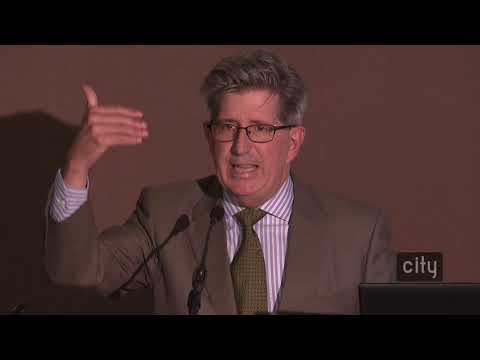
ICFRC: Neoliberalism, Chicago Boys, and the Americas
Introduction to the Program
Overview of the Event
- Bill Reisinger introduces himself as a board member and chair of the program committee, thanking members, volunteers, and sponsors for their support.
- Acknowledgment of financial supporters including various University of Iowa programs and special sponsors like Midwest One Bank.
- Explanation of the event format: a presentation followed by a 15-minute Q&A session with written questions from the audience.
Speaker Introduction: Chris Rossi
Background Information
- Chris Rossi is introduced as the director of Humanities Iowa with extensive academic credentials including a PhD in international relations.
- His professional experience includes work at prestigious institutions such as Carnegie Endowment for International Peace and roles within the UN.
- Rossi has published extensively on topics related to international law, war, and legal history.
The Bolivian Navy's Unique Situation
Historical Context
- Discussion begins on Bolivia's naval capabilities despite having no coastline since losing it in a war against Chile 140 years ago.
- The loss occurred during a conflict where Bolivia relied on Peru’s navy, which was ultimately defeated by Chilean forces.
Ongoing Territorial Dispute
- Bolivia continues to assert that its territory was wrongfully taken and seeks remediation through international courts.
- The internal political motivations behind Bolivia's claims are discussed, suggesting they serve both domestic support needs and external legitimacy.
Geopolitical Implications of Remoteness
Structural Issues in Geospatial Politics
- Rossi emphasizes deep structural problems related to geography that contribute to ongoing territorial disputes in Latin America.
- He highlights how perceptions of remoteness can shift when resources become valuable, using modern examples like Arctic shipping routes.
The Atacama Desert: Resource Richness
Value Beyond Perception
- The Atacama Desert is described as arid yet resource-rich; its value has evolved over time due to discoveries like guano and nitrates.
- Scientific interest in the desert is noted for its unique conditions suitable for astronomical observations and Mars rover testing.
Historical European Perspectives on Deserts
Early European Conceptions
- Discussion shifts to how early European explorers viewed deserts negatively based on travel logs from previous centuries.
- Notable figures like Felix Fabri documented their bleak impressions of deserts which shaped European understanding.
Cartographic Evolution Post-Columbus
Significant Maps Shaping Worldviews
- Martin Waldseemüller's 1507 map redefined global perspectives by depicting an unknown New World belonging to Spain without detailed knowledge about it.
- This map marked significant advancements in cartography by illustrating concepts such as oceanic navigation before they were fully understood.
Political Dynamics Influencing Cartography
Changing Representations Over Time
- Waldseemüller's later maps reflect shifting political objectives, emphasizing Asia over newly discovered territories.
- The removal of references to South America indicates changing geopolitical interests influenced by trade dynamics.
Spanish Colonial Expansion and Economic Impact
Control Over Resources
- Spanish conquests led to vast territorial control across South America with significant implications for local governance structures.
- Discovery of silver at Potosí transformed economic landscapes but also highlighted challenges related to mining logistics in remote areas.
Nitrate Wars: A Catalyst for Conflict
Consequences of Resource Exploitation
- The nitrate trade became central to conflicts leading up to Bolivia's loss of coastline during wars driven by resource competition.
- With synthetic production methods emerging post-war, traditional resource dependencies shifted dramatically impacting regional economies.
The Impact of Mining on Water Resources in Chile
Water Diversion for Copper Mining
- The copper mining industry is highly water-intensive, leading to significant water diversion in the Atacama Desert, which lacks natural water sources.
Ideological Shifts in Chilean Economics
- In the 1950s, Chilean economists trained at the University of Chicago began promoting neoliberalism, advocating for market-driven policies and reduced government control over industries.
The Role of Chicago Boys in Chile's Economic Policies
Neoliberal Implementation Post-Pinochet
- After the military coup in 1973 that ousted Salvador Allende, the new regime turned to the Chicago Boys for economic guidance, implementing shock therapy to revitalize the economy.
Consequences of Shock Therapy
- While some view this period as a "miracle," it involved severe economic hardship and repression under military rule lasting over a decade. Other countries like Argentina attempted similar reforms but faced disastrous outcomes due to weaker military authority.
Legacy of Neoliberalism and Its Critics
Ongoing Influence of Chicago Boys
- Despite their controversial past during Pinochet's regime, many Chicago-trained economists remain influential in prestigious academic positions across Chile today. They often downplay or ignore human rights abuses associated with their policies.
Bolivia's Insular Approach to Foreign Investment
- Bolivia has adopted a more insular stance towards foreign investment compared to Chile due to historical suspicions and lack of capital resources, complicating its economic development strategies.
Lithium: A New Resource Driving Global Interest
Importance of Lithium Today
- Lithium has emerged as a critical resource for various industries including technology and medicine; Bolivia holds significant reserves but remains cautious about foreign exploitation due to historical context.
Regional Competition Over Resources
- Countries like Argentina are also vying for lithium production opportunities amidst political changes that may affect their economic strategies moving forward. This competition highlights differing national perspectives on globalization and resource management among South American nations.
Historical Context: Gold vs Silver in Colonial Times
Spanish Interests in Precious Metals
- Gold was known upon Spanish arrival but silver became crucial for trade with Asia; both metals played significant roles in colonial economics despite differing levels of interest from Spain.
Bolivia’s Military Identity Without Coastline
National Sentiment and Military Projection
- Bolivia maintains a narrative around its military capabilities despite being landlocked; this serves domestic purposes by deflecting attention from internal issues while fostering national identity through historical grievances against territorial losses.
National Identity Politics Affecting International Relations
Political Dynamics Among Andean Nations
- National identity plays a crucial role in shaping politics within Andean countries; contrasting identities between Chileans and Bolivians influence regional dynamics significantly amid ongoing globalization challenges.
Future Implications of Lithium Wars
Global Interest Beyond Latin America
- As demand for lithium surges globally, major powers including China are increasingly interested in securing access to these resources amidst shifting geopolitical landscapes influenced by local policies and international relations dynamics involving Latin America.