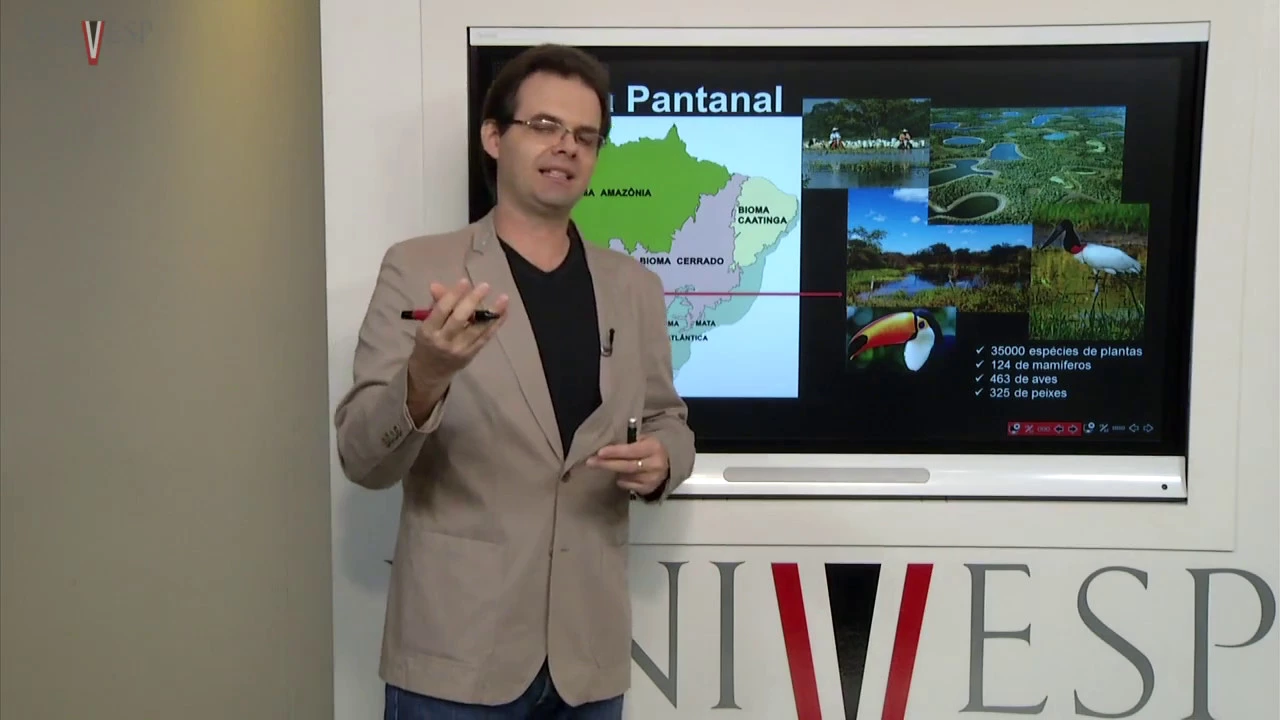
Ecologia - Aula 10 - Biomas do Brasil: Amazônia, Mata Atlântica, Pantanal
Biomes of Brazil: An Overview
Introduction to Biomes
- The session introduces the topic of biomes, specifically focusing on the Amazon, Atlantic Forest, and Pantanal in Brazil.
- A biome is defined as a group or mass of life where biotic components interact with abiotic components within a system.
- Biomes globally integrate soil, climate, relief, fauna, and other natural elements.
Characteristics of Biomes
- Clemens' definition highlights that a biome is a geographical unit characterized by specific climatic factors such as macroclimate, vegetation physiognomy, soil type, altitude, and environmental determinants.
- There exists an intrinsic relationship between climate and vegetation; climatic elements influence global vegetation distribution through latitude/altitude relationships and atmospheric pressure.
Vegetation as Climate Reflection
- Vegetation serves as a mirror reflecting climate conditions; it showcases how climate influences plant cover across different biomes.
- Tropical savannas are discussed with examples from various countries (e.g., Kenya, India), noting similarities in architecture among these ecosystems.
Human Interaction with Biomes
- Human utilization of natural resources varies across different biomes; technology aids in understanding biome functions to mitigate environmental impacts.
- The importance of combining environmental data (geographical, climatic, socioeconomic) for better comprehension and prevention strategies against ecological changes is emphasized.
Global Carbon Dioxide Dynamics
- Areas rich in green foliage near the equator indicate significant forest growth; contrastingly lighter areas show minimal vegetation.
- Seasonal CO2 dynamics are explained through photosynthesis processes in boreal forests during summer months.
Exploring Brazilian Biomes
Overview of Brazilian Biomes
- The Amazon biome is highlighted as the largest within Brazil's territory. It spans northern regions and includes extensive conservation areas rich in biodiversity.
Amazon Rainforest Characteristics
- The Amazon hosts over 40 thousand plant species and 300 mammal species due to its complex hydrographic basin. It also boasts more than 3 thousand fish species and at least 13 thousand bird species.
Overview of the Amazon Biome
Climate and Vegetation Characteristics
- The Amazon biome experiences high precipitation, reaching up to 3,500 milliliters annually, which significantly impacts its ecosystem.
- Distinct seasonal variations include a long rainy season and a well-defined dry season, influenced by an equatorial humid climate.
- Vegetation types vary based on proximity to water bodies; areas near rivers exhibit different characteristics compared to elevated regions with older sediments.
Types of Forests in the Amazon
- The igapó forest is characterized by continuous water coverage, with vegetation adapted to submerged conditions.
- Várzea forests experience flooding during wet seasons but reveal land during dry periods, allowing for human activity.
- Terra firme forests are dense and tall (up to 50 meters), creating dark understories due to limited sunlight penetration.
Ecological Layers and Species Distribution
- The structure of terra firme forests includes multiple layers or strata that host diverse plant species and fauna adapted to varying light conditions.
- Campinaranas are found in nutrient-poor sandy soils along riverbeds, resulting in shorter vegetation without large trees.
Human Influence on the Amazon Biome
Positive Contributions
- Indigenous tribes have sustainably utilized resources for millennia, practicing rational exploitation of biodiversity for food and materials.
Negative Impacts
- Modern agricultural expansion has led to significant deforestation over the past 30 years, particularly through cattle ranching and intensive crop cultivation.
Deforestation Patterns
- The "fishbone" pattern of deforestation in Rondônia illustrates how roads penetrate deep into the forest, leading to extensive habitat loss.
Introduction to the Atlantic Forest Biome
Biodiversity Significance
- The Atlantic Forest is recognized as a global conservation priority due to its rich biodiversity, housing nearly 20,000 plant species alongside numerous animal species including mammals (161), reptiles (200), amphibians (370), fish (350), and birds (850).
Current Status of the Atlantic Forest
- Originally covering approximately 1.36 million square kilometers, about 93% has been devastated by human activities; only around 6% remains intact or recovering.
Endemism and Threatened Species
- Of the remaining flora in the Atlantic Forest, around 8,000 species are endemic. Over half of its animal species face threats of extinction.
Vegetation Types within the Atlantic Forest
Mata Atlântica e Pantanal: Biomas Brasileiros
Características da Mata Atlântica
- A Mata Atlântica é composta por diferentes tipos de florestas, incluindo a floresta ombrófila aberta e densa, com remanescentes no nordeste de Minas Gerais e Espírito Santo.
- As florestas estacionais semideciduais e deciduais são adaptadas a climas mais secos, apresentando uma rica diversidade de espécies que caracterizam essas fisionomias florestais.
- A influência humana na Mata Atlântica é significativa, abrangendo 17 estados e mais de 3.400 municípios, onde vive 70% do PIB brasileiro e mais de 120 milhões de pessoas.
- Historicamente, a colonização do Brasil favoreceu a agricultura na região devido ao clima tropical favorável e solos férteis, impactando negativamente o bioma.
- Os ciclos econômicos que afetaram a Mata Atlântica incluem o extrativismo vegetal (ex.: pau-brasil), açúcar, mineração (ouro), café e atualmente exploração imobiliária.
Ciclos Econômicos Atuais
- Atualmente, os ciclos econômicos incluem a expansão urbana e o cultivo de papel e celulose com grandes plantações de eucalipto em áreas extensas do bioma.
O Pantanal: Um Bioma Conservado
- O Pantanal está localizado na fronteira com a Bolívia; é um dos biomas mais conservados do Brasil, com 83% da cobertura vegetal ainda intacta.
- Com uma grande biodiversidade, abriga cerca de 35 mil espécies de plantas, 24 espécies de mamíferos, 463 aves e mais de 300 espécies de peixes.
- É considerado o menor bioma territorialmente no Brasil mas possui a maior planície alagável do planeta devido ao seu relevo plano e solo pouco permeável que retém água.
Dinâmica Ecológica do Pantanal
- O clima apresenta um verão chuvoso longo que causa inundações nas planícies; durante a seca as lagoas se concentram com organismos aquáticos como peixes e jacarés.
- Durante as cheias no verão, os organismos aquáticos se espalham pela vasta área inundada; na seca (julho), as lagoas ficam repletas desses organismos concentrados.
Impacto das Atividades Econômicas
- A pecuária é uma atividade econômica importante no Pantanal; estudos mostram que não causa desmatamento significativo nem impacto negativo ao ecossistema local.
- As pradarias são periodicamente inundadas mas crescem rapidamente durante as secas oferecendo alimento para o gado sem comprometer o ambiente natural.
Comunidades Tradicionais no Pantanal
- Há uma presença positiva das comunidades tradicionais como tribos indígenas que utilizam recursos naturais sustentavelmente; isso contribui para a conservação do bioma.
Environmental Challenges in the Pantanal
Impact of Land Use and Pollution
- The extensive use of land in the Pantanal is coupled with massive agrochemical application aimed at increasing agricultural yield.
- Mining activities, particularly for diamonds and gold, raise concerns about mercury contamination affecting water bodies and food chains.
- There is a growing issue with tourism and migration that has taken on a predatory character over time.
Understanding Biomes
- A biome is defined as a collection of ecosystems functioning on a global scale, characterized by diverse fauna and flora.
- Biomes can be identified by their vegetation types; various forms of vegetation exist within each biome, as discussed in today's examples.
Brazilian Biomes Overview
- The session covered several Brazilian biomes including the Amazon, Atlantic Forest, and Pantanal, highlighting their rich biological diversity.