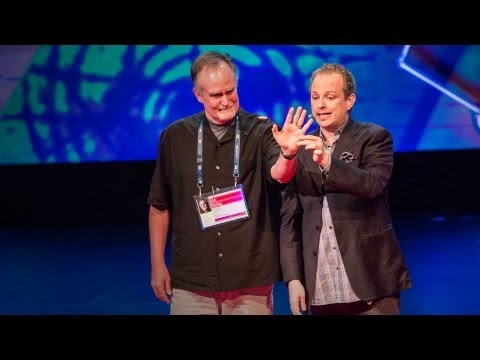
The art of misdirection | Apollo Robbins | TED
The Power of Attention and Human Behavior
Exploring Control Over Attention
- The speaker introduces the concept of controlling attention and predicting human behavior, suggesting it could be a superpower with both positive and negative implications.
- They share their background in studying human behavior through an unconventional method: pickpocketing.
Misdirection and Perception
- Misdirection is discussed as focusing on something peripheral while missing what’s directly in front of us; everyday objects can become invisible due to familiarity.
- An interactive exercise prompts the audience to recall details about their cell phones without looking, illustrating how easily we overlook familiar items.
The Cocktail Effect
- The speaker engages the audience in a trust exercise where they guess what the speaker is wearing with their eyes closed, highlighting varying levels of perceptiveness among individuals.
- They introduce a simplified model of attention likened to a surveillance system managed by "Frank," a metaphorical security guard in our brains that controls perception.
Attention as Reality's Gateway
- Attention is described as crucial for awareness; if we don’t attend to something, we cannot perceive it. However, one can attend without being consciously aware (e.g., recognizing one's name at a party).
- Techniques are employed to exploit attention as a limited resource; distractions can redirect focus away from critical information.
Demonstrating Distraction Techniques
- The speaker explains how they manipulate attention by prompting internal reflection (e.g., recalling memories), which distracts from external stimuli.
- A live demonstration begins where the speaker interacts with audience members, showcasing techniques that involve distraction and misdirection during pickpocketing.
Interactive Pickpocketing Game
- Audience member Joe is invited on stage for an interactive game involving his money and a poker chip, emphasizing focus on one hand while distracting with another.
- Humorously recounting past experiences, the speaker illustrates common misunderstandings during pickpocket attempts while engaging Joe further in the game.
Building Towards Conclusion
- As Joe focuses tightly on his hand holding the poker chip, he remains unaware of other distractions occurring around him—demonstrating how focused attention can lead to oversight.
- The interaction continues with playful banter about misdirection techniques used throughout the demonstration.
Final Thoughts on Attention Control
- Concluding remarks emphasize that attention shapes reality; the speaker poses reflective questions about what one would do if they could control someone else's attention.
Turn any video into a summary like this
YouTube links, meetings, lectures. With transcripts, search, and chat.


